 As we like to point out in this space each year, the Academy Award for Best Art Direction is presented to two individuals who have different but key roles in designing a film’s sets and props.
The first of these, the production designer, is the director of the film’s art department, responsible for the supervision of those in it and the overall architecture of the film’s design. The set decorator, on the other hand, is responsible for filling up those sets with proper scenery to fully bring them to life. When these individuals, and those who work alongside them in the art department, do their jobs well, we can be fully immersed into the story.
Historically, the nominees in this field fit into one of two categories: historical or fantastical. At least two – usually three or four – of the nominees every year are set in the past. This is not surprising. Being set outside of day-to-day life, such films require a different sort of research and, moreover, draw attention to themselves by not appearing to be what we encounter every day.
At the same time, fantasy titles show up at least once, often more, every year as well. Last year’s winner, “Avatar,” is a good example of this. Rick Carter and Robert Stromberg created a completely different world strictly from imagination.
That said, there are often films that combine both of these characteristics, and these are typically in great shape in this category (if, of course, competently designed). Titles such as “The Curious Case of Benjamin Button,” “Pan’s Labyrinth” and “Pirates of the Caribbean: Dead Man’s Chest” were able to show off their period and fantasy elements simultaneously and land a spot.
Truly contemporary films, on the other hand, show up rarely indeed. “Amélie” is the only title that could make such a claim, but even it had fantastical elements. You’d probably have to go all the way back to “The Birdcage” 14 years ago to find a contemporary film with no fantastical elements managing a nomination here, which doesn’t mean there haven’t been numerous worthy contemporary efforts in the interim.
Like all crafts categories, Best Art Direction does have individuals who show up frequently and are favored by the branch’s membership. In any given year, at least two of the nominees tend to be on their second nomination or more. Even so, the branch is not as insular as many others and at least one – usually two or three – of the nominees boast crafts artists on their first trip to the Kodak.
So what should we expect to show up this year? With its great reviews and the recent track record of Christopher Nolan’s films in this category, I would certainly look to Guy Dyas’s design of “Inception” as formidable. The dream world looks incredibly intriguing (using many practical applications, no less) and Dyas has been on the verge for a while (“Indiana Jones and the Kingdom of the Crystal Skull” and “Elizabeth: The Golden Age” jump to mind). I also expect the film to do very well at the box office.
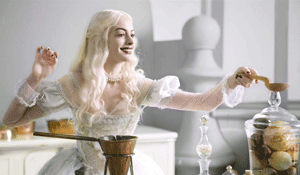
 Speaking of box office behemoths, last year’s winner, Robert Stromberg, could very well emerge in contention again for Tim Burton’s “Alice in Wonderland.” Burton’s films do very well in this category and, despite my distaste for this film, I cannot deny that its grand, fantastical sets are the sort this branch embraces.
Also in the fantasy realm is Stuart Craig for “Harry Potter and the Deathly Hallows: Part 1.” Stuart Craig (an eight-time nominee and three-time winner) has been nominated for two previous entries in this series. I expect the final installment to get several nominations when both films run their course, so perhaps they’ll get started this year.
“TRON Legacy” is another fantasy title we could see show up. I certainly expect an elaborate set design. Darren Gillford has not been nominated before but, depending on how the film is received, this could be the first time.
Moving to the more typical historical realm, I am certainly intrigued by the possibility of Eve Stewart finding a second nomination for “The King’s Speech.” Stewart (a previous nominee for “Topsy-Turvy”) has shown exceptional skill in recreating the England of the late 19th/early 20th century and this should be as good an opportunity as any.
Moving across the Atlantic, Thomas Sanders has the opportunity to depict the American upper class of the late 1960s and early 1970s with “Secretariat.” The film will almost certainly be compared, favorably or not, to “Seabiscuit,” but it appears to be the sort of feel-good film that would appeal to the masses. Sanders is a two-time nominee, after all.
Partially set in this era is Terrence Malick’s “The Tree of Life.” And Malick’s only production design collaborator, Jack Fisk, is back again. Fisk finally received his first nomination three years ago for “There Will Be Blood” (and seemed really close to a win). I have no doubt he made the most of whatever opportunity Malick has given him here.
Robert Redford has seen had a lot of luck with his recent directorial efforts. Nevertheless, it cannot be denied that he is a Hollywood staple. “The Conspirator” will give Kalina Ivanov the opportunity to recreate 1860s America. Ivanov has recently had some great success with her TV work so I’d keep an eye on this title.
 Ridley Scott’s “Robin Hood” did not set the world on fire as its producers undoubtedly hoped it would. But a big budget blockbuster shouldn’t be totally ruled out, especially one that is set in 12th century England. Scott’s usual designer, Arthur Max, has been nominated twice before for their collaborations. I would not completely rule this out as a third.
There can be no doubt that the Academy loves the Coen brothers. This year the duo remakes the western classic “True Grit,” an effort that surprises me but could be intriguing. (I certainly can think of no one better than Jeff Bridges to step into John Wayne’s classic role.) Moreover, Jess Gonchor, the Coens’ longtime collaborator, has done intriguing work in the past with “Capote,” “No Country for Old Men” and “A Single Man.”
The Coens are not alone among AMPAS favorites doing period films this year. Peter Weir and “The Way Back” is another example. The film sounds like it will largely exterior, but Weir has seen seven of his last eight films nominated for Oscars. I’m curious to see exactly what opportunity John Stoddart is given here.
Lastly, I’ll come to one of the most interesting visual directors out there – Julie Taymor. Adapting Shakespeare’s “The Tempest” will undoubtedly be another opportunity to show her unique vision. Production designer Mark Friedberg has done intriguing work in the past (“Far From Heaven,” “The Life Aquatic with Steve Zissou,” “Synedoche, New York,” among others) so this could just be his year.
Currently these are the titles I most expect to show up come January and February. Of course, titles we’re not expecting will emerge. But I still think we can be pretty sure they will be able to fit into the categories of either period or fantasy, given AMPAS tendency.
That’s our first look at a 2010 crafts category. Next week: Best Cinematography.
What are your thoughts on the Best Art Direction category? Have your say in the comments section below!
Comments
13 responses to “TECH SUPPORT: Best Art Direction — Volume I”
Great first tech article of the year, Gerard! Art Direction is one of my favorite below-the-line categories to watch because so much of what a film has to say begins with the mood it sets aesthetically. I would like to argue, however, that “The Dark Knight” received a nomination in this category, and that had a very gritty, contemporary feel, much less fantastical than its predecessors. It was, for me, a pleasant nomination on an otherwise sour nomination morning.
Mark Friedberg is certainly one of the most shocking cases of “why haven’t they been nominated yet?” at the moment. It’s stunning to think that with just those three films you listed he doesn’t have three nominations.
I wouldn’t be at all surprised to see “Get Low” crop up here — the kind of burnished Depression-era work that often finds favour.
I certainly feel Alice and Inception have great shots, in fact I feel both films could easily earn four or five tech noms (major noms being iffy for Inception and not happening for Alice).
I saw Tempest at an early screening and it does not jump out as a contender in this category, it is mostly exterior and the sets aren’t that elaborate; I think it would have a better chance in costume design and original score (the standouts on the technical level).
i thought youd mention shutter island as the art direction was very strong. any thoughts on that in hindsight?
Inception and Harry Potter both seem likely to me. I hadn’t thought about TRON Legacy, but I hope you are right and it’s that good. And yeah Secretariat would seem another intriguing possibility if the look and response to it are right. That’s a time and era that could look great if it turns out well.
No look at Voyage of the Dawn Treader?
Harry Potter will be here. The question is: will it be for Part 1, Part 2 or for both ?
I think for Part I, it has a wider and newer range of sets; for Part II they should re-use a lot of sets from the previous movies, not to mention that a chunk of the movie will take place in Hogwarts’ grounds.
Rob Reiner’s “Flipped” might nab a spot. The novel that is the source for the film is set in modern times, but Reiner decided to set the film in the 50’s instead. It takes place is a small suburb and (potential spoilers for those who haven’t read the book) there are some scenes that take place in a home for autistic people and at a small farm.
This year’s below the line work definitely looks like it will be more fantasy related than period, doesn’t it? Maybe this will make them reconsider contemporary designs more? Nah, doubt it.
***… “Capote,” “No Country for Old Men” and “A Single Man.”***
I think you mean “A Serious Man.”
[…] PostsTECH SUPPORT: Final analysis, part twoTECH SUPPORT: Analyzing the nomineesTECH SUPPORT: Best Art Direction — Volume IOSCAR GUIDE: Best Art DirectionTECH SUPPORT: Final analysis, part oneTECH SUPPORT: Final analysis, […]