 As regular readers have probably noticed, I’ve been away (undeservedly, apparently) on vacation for the past week or so, so I’ve missed out on the recent influx of submissions for the Best Foreign Language Film race.
Fortunately, Kris has been keeping you up to speed with our new foreign contenders page. Thanks, meanwhile, to the many helpful readers who have been keeping me updated with developments via email. Keep ’em coming.
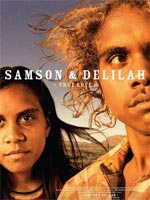
Today, however, saw two potentially significant players enter the race. Readers who have kept up with my predictions since I first posted them in May will recall that I’ve been instinctively forecasting a nod for Australian critical sensation “Samson and Delilah” from the beginning. Now that possibility has taken one further step towards fruition.
Thanks to Glenn at Stale Popcorn for pointing us to the news that Australia has officially entered Warwick Thornton’s English and Warlpiri-language debut feature, which won the Camera d’Or at Cannes back in May and recently played at Telluride and Toronto to across-the-board praise. (I’ll be seeing it at the London fest this month.)
Some questioned whether the film, a spare piece detailing the romance between two Aboriginal teenagers in adverse rural conditions, had sufficiently foreign-language dialogue to qualify, though it seems that issue has been resolved. Of course, Australia has no track record to speak of in this category, having only entered a film on four previous occasions — each time unsuccessfully.
That said, I do have an odd hunch (which means nothing whatsoever in this most unpredictable of categories) that this could be the film to reverse that trend. Stories of children and social hardship frequently strike a chord with this branch, and the near-unanimous acclaim to date (plus that glittery Cannes gong) makes it one of the higher-profile names in the race. A shortlist placing, at least, seems well within reach.
Meanwhile, Spain has surprised nobody by selecting Fernando Trueba’s Chilean-set romantic drama “The Dancer and the Thief” as their entry.
The selection seemed an inevitability after the Spanish announced their three-film shortlist for the honor, which notably omitted Pedro Almodovar’s “Broken Embraces” (Almodovar not being the selectors’ favorite many assume he is) and included Isabel Coixet’s “Map of the Sounds of Tokyo” which was not only critically derided at Cannes, but ineligible on the basis of its English dialogue.
Trueba, meanwhile, has Academy cred, having won the Oscar (in a rather unpopular upset) for “Belle Epoque” way back in the 1993 race. Reviews for the new film, which follows a heist attempt by two lovestruck thieves in post-dictatorship Chile, are on the tepid side, but Spain’s entry should never be discounted: the country is a 19-time nominee (and quadruple winner) in the category, even if they haven’t made the nominee list since 2004.
Comments
15 responses to “Australia and Spain enter foreign-language race”
Why was Belle Epoque an unpopular upset? What did it beat out?
I’ve seen it several times on the small screen and thoroughly enjoyed it each time! :o)
Have to check out Fernando Trueba’s latest when I get back to Spain…
“Farewell, My Concubine” was the odds-on favorite that year, with “The Wedding Banquet” as the potential spoiler. Nobody really saw “Belle Epoque” coming.
The big story in the category then was the dominance of Asian cinema, with 3 noms, so Spain’s win rained on that parade a little. Either way, as much fun as “Belle Epoque” is, it’s not in the same league as “Concubine.”
a fair assesment. ;o)
I saw “Samson and Deliliah” at Toronto. It will not be nominated. Period.
Care to elaborate? “Period” is emphatic but not very specific.
How do films like “Map of the Sounds of Tokyo” even get considered for submission when they are mainly in English? Don’t the submitters realize what is eligible?
I saw five Australian film in Toronto–Balibo, Beautiful Kate, Last Ride, The Boys Are Back, and Samson and Delilah. I thought Samson and Delilah was a big disappointment. I would have submitted Balibo, but perhaps that is financed by several countries, not just Australia?
Isn’t “Balibo” mainly in English?
Balibo is mostly in English, which makes it ineligible. Good film though.
Samson and Delilah is good enough for a nomination but too good to win. It’s certainly no Counterfeiters or Departures.
Daveylow, there were only two Aussie contenders for submission. “Samson & Delilah” – a box office hit, Cannes award winner and with so many 4/5-star reviews you could fill a broadsheet. The other candidate was “Van Diemen’s Land” a slow, boring, horror movie in Gaelic. Those titles you listed are all in English (although “Balibo” does have a small amount of Indonesian/Portuguese dialogue). “S&D” has been hailed as possibly the best Australian film ever made by many down here so… there ya go.
I’m with Luke Gorham on this one. I admired “Samson and Delilah” for the effectiveness of its visual storytelling, but the Foreign Language branch is so prickly when it comes to English dialogue in foreign films. “Samson and Delilah” may not have enough dialogue of ANY kind to impress that oh-so-out-of-whack sector of AMPAS.
Sounds plausible … but I have been wondering if its very strong critical profile could make it one of the extra titles “saved” by the (moderately) more adventurous executive committee.
Hopefully Samson and Delilah will score Australia’s first ever nomination in the category – here’s to the Aussies (eh Glenn and any other Aussies here?)
Well, firstly I would be surprised if it makes the 50% mark for the foreign language requirement. It will be very close. Additionally, the film turns what could have been an interesting study of modern day aboriginal culture or even a non-traditional love story into a typical drug abuse drama, and one that will not likely appeal to the more traditionally-minded foreign film committee.