 It was June 29, 2001. I was in film school. I opened the local paper, read my friend, the film critic’s, review of “A.I.: Artificial Intelligence,” Steven Spielberg’s distillation of a project he and legendary filmmaker Stanley Kubrick had developed together for years.
I was nervous. I had, for one, hit a post-adolescent anti-Spielberg stretch (which I fully own as childish, but attribute in part to my feelings on the “Saving Private Ryan” vs. “The Thin Red Line” situation of a couple of years prior). Like any cliched film school student, I was a Kubrick obsessive. I wanted this to come off without a hitch.
The review was positive. Not an all-out rave, but enough to really get my hopes up. I hit the first matinee of the day, bells on, ready. The film washed over me and it didn’t connect. Something felt off. I heard the film, but I didn’t listen to it (to paraphrase, of all things, “White Men Can’t Jump”). So I adopted early on an attitude toward the film that I soon would understand as limited even if it wasn’t ill-considered.
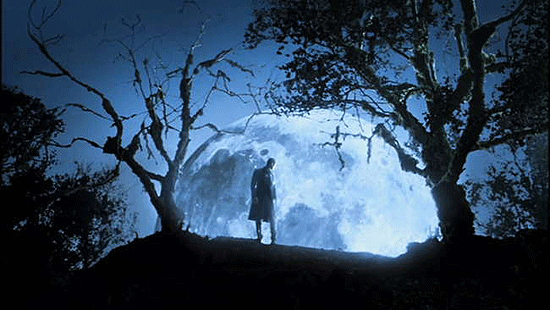
 This column has been the elephant in my living room for months.
 Looking back over the previous Oscar winners for Best Picture since 2000, the start of a new century (and a new millennium), I find myself wondering sometimes what the hell the Academy was thinking. It’s no secret I disagree with the Academy a lot, but I can also admit that when they get it right, they get it right.
