In Contention

Tag: Apollo 13

  • The new millennium Oscars?

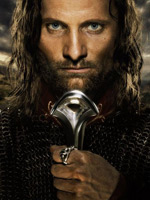
    Viggo Mortensen in The Lord of the Rings: The Return of the KingLooking back over the previous Oscar winners for Best Picture since 2000, the start of a new century (and a new millennium), I find myself wondering sometimes what the hell the Academy was thinking.  It’s no secret I disagree with the Academy a lot, but I can also admit that when they get it right, they get it right.

    But since 2000, their Best Pic choices have run the gamut from incredibly ridiculous, “Gladiator” and “A Beautiful Mind” being just goofy, to bang on, with “The Departed” and “The Lord of the Rings: The Return of the King.”  I am told the Academy is moving in a more progressive direction, willing to take more risks, and I suppose some of these winners do just that.  But they could have gone further.

    Year by year, here’s a quick look, with some thoughts about who might have won, and who should have at least been nominated…

    (more…)

  • TORONTO: Ed Harris on ‘Appaloosa,’ acting and film crticism

    Ed HarrisWalking into to interview with any actor/director can be a tad intimidating, even after 20 years of doing it.  They have a tendency to be…difficult.  But 30 minutes into my interview with Ed Harris, he pays me a compliment that could keep wind in my sails for the duration of the fest: “Thank you for your integrity, intelligence and dedication to your job.  This has been a pleasure.”  He smiled as we shook hands and he walked me to the door

    Harris has been an actor I have admired since first seeing him as squeaky clean John Glenn in “The Right Stuff” back in 1983, which he followed with a chilling turn as a mercenary in “Under Fire,” his bright blue eyes windows into hell’s furnace. His career has moved along an interesting trajectory, shifting between supporting roles and leads with ease, often dominating whatever film he takes on with powerhouse acting.

    Oddly enough, he did not receive his first Oscar nomination until 1995 when he gave a sterling performance as Gene Kranz in “Apollo 13,” followed by another brilliant turn in “The Truman Show” as a God-like TV producer. He nurtured his dream project, “Pollock,” through its funding, before taking up the reins as director and grabbing another Oscar nod in front of the camera. And in 2002 he was nominated for a fourth time for his AIDS-afflicted writer in “The Hours,” a critically acclaimed ensemble piece from director Stephen Daldry.

    It is doubtful that “Appaloosa” will see any Oscar attention.  Though it is beautifully shot and the art direction is sublime, the film was something of a letdown, despite strong work from Harris and co-stars Viggo Mortensen and Jeremy Irons.

    “I gave the book to Viggo here at this festival in 2005,” Harris said, “when we were here for ‘A History of Violence.’ There was no one else I really wanted to do the film with, and I certainly never considered anyone else. I just thought he and I would make a strong partnership on screen. We don’t hang out, I mean we’re friends, but we don’t see much of each other. He agreed to do it, and Viggo’s the sort of guy where his word is his bond, so that gave me the start to keep moving on the film. It didn’t really occur to me that the film was a western, what struck me was the relationship between these two men in 1882, that’s what really grabbed me about the film. That it happened to be a western was incidental.”

    (more…)

  • Can Ron Howard give ‘Frost/Nixon’ the edge it needs?

    Ron HowardIn 2000 I remember reading a post on Ain’t It Cool News by Harry Knowles.  Having seen an unfinished cut of “How the Grinch Stole Christmas,” the Ron Howard film based on the beloved Dr. Suess story and animated program, Knowles believed that the film would redefine Howard as a filmmkaer, elevate him to a higher level and be the film he would be remembered for.

    Knowles felt it was a greater achievement than “Apollo 13” and pretty much anything else the director had done, that Howard had given us the fantasy film we had been waiting for. Admittedly the effects were incomplete, but Knowles was confident what he saw was a masterpiece.

    Granted it was Harry Knowles, but then, of course, the film was released, critically crucified, reasonably successful before hitting DVD where it is not even regarded as a Christmas classic. You know why? Because it was not very good.

    Whatever Knowles saw, and I am sure he saw something he felt was exciting, did not transfer to the final cut. Instead we had a busy film with a massively over-the-top performance from Jim Carrey and these bizarre little creatures with odd makeup called “Whos.” Christine Baranski was in heat for the green misanthrope, though she had not seen him since he was a wee Grinch, and the town’s mayor was still the pompous windbag he had been in school when he had humiliated our hero and sent him off to the mountain where he now resides.

    They searched the continent of North America to find the right little girl to play Cindy Lou Who, and I suppose Howard thought they had found her.  Wrong.

    One year later Howard won the Academy Award for ” A Beautiful Mind,” one of those wildly over-praised films that somehow win Oscars over better efforts like “The Lord of the Rings: The Fellowship of the Ring” or “In the Bedroom,” or the un-nominated “A.I. : Artificial Intelligence.”

    For my money, Ron Howard has struck gold just once, with the brilliant “Apollo 13,” a superb piece of filmmaking. The Academy awarded the film with nine nominations, but stunningly, despite having won the Directors Guild Award for Best Director, Howard was not among Oscar’s list of helmers. What a terrible slap in the face that must have been!

    In the years since “How the Grinch Stole Christmas” Howard has matured as a director, giving us a superb western that nobody saw called “The Missing,” with outstanding performances from Cate Blanchett and Tommy Lee Jones, and the extraordinary “Cinderella Man,” for which he and Russell Crowe should have earned Oscar nominations.

    If this generation of directors has a filmmaker that resembles Frank Capra, I suppose Howard is the closest we have, though I am not suggesting he is in the same league. Howard is a good director, not a great one.

    Which brings me to my point: I wonder if he can bring the edge needed to make a film like “Frost/Nixon” work?

    (more…)
  • Who joins the great Best Picture snubs this year?

    It happens every year, a great film, in some cases destined to be remembered more than the eventual Oscar winner is snubbed for a Best Picture nod, or gets nominated and loses to an inferior film that happened to capture the public’s attention at that particular point in history.

    Some of the greatest films of all time lost the top award, “Citizen Kane” among them, arguably the greatest of all time (though I disagree). “The Treasure of the Sierra Madre”, easily John Huston’s best work, joins the list, as does “The Searchers,” which is in my opinion the finest western ever made and contains the greatest John Wayne performance of all time.

    Remember “Rocky” winning over “All the President’s Men,” “Network” and “Taxi Driver?” Or “Kramer vs. Kramer” over “Apocalypse Now?” In the last twenty years, Oscar has pulled some howlers, some choices that left me nearly putting my foot through the television upon the announcement. The first time I remember being really, truly angry at a lame decision was in 1981 when “Chariots of Fire” bested Warren Beatty’s “Reds,” which I believe to be among the best films of the 80s.

    (more…)

  • Actors winning Best Director — always deserved?

    Of course not. Quite often the Academy gets behind an actor for the simple reason they pulled of the film without screwing too much up.

    How else can one explain Mel Gibson’s win for “Braveheart” but failure to be nominated for his masterpiece “The Passion of the Christ” and “Apocalypto,” easily two of the finest directed films of the last ten years? Somewhere along the road, the Academy fell in love with actors who try their hand at directing (unless your name is Sean Penn or Barbara Streisand) and began giving away Oscars, quite often over more deserving directors.

    Poor Martin Scorsese has watched actors win the Best Director prize over his work three times. In 1980, of course, Robert Redford won for his drama “Ordinary People” over Scorsese’s searing “Raging Bull,” while ten years later Kevin Costner won the Oscar for “Dances with Wolves,” besting Scorsese for “Goodfellas.” But hey — this is the Academy…right? Clint Eastwood also bested Scorsese’s “The Aviator” in 2004 with a win for “Million Dollar Baby.”

    One year after Redford won his Academy Award for Best Director, Warren Beatty took home the award, much deserved for his criminally under-appreciated epic “Reds.” But he would watch in shock as “Chariots of Fire” ran to the Best Picture award over his film. The following year, a minor British actor, Richard Attenborough directed “Gandhi,” which the Academy fell in love with, honoring the achievements of the film’s subject rather than the effort itself, which even at the time seemed old-fashioned and rather ordinary. Attenborough himself, on the way to accept the Directors Guild Award for the film, stopped to chat with Steven Spielberg to make clear what everyone in the room seemed to know: that Spielberg should have won the award for “E.T.: The Extra-Terrestrial!”

    (more…)