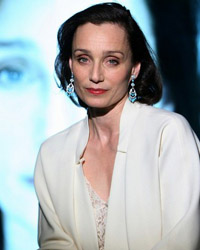
 When interviewing Kristin Scott Thomas, the woman who for many audiences represents the living portrait of English upper-crust serenity, Led Zeppelin isn’t exactly the first name you expect to crop up in the conversation. And yet, halfway through our Transatlantic chat, that is exactly what happens.
“Seeing the guys, well into their sixties, just getting up on stage and doing their thing … it’s just so inspiring,” she says, referring to the British rock gods’ reunion concert that took place in London a year ago. “And spanning generations too — my son is into them. It’s a reminder that you don’t stop being interesting or relevant at a certain age. I’d love to do that.”
As entertaining as the idea of Thomas belting out “Whole Lotta Love” to a screaming arena of thousands is, it’s a weirdly apt comparison. Where many actresses her age recede (albeit not usually by choice) into mumsy bit parts and dreary disease-of-the-week movies, Scott Thomas, now (incredibly) 48, has recently been taking on the most challenging, intriguing work of her career to date.
As if to prove the point, she is speaking from New York, where she is tackling one of the theater’s greatest female roles in her first ever Broadway gig. Her witty, ferocious interpretation of Arkadina in Chekhov’s “The Seagull” earned her an Olivier Award for the play’s original London incarnation and is now garnering breathless raves Stateside.
It’s her recent film work, however, that has made 2008 a banner year for the thesp. Two highly entertaining, highly contrasting supporting roles — as a worldly lesbian in the smash French thriller “Tell No One” and an icy matriarch in period comedy “Easy Virtue” — are mere appetizers to her staggering, career-peak performance as an introverted, grief-ridden ex-con, reconnecting with family and society alike, in Philippe Claudel’s superb debut feature “I’ve Loved You So Long.”
(more…)
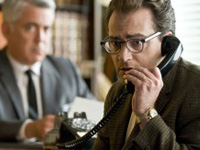 • “A Serious Man,” a glossary. [Focus Features]
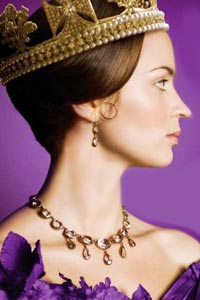 Somewhere out there, wherever such souls reside, Anne of Great Britain must be wondering what she had to do during her reign to merit her own prettily mounted biopic. She may be the last relatively untapped figure in British heritage cinema’s well-worn library of queenly narratives, but she has once more been passed over for the privilege of fronting the latest middlebrow, true-life royal drama, fast becoming an annual fixture on the UK film calendar.