 It’s no real secret that the Academy is partial to the biopic. Big or small, intimate or epic, celebratory or critical, they never seem to tire of the allure of actors channelling real-life figures, past and present. Lately, in the performance categories in particular, biopics have been the surest route to voters’ hearts, with seven of the last nine Best Actress winners falling under the category, and Daniel Day-Lewis having just broken a three-year run of biopic winners in Best Actor.
The genre is no less prominent this year, with titles like “Milk,” “Frost/Nixon,” “Che” and “W.” all garnering varying degrees of awards buzz, for their star turns in particular. Meanwhile, from the arthouse, European titles like “Hunger” and “Il Divo” are significantly challenging the formal boundaries of the biopic, proving that the genre has far more adventurous terrain to cover than the solid, occasionally stodgy awards catnip the Academy frequently chooses to laud.
Back in August, I wrote a post about how I was wearying of Oscar’s devotion to the genre; in turn, after my unenthusiastic “Frost/Nixon” review, a friend said to me, “Well, you do hate biopics.” I really don’t. But I am a little bored of the more linear, prosaic examples of the genre that reduce the narrative to CliffsNotes highlights in order to showcase a performance. (Step forward, “Ray” and friends.)
Real life offers an infinite number of structural and cinematic possibilities, and it is the films that best take advantage of this fact that this week’s list is designed to celebrate. The ten films here take a wide range of approaches in portraying an equally diverse array of lives, but for me, they all pass the principal test of the great biopic: defamiliarizing the familiar. By creating living, breathing characters out of figures best known from history books and pop culture annals, they make real life as revelatory and surprising as fiction.
It’s interesting to note how few of the films I’ve chosen qualify as the Oscar-bait that biopics are widely perceived to be — we have four Best Picture nominees here, and only one winner. It was by no means a deliberate or elitist move on my part, but the fact remains that a lot of the most interesting and audacious work within the genre doesn’t get the recognition it deserves.
The biopic is clearly maturing — as I was drawing up the shortlist for this piece, I was surprised by how recent many of my inclusions were, but it’s clear that filmmakers are getting more adventurous with time. For example, in the 1950s, a film like “La Vie en Rose” would have been made as a stolid music weeper in the “I’ll Cry Tomorrow” mold — today it comes in a considerably more fractured form, structurally and stylistically. It’s just one of several recent films, from “The Assassination of Jesse James by the Coward Robert Ford” to “Marie-Antoinette,” to show that the biopic need never be safe cinematic territory. The following ten films prove that.
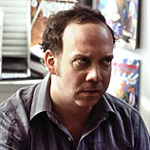 10. “American Splendor” (Robert Pulcini and Shari Springer Berman, 2003)
An ingeniously intertextual account of the life and work of comic book author Harvey Pekar, “American Splendor” goes against the grain of nearly every other biopic of a creative being by revelling in its subject’s ordinariness. Riffing off Pekar’s own autobiographical comics, Pulcini and Berman brought their keen documentarist’s eye to Pekar’s unremarkable world of beige offices and supermarket checkouts, making as much dramatically of the absences in his life as his achievements. Anchored by a quicksilver performance from Paul Giamatti, this achieves the rare biopic feat of matching its subject’s individualism.
(more…)
 One of my favorite current film writers, Ryan Gilbey, has an excellent piece in today’s Guardian on the subject of biopics — in particular, on the rise of the postmodern biopic in the face of Hollywood’s increasingly tepid stabs at the form. It’s a good read, but far better is the unabridged version of the article at Gilbey’s own blog, which contains some fascinating nuggets cut by the Guardian subs.