In Contention

Tag: Jurassic Park

  • Remembering Michael Crichton at year’s end

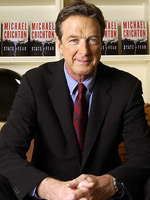
    Michael CrichtonOne of my wish list items that happened to be under the tree this Christmas was Michael Crichton’s “State of Fear,” an anti-global warming thriller that is likely to both infuriate (given the politics) and keep me turning the page (given Crichton’s story-telling skill).

    It’s been a while since I flipped through a Crichton book, but I’ve been in a somewhat nostalgic mood for his work ever since the author’s untimely death last month.  I’ve always found myself sharing an opinion of him similar to New York Times writer Charles McGrath’s, who noted in his obituary, “As a writer he was a kind of cyborg, tirelessly turning out novels that were intricately engineered entertainment systems. No one — except possibly Mr. Crichton himself — ever confused them with great literature, but very few readers who started a Crichton novel ever put it down.”

    As we move closer and closer to the end of the year, In Memoriam installments will fly fast and furious for the entertainers we lost in 2008.  With that in mind, Rachel Abramowitz has penned an appreciation in the Los Angeles Times for the departed scribe: “Michael Crichton’s Hollywood legacy.”  She opens the 11-page photo gallery with the following words of remembrance:

    It’s hard to imagine modern-day Hollywood without provocative potboiler author Michael Crichton, the Harvard-trained doctor whose fertile imagination fused science and fear in heart-stopping fashion, launching upon unsuspecting moviegoers extraterrestrial killer micro-organisms (“The Andromeda Strain”), the black-market trade in organs (“Coma”), an amusement park full of fantasy-fulfilling androids (“Westworld”), Adrenalin-junkie tornado chasers (“Twister”) and of course, genetically recreated dinosaurs running amok (“The Jurassic Park” franchise).

    In his spare time, the 6-foot-9 author who could churn out 10,000 words a day, tackled the murky politics of sexual harassment (“Disclosure”), questionable Japanese business practices (“Rising Sun”), and created “ER”, one of the most popular television series of all time. He’s probably the only person in America ever to have a No. 1 book, No. 1 movie and No. 1 TV show all at the same time.

    Take a trip down memory lane here.  And here’s one of Crichton’s last in-depth interviews, an hour-long discussion with Charlie Rose last year as he was making the publicity rounds on “Next,” including maybe a 20-minute chunk on Crichton’s controversial views on global warming:
  • Michael Crichton, author of ‘Jurassic Park,’ dies at 66

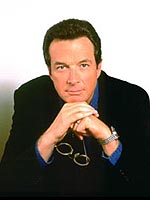
    Michael CrichtonI truthfully wasn’t even aware that Crichton was struggling with cancer.  But apparently, the awful disease has taken him from us.

    I remember being charged on Crichton’s work after seeing “Jurassic Park” in 1993.  Sure, he already had fans from the days of “The Andromeda Strain,” “The Great Train Robbery” and, later on, “Disclosure,” but the dinosaurs that caught the film-going world’s imagination first drew me to the author’s work.

    I picked up “Sphere” (which blew my mind), “Congo” and “The Lost World” immediately.  It was painful to see his works ravaged by the film industry, but he made his mark on the small screen with “ER” (one of the most successul shows of all time) and the original treatment that became “Twister” (part of a mid-90s glden age for action movies).

    The last time I was really entranced by a Crichton novel was “Airframe” in the late-90s, a project that has failed to make the move to the big screen to date, despite attracting talent like Richard Donner and Sigourney Weaver over the years.  I never picked up “Timeline” (though I saw Donner’s awful film) or “Prey” (though it proved to be a constant airport temptation).  Perhaps his work on an old script, “Westworld,” will still make it to the screen with the help of “Shattered Glass” scribe and helmer Billy Ray.

    The last Crichton novel published was 2006’s “Next,” a genetic research thriller that, like so much of his work, didn’t seem satisfied merely telling a story.  Crichton was always more interested in the cautionary aspects of his yarns and how they might be better capture the zeitgeist.

    For me, a one-time fan and perhaps likely to dive back in with this sad news, Crichton will be missed.

  • Sweet buzz for ‘Button’ effects

    Brad Pitt in The Curious Case of Benjamin ButtonFresh on the heels of Gerard’s visual effects Tech Support column this morning, I got an email from an industry friend who keeps his eye on the tech races and, indeed, the Oscar races in general.  It seems “The Curious Case of Benjamin Button,” which was always going to be a delicate effects balance, is striking the right chord with those who ought to know.

    Here’s what our source had to say:

    Don Shay, who founded and is EIC of Cinefex magazine, which is more or less the gold standard for folks in the visual effects industry, has already seen “Benjamin Button” and told a mutual friend that it’s as big a leap forward in visual effects as “Jurassic Park” was. Coming from him, that’s a big deal.

    Obviously, the odds for it go even higher if the picture ends up being a sweeper, which I’m betting on as I know two other guys who have seen it in rough shape and both of them – straight shooters and neither of them particularly emotional – were crying at the end.

    I say if you watch that second trailer, and you get all of that sweep and Americana AND you’re crying at the end, it’s going to be a major force.

    When I first talked to Eric Roth about “Button” almost two years ago, he told me director David Fincher was keeping his recipe for the film’s effects close to the vest.  A wise move, considering the finished product could have become lost in its own good intentions.

    But that doesn’t seem to be the case.  With a Los Angeles Times write-up on makeup wizard Greg Cannom still to come and an Industrial Light & Magic feature just waiting to happen, I’d say the below-the-line achievements on the film might be inching it toward consideration as the tech giant of the year.

  • Spielberg and blockbusters

    Can he do it? After becoming (in his own eyes) a serious filmmaker with “Schindler’s List,” “Amistad,” “Saving Private Ryan,” “A.I.” and “Munich,” is Steven Spielberg able to re-create the magic he almost always brought to his pure entertainment blockbusters?

    It takes a look at his journey as an artist to even attempt a reasoned understanding of such a question.

    On one hand, I argue that he was always a brilliant director, “Jaws,” “Close Encounters of the Third Kind,” “Raiders of the Lost Ark,” and “E.T.” all great examples of his artistry, yet he himself was never satisfied by the reaction to those films by the Academy. It is well documented that Spielberg coveted acceptance in the film community, seeing the Oscar for Best Director as the ultimate acceptance from Hollywood. Snubbed for “Jaws” in 1975, he behaved like a petulant child as live cameras caught it all on film, invited in to see his reaction when he was nominated…but — he wasn’t.

    (more…)