In Contention

Tag: The Bicycle Thief

  • Variety reflects on foreign Oscar history

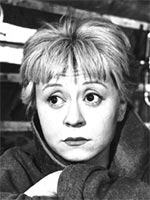
    Giuletta Masina in La StradaThe mark of a true Oscar geek is the self-assignment of nuttily completist viewing exercises. Only a select few understand the drive to track down every Oscar-affiliated titles in existence — however obscure, expensive or awful — all so one can say with absolute authority who should have won, say, Best Actor in 1952. (Alec Guinness, since you ask.)

    As small an achievement as it appears to the uninitiated, I remember the sense of triumph I felt upon excavating a VHS copy of “Cavalcade,” then the last remaining Best Picture winner I hadn’t seen. (Triumph soon turned to agony as I actually watched the film, but I prefer to forget that.)

    So I doff my hat to Variety critic Peter Debruge. Inspired by a montage in the 2007 Academy Awards broadcast — see, the montages aren’t completely useless after all — Debruge set himself the task of watching every Best Foreign Language Film winner in Oscar history, encompassing 61 titles ranging from the canonized to the buried.

    (more…)

  • THE LISTS: Top 10 Best Foreign Language Film winners

    John RatzenbergerIt is with a notable silence that Yojiro Takita’s “Departures” – best known to many of you as that film that beat “Waltz With Bashir” to the Best Foreign Language Film Oscar – slipped onto U.S. screens last week. Of course, there are various reasons for the lack of hoop-la surrounding its release.

    The film itself is a decidedly unassuming, low-key effort. The critical reception has been, if hardly hostile, slightly soft. (Sure, Ebert gave it four stars, but what does that mean these days?) Meanwhile, more than three months after Oscar night, it’s likely most people barely remember the film’s victory at all. (Probably a good release strategy, given the dismay with which the win was greeted in many quarters.)

    The less charitable explanation, of course, is that the film isn’t terribly good. Pleasant, certainly, and executed with commendable sincerity, but swaddled in the kind of safe, maudlin cinematic cotton-wool that never threatens any real danger, despite the potentially macabre directions the material could go in. It’s a cozy piece of work that doesn’t dare approach “Waltz With Bashir” for formal invention or “The Class” for storytelling verve.

    As such, it’s a textbook illustration of the Academy’s voting tendencies in this category, which repeatedly favor the safe ahead of the searing: the movie you’d take home to meet Mom rather than the one you’d run away to Paris with. This decade alone, we’ve seen such competent, amiable and relentlessly middlebrow fare as “Nowhere in Africa,” “Tsotsi” and “The Counterfeiters” triumph over infinitely more innovative competition – -or, all too often, films that didn’t even make the nominee list. It’s a situation that inspires annual grumbling, on these pages and innumerable others.

    But it’s not all bad. The running-joke status of the foreign-language award tends to obscure the fact that the Academy has rewarded a number of stone-cold classics in their time too –- never more so than in the earliest days of the award, when titans of film history like Kurosawa, De Sica and Fellini made it to the winners’ podium. And even these days, a gem like “The Lives of Others” can still manages to fight its way to the surface.

    Today’s list seeks to at least partially rehabilitate the reputation of this beleaguered (albeit deservedly so) award, reflecting on the most adventurous –- or simply most resonant -– selections in the 62-year history (including the days when it was merely an honorary citation) of the Best Foreign Language Film award.

    (more…)
  • TCM’s top 15 most influential classic movies

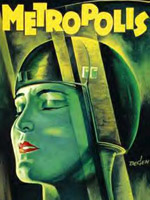
    MetropolisWell, here’s something I guess.  Rope of Silicon points us to TCM’s list of the top 15 most influential “classic” films of all time.  I actually started working up such a list for the site a while back but abandoned it for whatever reason.  It was going to include all comers, though, not just classic films.  They seem to be listed in chronological order over at TCM.com.  The 15:

    “The Birth of a Nation” (1915)
    “Battleship Potemkin” (1925)
    “Metropolis” (1927)
    “42nd Street” (1933)
    “It Happened One Night” (1934)
    “Snow White and the Seven Dwarfs” (1937)
    “Gone with the Wind” (1939)
    “Stagecoach” (1939)
    “Citizen Kane” (1941)
    “The Bicycle Thief” (1947)
    “Rashomon” (1950)
    “The Searchers” (1956)
    “Breathless” (1959)
    “Psycho” (1960)
    “Star Wars” (1977)

    My list certainly included most of those, which are by and large hard to argue with.  “Birth,” “Battleship,” “Metropolis,” “Night,” “Snow White,” “Wind,” “Kane” and “Star Wars” were definitely included in my tally.  If we were to extend it beyond the “classic” realm, I think we’d have to include “Jurassic Park” and the “Lord of the Rings” franchise.  “Toy Story” would have to have a secure place, while “Pulp Fiction” obviously sparked a revolution some would argue had roots in “sex, lies and videotape” (also a contender for an “all-time” list).

    Since TCM’s idea of “classic” obviously stretches into the late 1970s, I think it’s rather foolish to leave off “Jaws” and/or “The Godfather” considering what they meant to big business theatrical revenue before “Star Wars” came along.  And going way back, “The Great Train Robbery” had people running from the theater screaming after the final image of a bandit firing his gun at the camera.  There’s something to be said for one of the first films to enthrall like that.

    And what about “The Jazz Singer?”  How do you leave that title off a list of “classic” cinema?  I guess it had to be narrowed to 15 but there are a couple of films on that list that could have been bumped, I think.

    Let’s put it to the readership.  Assuming an “all-time” list rather than limiting it to the classics, what would you say have been the most influential films?  I could make a mean case for “Die Hard,” but I’ll anxiously await your input.  Rattle off your lists and maybe we’ll settle things with a series of polls.