 It is nothing new for a film to be released, find no audience, no critical favor, and disappear to be discovered by a new generation and raised to the level of masterpiece. In fact, this has been going on since the silents.
Charlie Chaplin’s masterpiece “City Lights” was released four years after the advent of sound, and though popular at the time with both audiences and critics, it was some years later that it was finally hailed as Chaplin’s finest work. “The Wizard of Oz,” one of the most beloved films of all time that celebrates a 70th anniversary this month, was a dismal box office flop when released in 1939. It wasn’t terribly popular with the critics either, but years later it was finally championed as a work of art and, of course, now the film is considered one of the greatest films of all time and perhaps a more worthy Best Picture choice than the eventual winner that year, “Gone with the Wind.”
The “Citizen Kane” tale is so well documented I need not continue, and John Ford’s magnificent “The Searchers,” written off as just another John Wayne western, was discovered by film school professors who taught its brilliance to such young minds as Martin Scorsese, John Milius and Francis Coppola. Even Stanley Kubrick’s “2001: A Space Odyssey” failed out of the gate with both audiences and critics, but within a year of its release, many of those same critics had changed their minds about the film. Within 10 years it was being declared as important a film as “Citizen Kane.”
When “Gandhi” won eight Academy Awards in 1982, no one was terribly surprised. Yet within a year there were rumblings within the Academy that a mistake had been made and the rightful winner should have been “E.T. : The Extra-Terrestrial,” now recognized as a sublime work of art. And that same year, “Blade Runner” began its life as a major flop, only to re-discovered on home video over the years and become a cult classic.
Looking back over the last decade or so, which films released since will be recognized 50 years from now? Which films that were passed over by audiences, critics and/or the Oscars will be hailed as masterpieces in the years to come? I took a stab as choosing a group of films I believe could fall under this label.
 Entirely slipped my mind to do this on Friday, but here’s what we (and you) were talking about this week:
 Five years have passed since the release of Mel Gibson’s extraordinary film “The Passion of the Christ,” a self-financed work that would eventually stun the industry, bringing in more than $600 million worldwide. There were gales of protest about the film, religious leaders spoke out, some for it , some actually against it, and audiences members wept, or walked out, depending on the person. I can’t remember a film causing this sort of reaction from so many people. Gibson divided audience right down the middle.
 Those seeking a cinematic escape from this week’s barrage of “Transformers” silliness couldn’t find a much more sober alternative than Cyrus Nowrasteh’s “The Stoning of Soraya M.,” an adaptation of the non-fiction bestseller by French-Iranian journalist Freidoune Sahebjam.
 Looking back over the previous Oscar winners for Best Picture since 2000, the start of a new century (and a new millennium), I find myself wondering sometimes what the hell the Academy was thinking. It’s no secret I disagree with the Academy a lot, but I can also admit that when they get it right, they get it right.
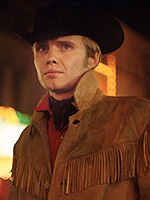 In 1969, the Academy saw fit to give “Midnight Cowboy” the award for Best Picture — a first ever for an X-rated film. Some saw the moment as a bellwether signaling a new dawn for the group, that they were developing a growing acceptance for the films that would start coming at them around this time of creative invigoration in the cinema. But was it really?
 In 1996, a fall movie preview of Entertainment Weekly arrived in my mailbox, the cast of “The Crucible” staring back at me on the cover, making clear to me this was going to be THE film of the fall. There were rumors floating within the industry that the film, based on the Arthur Miller play, could conceivably be nominated for 12 or 13 Academy Awards, and it seemed a cinch for at least a Best Picture nod.
 As film junkies, we all know it happens. Usually every single year there are one or more films the Academy passes over for Best Picture consideration, in some cases because there are, after all, just five slots available, but in others because, well — they blew it.
