 Cannes Film Festival
Opening Night
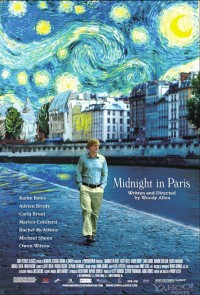
“The past is a foreign country: they do things differently there.” Nobody actually quotes L.P. Hartley in “Midnight in Paris,” Woody Allen’s often charming if largely over-explicated ode to the healing and deceiving properties of nostalgia. If they don’t, however, that could just be because a spring breeze stole the last few pages of the script at some point on the shoot of this amiably unfinished choux-pastry film, and Allen didn’t feel much like rewriting them.
Up until that point, Allen hasn’t exactly shied away from obvious references or externalized subtext — this is a film that trades in emphatic cultural and historical caricature, a picture-book approach that will delight some viewers even as it strikes others as aggravatingly twee, but one Allen commits to with the take-it-or-leave-it dispatch of a 75 year-old master working in quick-sketch mode.
Either way, the tourist-style filmmaking that surfaced in such recent Allen films as “Match Point” and “Vicky Cristina Barcelona” feels more thematically motivated in “Midnight in Paris,” a study of a character not merely a traveller in his physical surroundings, but his generational ones too. I kept wondering if the film’s narrowness of perspective was that of Allen or Owen Wilson’s Allen-substitute protagonist, and what textual difference the distinction even makes.
 I have a bit of a love-hate relationship with the BAFTA Awards. On the one hand, they can be far more daring and playful in their choices than the American Academy — this is an organisation, after all, that has handed their Best Film award to such enduring works as “The Purple Rose of Cairo,” “GoodFellas” and “Lacombe, Lucien,” while nominating the Oscar-snubbed likes of “Eternal Sunshine of the Spotless Mind” and “The Usual Suspects.”