
In Contention

Tag: This Is England

  • THE LONG SHOT: A little bit of English

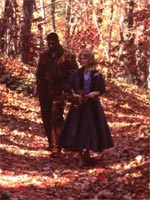
    Rosamund Pike in An EducationYesterday, while talking with one of my sane friends whose thoughts drift to film awards perhaps one day a year, the conversation turned to the BAFTAs, which announce the nominations for their 2009 film awards tomorrow.

    “The BAFTAs, they’re like the Oscars for British films, right?” she asked.

    “Not quite,” I replied. “They’re open to all films.”

    “But the British films always win, right?”

    “No, not always.” I stared into my pint. “Well, a lot of the time, yeah.”

    “Why not just make them for British films, then?”

    “Because they want to be like the Oscars.”

    “So why do they keep rewarding the Brits?”

    The conversation could have circled this way for some time, but fortunately, it was time for another round – and by the time I returned from the bar, the topic had shifted to Pat Robertson.

    My friend’s innocent but pertinent questions only grazed the surface of the peculiar identity crisis suffered by the BAFTA Awards, a longstanding institution, kindly regarded by many, that only joined the pack of Oscar precursors nine years ago. Since they did so, it’s become increasingly difficult to ascertain who they are, what they stand for in awards season.
    (more…)

  • Guy’s top 50 of the decade: #11-20

    Dennis Haysbert and Julianne Moore in Far From HeavenOkay, so I wasn’t expecting “Wolf Creek” to be the most popular inclusion — though in putting it out there, I was glad to see the number of fellow cheerleaders I have for that one. Such sharing is the principal joy of doing such lists.

    I doubt that any titles in today’s group of ten are quite as contentious, though one received a far rougher ride from some major critics upon release than I think it deserved, and has rather disappeared from view in recent years. Keen-eyed readers will also notice my list’s first overlap with Kris’s best-of-decade collective — ironically, on a film that tends to divide opinion rather than unite it.

    Several of you have asked, in comments and via email, about the films that would fill out my Top 100. I thought 50 films more than enough for me to write up, but since some readers are treating the project as the kind of playlist I had hoped for, I could be persuaded to offer an alphabetical, titles-only list of the also-rans.

    The list continues after the cut.

    (more…)

  • ‘Trainspotting’ named best British film of last 25 years

    Ewan McGregor in TrainspottingThe Observer has just assembled one of the more interesting lists I’ve seen in some time — a collective of the 25 best British films of the last quarter-century, compiled from the votes of over 60 critics, film professionals and assorted outside voices, ranging from Ben Kingsley to Peter Morgan to our friend Anne Thompson.

    Looking down the list, there are remarkably few inclusions that I really take issue with, whether I’d necessarily put them on my own such list or not — the majority of titles here are films I admire that have a legitimate sphere of influence in modern British film history, and they’ve lucked into an intelligent balance between arthouse and populist titles.

    “Trainspotting” is an obvious pick for number one, but sometimes obvious is fair. I don’t think it’s the greatest of the 25 titles listed here, but it’s an inarguably fine film that embodies the restless spirit of mid-1990s Britain from its whip-smart dialogue to its mega-selling soundtrack: its lightning-in-a-bottle blend of thrilling cinema and social document assures immortality.

    (Further discussion, and The Observer’s Top 10 list, after the cut.)

    (more…)

  • Will BAFTA stick by their own?

    I have a bit of a love-hate relationship with the BAFTA Awards. On the one hand, they can be far more daring and playful in their choices than the American Academy — this is an organisation, after all, that has handed their Best Film award to such enduring works as “The Purple Rose of Cairo,” “GoodFellas” and “Lacombe, Lucien,” while nominating the Oscar-snubbed likes of “Eternal Sunshine of the Spotless Mind” and “The Usual Suspects.”

    Their technical awards are invariably more imaginatively awarded, too — take a look at their Best Film Editing category, for example, which in recent years has crowned “Eternal Sunshine,” “City of God” and “Mulholland Drive” as winners. And they can often be counted upon for gratifying upsets, as when Pedro Almodovar pushed past Sam Mendes for Best Director in 2000, or when “Trainspotting” blindsided “Sense and Sensibility” in the 1996 screenwriting race.

    For an awards show that fancies itself world-class, however, BAFTA can be infuriatingly parochial in their selections, stubbornly rewarding their own in the face of bigger, bolder competition. I doubt most of the voters could say with a straight face that “Four Weddings and a Funeral” was the very best film of 1994, nor “The Full Monty” of 1997, but they cleaned up nonetheless.

    For the last two years running, that kind of provincialism has ruled the voting, with this year’s awards looking particularly suspect. I think “Atonement” is a fine film, but handing it their top award seemed tokenistic at best, not least when the only other gong it took was for Best Art Direction.

    It’s a trend that Variety thinks could continue this year. In an article previewing the British contenders in the acting categories, they point out that Limeys have taken 16 acting BAFTAs in the last decade, compared to seven Oscars. Needless to say, they are frequently justified. It’s fair to say that this year, several British names will be cropping up in awards lists on either side of the Atlantic, and deservedly so — particularly in the Best Actress category, where thesps like Kristin Scott Thomas, Sally Hawkins and the ubiquitous Kate Winslet are all likely to figure.

    (more…)

  • LONDON: ‘Tony Manero,’ ‘The Other Man,’ ‘Awaydays,’ ‘Seamstresses’

    Before I continue my roundup of films from the last few days of the London Film Festival, I received an email asking why I haven’t mentioned such major festival titles as “Rachel Getting Married” and “Religulous.”

    There is little point in me reviewing titles that have already opened in the States (and which Kris has already discussed, in my opinion rather accurately), with so much coverage already available. But to deal briefly with three such films, I enjoyed “Rachel Getting Married” (***) for Jonathan Demme’s loose, funky aesthetic, but found the script disappointingly glib beneath the flashy surface wit. “Religulous” (**1/2) is entertaining but not as penetrating as it imagines itself, with Bill Maher claiming to stand for doubt, but showing precious little thereof in his one-sided argument. Meanwhile, the less said (from me, at least) about the fatuous trifle that is “Nick and Norah’s Infinite Playlist” (**), the better. Moving on:

    TONY MANERO (***)

    Chile’s official Academy Awards submission is a stark, studied and ultimately rather unsettling black comedy that provides a particularly bleak spin on the familiar character of the fame-crazed non-talent. Set in the late 70’s, against the ominous (and fascinating) political backdrop of the Pinochet dictatorship, the film centres on Raul (Alfredo Castro), a dour, dysfunctional middle-aged man whose chief pleasure in life is regular viewings of “Saturday Night Fever” at the local cinema.

    Obsessed with the John Travolta character for whom the film is named, Raul begins modelling himself on Manero, going so far as to enter a Manero lookalike contest on national TV, and leading a shabby dance troupe in meticulous pastiches of “Fever” dance numbers at a local bar. However, the startling lack of moral boundaries Raul shows in his quest to inhabit Manero leads him into a spiral of theft, lies and murder.

    (more…)