
In Contention

Tag: Traffic

  • INTERVIEW: Steven Soderbergh

    Steven SoderberghToronto Film Festival

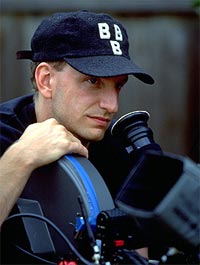
    Steven Soderbergh freely admits how much luck has played into his career, beginning with winning the coveted Palme d’Or at Cannes in 1989, the victory that launched his career and his first major work, “sex, lies and videotape.”

    “First of all the film was not supposed to be part of the competition but when another film was removed they bumped mine into that category,” he explains, “and then Francis Ford Coppola, who was supposed to be head of jury, couldn’t do it, so Wim Wenders took over. Without those two sets of circumstances would anything good have come out of Cannes for me? You have to ask yourself those things. Luck was with me, and I am fine with that. It’s knowing what to do with that luck.”

    Soderbergh is a relaxed guy in this posh hotel suite. For some reason Warner Bros. chose the Royal York Hotel for their press days, away from festival village, and a cab (or subway) ride away from the action. I don’t mind the break, and frankly I admire Soderbergh very much, so I was looking forward to meeting him and speaking with him about his film “The Informant!” (opening today) and his career.

    At this stage in his life, as he nears 50, Sodebrergh smiles and says he sees so much comedy in the world around him these days.  “You have to see the humor in things don’t you,” he asks.  “When I read ‘The Informant’ for the first time I saw it as a comedy, which many other people did not. But think about it, there have been films like this done as drama, Michael Mann’s ‘The Insider,’ which I like very much, so I chose not to go in that direction.
    (more…)

  • THE LISTS: Top 10 Steven Soderbergh films

    Steven SoderberghThis Friday sees the release in American theaters of “The Informant!,” the nimble Matt Damon-starring corporate caper which, depending on the format in which you saw last year’s “Che,” is either the 20th or the 21st feature from one Mr. Steven Soderbergh. (I say 21st, given that “Che” clearly comprises two films utterly distinct in tone and structure, but 20th does sound more momentous for the purposes of a list. Oh, well.)

    This year also marks the 20-year anniversary of Soderbergh’s game-changing debut feature “sex, lies and videotape,” which made the then 26 year-old novice the toast of Cannes and the American indie scene alike, and set the course for one of the most (delete according to taste) fascinating/diverse/infuriating/rich/productive/exciting auteur careers of the last two decades. (It also earned Andie MacDowell a deserved, everlasting defense against an increasingly hostile barrage of criticism, but that’s neither here nor there.)

    On balance — he started slower, after all — it’s a work rate that matches Woody Allen’s for consistency of output, and inconsistency of content. No filmmaker today better manages the track of juggling a “one for me, one for the studios” routine, and what keeps Soderbergh’s career so intriguing is that there’s no set law as two which of these two categories might house his stronger works.

    So it seemed a suitable point to take stock of this most idiosyncratic career, bisecting his filmography to evaluate the ten Soderbergh films that have delighted and/or enriched me most over the years. As a child growing up with ambitions of working in this industry, Soderbergh was — and, to a large extent, still is — one of my heroes, so his is a filmography that I’ve grown and changed with over time.

    (more…)

  • The new millennium Oscars?

    Viggo Mortensen in The Lord of the Rings: The Return of the KingLooking back over the previous Oscar winners for Best Picture since 2000, the start of a new century (and a new millennium), I find myself wondering sometimes what the hell the Academy was thinking.  It’s no secret I disagree with the Academy a lot, but I can also admit that when they get it right, they get it right.
    But since 2000, their Best Pic choices have run the gamut from incredibly ridiculous, “Gladiator” and “A Beautiful Mind” being just goofy, to bang on, with “The Departed” and “The Lord of the Rings: The Return of the King.”  I am told the Academy is moving in a more progressive direction, willing to take more risks, and I suppose some of these winners do just that.  But they could have gone further.

    Year by year, here’s a quick look, with some thoughts about who might have won, and who should have at least been nominated…

    (more…)

  • REVIEW: “Gomorrah” (****)

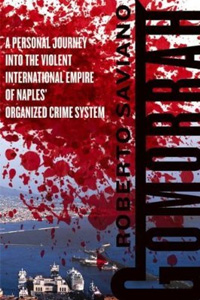
    IFC Films' GomorrahThe title “Gomorrah” is at once metaphorically apt and tonally misleading. In referencing the Biblical city destroyed by God for its sinfulness, Roberto Saviano’s best-selling non-fiction posited its own setting, Naples, as some kind of present-day equivalent.

    A city ruled and consequently ravaged by the Camorra, the notoriously brutal crime syndicate that has reportedly been responsible for over 4,000 deaths since the 1970s, it is also suffering for its sins — though in this case, the destruction comes entirely from within.

    The weightiness of the Biblical allusion, however, implies a fire-and-brimstone subjectivity that is refreshingly absent in Matteo Garrone’s thrilling remixing (adaptation is too cautious a word) of Saviano’s book. Marked alternately — and, in its best moments, simultaneously — by jolting violence, poetic kitchen-sink realism and blacker-than-black humor, this is first and foremost a work of social observation.

    As he repeatedly emphasized in his recent Q&A at London’s ICA, Garrone is more concerned with truth than tract.  Though the film lays the grim consequences of organized crime bare for all to see, his primary interest is in how such horrors complicate the everyday lives of those who live within and without the Camorra’s snare.

    The film’s social consciousness and dense, initially disorienting multi-narrative structure has earned comparisons with such recent crime sagas as “City of God” and “Traffic,” though it’s not as cinematically self-aware as the former, nor as narratively diagrammatic as the latter. (Neither term is meant pejoratively.)

    Garrone instead cites neo-realist doyen Roberto Rossellini as a key influence, and this provides a far clearer reference point: Garrone may have far busier story material here than exists in “Paisan” and “Open City” combined, but he shares Rossellini’s most academic qualities as a filmmaker, patiently following his characters through everyday domestic exchanges, and noting the physical and social textures of his story world with an anthropologist’s eye. In doing so, he further mines territory initially opened by such works as “The Sopranos” to offer up the least glamorous Mafia film ever made.

    (more…)