In Contention

Author: Guy Lodge

  • Why there’s no Gosling “dilemma”

    Kris wrote a thorough piece yesterday on the vast number of hard-working actors this year who seem to have two or more dogs in the Oscar hunt — one to which many of you responded with even more names to add to the conversation.

    In many cases, talk drifted away from serious awards potential and toward the less unusual occurrence of actors who simply had more than one film out this year: lord knows we all love Marisa Tomei, but nobody’s pretending she has more than a 0-for-2 shot at a nomination this time round.

    The name that everyone seems to be zeroing in on, however, is Hollywood’s current man of the hour, Ryan Gosling: with three prominent films to go with his endless portfolio of magazine covers, style-page paeans and blogosphere valentines, many are quick to assume the Academy will naturally fall in line, despite (or, some will reason, because of) their failure to acknowledge his career-best turn in last year’s “Blue Valentine.”

    (more…)

  • Wenders on why ‘Pina’ needs 3D

    Since seeing the film in February, I’ve been something of a broken record saying that Wim Wenders’s marvellous performance film “Pina” — which has been drawing rave responses at Toronto, and was recently submitted as Germany’s entry for the Best Foreign Language Film Oscar — single-handedly restates the case for 3D, a technology that any number of recent Hollywood blockbusters have tarnished somewhat.

    While even the most well-executed 3D narrative films have hardly depended on the gimmick for anything more than bonus effect, 3D actively enhances the audience’s understanding of the subject in “Pina,” where movement patterns and spatial deconstruction in the late Pina Bausch’s choreography are brought to the fore, replicating the immediacy and interactivity of live performance.

    (more…)

  • Tailoring ‘Tailor’

    One craft aspect I didn’t get around to praising in last week’s review of “Tinker, Tailor, Soldier, Spy” is the immaculate costuming by Jacqueline Durran — a designer with only 11 feature credits under her belt, yet one who already seems something of an institution.

    Durran is one of those rare designers capable of equal deftness and creativity in period and contemporary work: her reputation will likely forever rest on that green evening gown from “Atonement,” but she was also responsible for the highly idiosyncratic thrift-store ensembles worn by Sally Hawkins in “Happy-Go-Lucky.” (Indeed, she’s been a loyal member of Mike Leigh’s crew for the last decade.)

    Her male-centric work on “Tinker, Tailor,” meanwhile, falls somewhere in between. Set in 1973, the film is a highly specific period piece, but one whose costumes call for the subtle character focus and practicality of her modern-day work. The gentlemen’s game of British espionage calls for some dapper suiting, and the film is every bit as stylishly dressed as you’d expect one that thanks Sir Paul Smith first in its closing credits to be.

    (more…)

  • Iran’s ‘A Separation’ latest to enter Oscar race

    I’d say this was a no-brainer, but one should never underestimate the ability of countries to shoot themselves in the foot when selecting their submissions for the foreign-language Oscar. Happily, Iran has done no such thing, picking Asghar Farhadi’s critically beloved festival sensation “A Separation” as their pony this year.

    It’s a choice that I suspect will pay off handsomely. I’ll be astonished if the film doesn’t at least make the January shortlist — it should play well enough with general voters, but the executive committee should swoop in if it doesn’t. It’s not too much of a stretch to imagine this smart, humanistic marital drama going all the way to the podium, particularly with Sony Pictures Classics — unmatched campaigners in this category — steering the film.

    Ecstatic critical notices at Toronto and Telluride (Kris’s take here) are merely the newest feather in the film’s cap: it already nabbed the Golden Bear (plus Best Actor and Actress) at February’s Berlin fest, and was released to a shower of acclaim in the UK this summer. If the buzz continues to build for this late-December release, could Sony even angle for extra attention in the highly pliable Best Original Screenplay category? A far-fetched suggestion, perhaps, but I wonder.

    (more…)

  • Toronto reception takes ‘360’ back to zero

    The warning signs were there for “360.” An umpteenth reworking of “La Ronde” didn’t seem an obvious fit for either Fernando Meirelles or Peter Morgan — a pretty dispassionate writer even on his best form, he came badly unstuck last year when he veered from his fact-based template with “Hereafter.”

    Meirelles, too, is seeking to bounce back from a flop (2008’s “Blindness,” in case you’ve forgotten), and ensemble members Anthony Hopkins and Jude Law have of late been unreliable indicators of quality.

    Interest in the film seemed to hover mainly in how it might serve Rachel Weisz, whose multiple lead roles this year — including an acclaimed turn in “The Whistleblower” and a buzzy one in “The Deep Blue Sea” — have many wondering if a second Oscar nod could be on the cards. It might be, but tepid reviews following the film’s premiere suggest it won’t be for “360.”

    (more…)

  • Venice awards make a stand

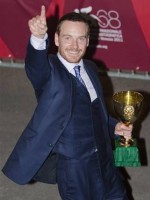
    To judge from the press reaction to yesterday’s Venice Film Festival awards, you could be forgiven for thinking that Michael Fassbender won every single one of them, plus an extra certificate for full attendance.

    That’d hardly be surprising in any circumstances, given Fassbender’s growing celebrity and the media’s reliable aversion to world cinema. Best Actor was the only major prize handed to an English-language film, after all — prompting cries of “Boring!” in many a comment board, for what in cinema is more boring than subtitles and faces you don’t immediately recognize?

    But I’m being unfair. Surely one reason for Fassbender hogging last night’s Lido headlines — with Golden Lion winner “Faust” generally relegated to a grudging postscript — is that his was one choice made by the jury that nearly everyone could agree upon, and had indeed agreed upon since “Shame”‘s first screening a week before. I’d have been equally happy with an award for quick-witted “Carnage” savior Christoph Waltz, but I’m pleased the more exciting film got indirectly honored.

    (more…)

  • VENICE: Delicious ‘Damsels’ breaks the Closing Night curse

    “Oh, Christ, that means it’s going to be shit,” wailed a friend of mine, an ardent devotee of long-dormant American auteur Whit Stillman, when the director’s new film, “Damsels in Distress,” was announced as the Closing Night film of this year’s Venice Film Festival.
    I consoled him that it needn’t be the case, but only half-heartedly. It’s an unwritten rule of major festival programming that the closing film should be, if not shit, at least aggressively mediocre — particularly at Venice, so as not to antagonize the hordes of journalists who have already departed for Toronto. God forbid they should be given a reason to stay.

    Last year’s selection was certainly the kind that benefited from being seen by as few eyeballs as possible: Julie Taymor’s ghastly adaptation of “The Tempest” was both the nadir and epitome of festival closers, its ill fortunes seemingly cast in stone even before the critics stuck the boot in. The unfailingly literate, stylish Stillman couldn’t have made a film that bad, could he? Surely not. And yet why was Venice director Marco Mueller burying it at the end? And why was the first film in 13 years from this critics’ darling not in  Competition?

    (more…)

  • VENICE: What will win… and what should

    This year’s Competition strand of the Venice Film comprised 23 films — a large-ish number by major festival standards, and yet it still feels remarkably thin.

    Admittedly, I’m viewing the field with a slight eyepatch on, having only seen 17 of the 23 films. Yet compared to last year’s lineup — where the successes ranged from higher-profile American auteur works like “Black Swan” and “Meek’s Cutoff” to more rarefied critical hits like “Silent Souls” and “Post Mortem,” with several heavily discussed possibilities in between — it feels this year like the Lido conversation has centered on the same small handful of titles for the past week.

    Last year, Sofia Coppola’s “Somewhere” was something of a shock Golden Lion winner; this year, anything that extensively discussed would be in the thick of consideration. As I wrote earlier, the extreme front-loading of the schedule, combined with the lack of breakout critical sleepers in the festival’s quiet second week, has made for a rather static buzz wave.

    (Thoughts on this year’s contenders, and my own list of predictions and preferences, after the jump.)

    (more…)

  • VENICE: ‘Texas Killing Fields,’ ‘Faust,’ competition stragglers

    After a ten-day, 23-film Venice Competition that started slowly but respectably, hit a healthy stride midway through and began wheezing with exhaustion in its closing stages, things have finally ground to a permanent halt with “Texas Killing Fields” (**), the sophomore feature from Ami Canaan Mann — daughter of Michael,  who predictably takes a producer credit here. Mann fille arrived on the Lido a mostly unknown quantity — her debut feature dropped 10 years ago, and appears to have been by precisely nobody in that time — and I’d love to say she proved to be something of a secret weapon up festival director Marco Mueller’s sleeve.

    Alas, the only weapons brandished by this color-by-numbers tumbleweed policier are those belonging to the dutifully scowling small-town cops played by Sam Worthington, Jeffrey Dean Morgan and one of Jessica Chastain’s recently minted clones — the ones to whom she now hands the second-string scripts that don’t quite merit her personal attention.

    (more…)

  • ‘Pina’ among latest entries in foreign Oscar race

    I predicted on Twitter a couple of weeks ago that Wim Wenders’ 3D dance film “Pina” would be selected as Germany’s submission for the Best Foreign Language Film Oscar, and that it could well be a surprise shortlist entry if the executive committee gives it a leg up. The first half of that forecast panned out today, and I’m sticking by the second — though Kris, I should add, thinks I’m off my rocker.

    It’s a riskily unconventional choice for Germany, which tends to play this game pretty safe — and has six nominations in the last nine years to show for it. “Waltz With Bashir” may have recently opened the door for documentary (or at least hybrid) filmmaking to get recognition in this category, but that was still a more narrative film than “Pina,” the bulk of which amounts to filmed performance art. It’s also the first 3D submission that I can recall.

    There’s no precedent for such a nomination, yet that novelty is exactly why I think the branch’s executive committee — which has made a concerted effort to bring a more adventurous streak to a frequently fusty category — might stand up for it.

    (more…)

  • VENICE: ‘Killer Joe,’ ‘The Exchange,’ ‘4:44: Last Day on Earth’

    With two days to go until wrap-up, and a host of journalists having defected to Toronto, one can feel the air not-so-slowly hissing out of the Venice balloon. And while this certainly has its upsides — it no longer takes half an hour to get an espresso as the festival café, for example — it’s difficult to escape the sense that we’re drinking the dregs of the film programme. (If I had a euro for every time I’ve heard the term “front-loaded” uttered around the Lido…)

    Or perhaps not — the festival didn’t start to a tune of critical consensus, and it’s not ending that way, either. Last night, the last of the heavyweight Euro auteurs in competition, Aleksandr Sokurov, unveiled his take on Goethe’s “Faust” — and while I thought it a mostly agonizing misstep for the Russian formalist (with a bevy of walkouts suggesting others agreed), ecstatic applause all the way through the closing credits didn’t bode well for critical consensus. Sure enough, Sight & Sound’s Kieron Corless tweeted this morning that the film is “flawless,” and online bookies appear to be knocking down its Golden Lion odds. To each his own cinema, and all that — but I’ll happily let others have mine, in this case.

    (more…)

  • London Film Festival unveils Weisz-bookended lineup

    I’m not going to spend too much time on the London Film Festival lineup, which was announced in all its glory this morning — partly because I’m still at Venice and am experiencing disturbing festival double vision, and partly because I’ve already seen a number of its choicest selections.

    As usual, festival director Sandra Hebron (in her final year steering the fest) and her team have done a stellar job of cherry-picking the hottest titles from Cannes (“The Artist,” “We Need to Talk About Kevin,” “Miss Bala”), Sundance (“Like Crazy,” “Martha Marcy May Marlene”), Venice (“Alps,” “Shame,” “Wuthering Heights”), while bulking out the programme with exciting lesser-known British and international cinema titles — world premieres, a number of them.

    204 films films will play over the course of 16 days, which, with so many inclusions already checked off my list, should afford me plenty of time to dig into more buried treasures from the lineup. As usual, I’ll be keeping you abreast of my discoveries, as well as the handful of autumn prestige titles that I’ll get my first look at there.

    (more…)

  • Beatty, Bonham Carter among 2011 BAFTA LA honorees

    I’ve never been precisely sure what BAFTA Los Angeles is, or what it is that they do — I do know that I’m wary of any group that is chaired by “So You Think You Can Dance” overlord Nigel Lythgoe, but that could be irrational on my part.
    I do know, however, that have their own annual awards, which have very little to do with the actual BAFTAs over in my part of the world — though that won’t stop many members of the “Harry Potter” cult from flipping out over the news that latter-day franchise helmer David Yates is to receive their John Schlesinger Britannia Award for Excellence in Directing. Pop the champagne corks, if you’re so inclined, while Lynne Ramsay weeps quietly in a corner. Or not, probably.

    In a semi-related win, Helena Bonham Carter will receive the British Artist of the Year award, which seems a tad random even if you include her Oscar-nominated work in last year’s “The King’s Speech.” (What have Tom Hardy and Michael Fassbender done this year, anyway?)

    (more…)

  • REVIEW: “Wuthering Heights” (***1/2)

    Venice Film Festival

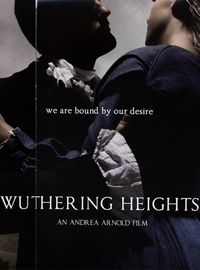
    British filmmaker Andrea Arnold would have been 16 years old when Kate Bush topped the UK pop charts with “Wuthering Heights,” a swirling art-rock ballad that stripped the Emily Brontë novel for which it is named down to a few key lines and narrative details, but evoked its grand-scale tragic romance in more intuitive terms. In its wake, a new generation of schoolgirls clutched Brontë’s words tightly to their chests.

    We can only speculate how Arnold came to the novel, but her bold, forbidding and impressively reconceptualized “Wuthering Heights” appears to take the Kate Bush course of adaptation: gutted of most of its words, with some choice ones added (I haven’t read it in some time, but I’m pretty sure Brontë didn’t write the line, “Fuck you all, cunts”), the novel serves as a theoretical starting point for an artwork that redraws the story with the most immediate sensory tools of its medium. This is a “Wuthering Heights” of weather and flesh and grass and locked eyes, one that has the simple common sense and staggering cinematic wherewithal to know that great adaptations don’t beat great writers at their own game; they play a new game entirely.

    (more…)

  • REVIEW: “Tinker, Tailor, Soldier, Spy” (***1/2)

    Venice Film Festival

    An uncharacteristically dark Venetian downpour greeted this morning’s premiere screening of “Tinker, Tailor, Soldier, Spy,” and if some flashbulbs of lightning last night hadn’t already previewed the turn in weather, I’d suspect the pervasively, necessarily drab atmospherics of Tomas Alfredson’s artful John le Carré adaptation of bleeding out from the screen and into the beyond.

    Looking for all the world as if the print has been stewed in black tea before being left to gather a few months’ worth of dust in the projection room — and that’s a good thing, I hasten to add — the film proves a happy marriage between two very different brands of understated precision: the British scholarliness of le Carré’s dense espionage lore and the icier Scandinavian calm that Alfredson brought to his breakout vampire drama, “Let the Right One In.”

    In many ways, Alfredson directs le Carré’s self-described “little gray men” of Britain’s MI6 intelligence service as they are themselves vampires of the Cold War: lurking in irremovable half-light, striking efficiently and selectively, and only notionally acquainted with the concept of sunlight, these thickly-tweeded spies appear to bear the burden of their profession as a lifelong alibi for the avoidance of intimacy, social functionality and even standard-issue conversation.

    (more…)

  • VENICE: ‘Dark Horse,’ ‘Chicken With Plums,’ ‘Sal’

    (Review of “Tinker, Tailor, Soldier, Spy” landing later this morning. Hang tight.)

    Todd Solondz has forged a loyal friendship with the Venice Film Festival across the second half of his career: all three of his last features have premiered here. Their mutual devotion somewhat surprises me, given that both Solondz screenings I’ve now attended on the Lido have seemingly been received with a measure of polite confusion by the home crowd, like an awkward cocktail party guest joining in the laughter at a joke he didn’t quite hear. Perhaps other high-end festivals simply lost their taste for his casual misanthropy; after the 1998 career peak of “Happiness,” most arthouse audiences seemed to do the same.

    They could potentially be lured back by “Dark Horse” (***), a more streamlined character comedy that, while neither as probing nor as acidly funny as 2009’s “Life During Wartime,” might just represent the warmest film Solondz is capable of making.

    (more…)

  • ‘Turin Horse’ among latest foreign Oscar entries

    This news has been hanging around for a few days, but amid the Venice hubbub, I haven’t found a moment to post it until today — though we did address it briefly in Friday’s Oscar Talk. With less than a month to go until the deadline, the pile of official submissions for the Best Foreign Language Film Oscar is slowly growing — and the most prominent of them is a title I already reviewed at February’s Berlinale.

    That film would be Béla Tarr’s “The Turin Horse,” which won the runner-up Grand Prix at the festival and just screened at Telluride this weekend, and which I described as “a stately, granite-textured and altogether rather tremendous” work in the famously austere director’s canon. Hungary has a history of choosing ballsy and utterly doomed Oscar submissions — “Taxidermia,” anyone? — but this is the first time they’ve dared to enter a Tarr opus.

    (more…)

  • REVIEW: “Shame” (***1/2)

    Venice Film Festival

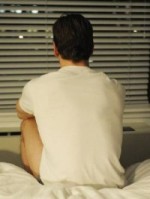
    If “Hunger,” artist-turned-filmmaker Steve McQueen’s remarkable debut feature, was a study of a body strenuously denied its fundamental needs, his satisfyingly rigorous, explicit follow-up, “Shame,” traces the very different damage done by a body over-gifted with wants.

    A sternly formalist parable on the pruning and stunting of relationships both familial and carnal in modern-day urban society, “Shame” is only for the purposes of swift summary a story of sex addiction — specifically that endured by Brandon, Michael Fassbender’s dourly handsome New York advertising hotshot. Sex, and the pursuit thereof, is what needles Brandon first and foremost, but it doesn’t take Freud (or indeed Fassbender’s own Jung from “A Dangerous Method”) to tell that it’s a displaced urge in a life whose most crippling vacancies take longer to fill than a Friday night fuck.

    “Hunger” was a film that dismantled known history and re-presented it in highly sensual, imagistic terms. The new film might be a foray into fiction for its director — working from an original screenplay by British playwright and television scribe Abi Morgan — but it performs a similar trick with psychology so embedded in the popular consciousness it would appear to offer little room for surprise.

    (more…)