In Contention

Tag: Apocalypse Now

  • Guardian does the ‘all-time greatest’ meme

    Ah, lists. The gift that keeps giving — particularly in the world of film blogging, where they provide snappy short-form content, invite numerous comments and generate multiple hits when spread across a zillion pages.

    Last year’s flood of end-of-decade countdowns surely satisfied even the most ardent list fanatic for a good few months, but with no such milestone to mark this year, The Guardian has returned to an old chestnut: the greatest films of all time.

    The gimmick they’ve used for the project (the results of which have been unfolding on their website over the past week) is to subdivide the larger collective according to genre: the 25 best comedies, romances, action films, and so on. As if any all-time best isn’t prone to enough criticism, this doubles the opportunities for debate: now we can kvetch not only about the films that made the cut (or didn’t), but whether they’ve even been categorized correctly.

    (more…)

  • When one decade isn’t enough

    Apocalypse NowAmid the plethora of “best of the 2000s” lists doing the rounds, the London Film Critics’ Circle has decided to go one (or two, rather) better.

    Since the end of this decade coincides with the organization’s 30th anniversary, they’ve rather oddly elected five standout films of the last three decades.

    Take note that it’s not a comprehensive “best films” study. The five titles have been selected from the list of previous top-category winners at their own annual awards ceremony. (“The Wrestler” was their choice this year.)

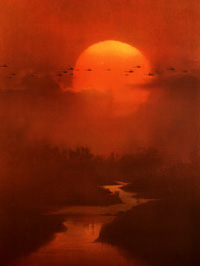
    Anyway, they made the most of their time span, going all the way back to 1979 for their #1 choice: Francis Ford Coppola’s “Apocalypse Now.” I find it hard to argue with that, personally. Anyway, for all you list junkies out there, their top five is after the cut.

    (more…)

  • THE LISTS: Top 10 Robert Duvall performances

    Robert Duvall in The Great SantiniWith “Get Low” bringing actor Robert Duvall back to the spotlight, and Sony’s purchase of the film no doubt landing him in the Oscar race for Best Actor (whether released this year or next), I thought perhaps a look back at the legend’s substantial carer and best performances might be fun.

    Since his first brilliant turn as Boo Radley, both boogey man and savior to the children in “To Kill a Mockingbird,” Duvall has been one of America’s greatest actors. A self-described late bloomer, he did not see great success until he was in his 30s, but once there he never stopped, giving us an array of brilliant performances that have made him one of the most beloved, finest actors in American history.

    Over the years I have had the chance to spend some time with Duval and it should seem obvious by now that I admire the man. Sure there have been missteps along the way — what great actor does not err — but films like “Newsies,” “The Scarlett Letter” and “Kicking and Screaming” are few and far between in a career spanning more than 50 years.

    With “Get Low,” a decent campaign should see the veteran actor with his seventh Oscar nomination, his fourth for Best Actor, and given the Academy’s wont for waxing sentimental or fixing past wrongs, they might just give it to him for having passed on the opportunity 12 years ago.

    Here are my picks for his 10 best performances…

    (more…)

  • INTERVIEW: Robert Duvall

    Robert DuvallToronto Film Festival

    Sitting down with Robert Duvall is more than a little intimidating. The man does not suffer fools, nor does he have a lot of time for small talk or stupid questions. He likes to talk, but he also likes an informed conversation.  As he nears 80, he is still a force of nature, with a powerful presence and voice that goes up and down depending on his excitement.

    Duvall and I first met in 1997 when “The Apostle” exploded out of Toronto, landing the veteran actor a much-deserved Oscar nomination for Best Actor.  The performance was a volcanic, furious portrait of a man trying to atone for his sins by building a church in the backwoods of Louisiana after killing a man in a fit of rage. For 13 years Duvall shopped the project around Hollywood, being turned down by the major and minor studios until his accountant suggested he finance the film himself.  In a position to do so, he did just that, eventually selling the film at TIFF after a famed bidding war.

    I got to know him when he invited me to spend some time with him on the set of “John Q” while it was shooting here in Toronto, the invitation coming during the 2000 Film Festival when I interviewed him a few times for his soccer picture, “A Shot at Glory,” in which he co-starred with soccer star Ally McCoist.  In the years since, Duvall has kept himself busy with great roles and performances in films such as “Broken Trail,” for which he won the Emmy Award for Best Actor, and “Kicking and Screaming,” a soccer comedy with Will Farrell that seemed like an odd choice for the actor.

    Recognized as one of America’s greatest thespians, Duvall has given an array of brilliant performances over the years, from his breakthrough, shy Boo, in “To Kill a Mockingbird” through to his mafia lawyer Tom Hagen in “The Godfather” and “The Godfather Part II” and perhaps most memorable of all, Kilgore in “Apocalypse Now.” He came into his own in the 1970s, at a time when other major talents such as Jack Nicholson, Dustin Hoffman, Al Pacino, Robert De Niro and Gene Hackman were also turning in brilliant performances, changing the face of American acting.

    (more…)

  • WEEKLY WRAP: Closing Cannes and opening ‘Up’

    Isabelle Huppert presenting the Palme d'Or at Cannes• The Cannes Film Festival wrapped up, with Michael Haneke’s “The White Ribbon” taking the gold, and “Antichrist” nabbing honors too. (The Ecumenical Jury was less impressed.)

    • In the wake of the festival, we offered an updated survey of the Oscar landscape ahead.

    • With “Up” finally hitting our screens this week, we chatted to director Pete Docter.

    • And with ten features now under their belt, this week’s list ranked the best (and worst) of Pixar.

    • This week’s Page to Screen also returned to childhood, reflecting on the cinematic possibilities of “Where the Wild Things Are.”

    • The nostalgic vein continues with a revisiting of “Apocalypse Now,” thirty years on.

    • Newly released concept art provided a faint glimpse of what’s coming in James Cameron’s “Avatar.”

    • Speaking of Cameron, a look at what went wrong with “Terminator Salvation” at the box office.

    • On a happier note, “Drag Me to Hell” proved an absolute blast.

  • ‘Apocalypse Now’ — 30 years later

    Apocalypse NowIt was 30 years ago this summer I stumbled out of the old University Theater on Bloor Street in Toronto in shock, too dazed to speak, to stunned to make human contact. Finding a bench on the street I sat down and tried to collect my thoughts.

    I was 20 years old, an acting student minoring in cinema, quite happy with my life though wondering if acting was for me. Going to movies alone was something I enjoyed, even though my girlfriend at the time did not care for this habit. My feelings were it allowed me to see the films she did not care to see, right? Though I was learning the method, it seemed movies were my first love, and not to perform in them. “Apocalypse Now” defined for me what I wanted to do with cinema and my life.

    In this case I had just seen the first public Toronto screening of Francis Ford Coppola’s long awaited film, and emerging from the theater into the summer sun I knew I had been altered in some way, that this film had galvanized me and changed my life. At the time I had no idea that the film had made this impact, of course, but I knew deep in my gut that something extraordinary had just happened.

    As a film junkie I was aware of the history of the film, and because it was Francis Ford Coppola, who had directed “The Godfather,” “The Conversation” and my favorite of all time, “The Godfather Part II,” I was more than a little anxious to see the film. Coppola could do no wrong in the 1970s, having won Academy Awards for writing “Patton” and co-writing ‘The Godfather.”  He received a Best Picture Oscar nomination for the latter and won the DGA award.  For the film’s 1974 sequel, he won his Oscar for directing.

    That same year his film “The Conversation” was also a Best Picture nominee, a remarkable achievement for the young director. He then made the decision to head into the jungles of the Philippines to bring “Apocalypse Now,” a loose adaptation of Joseph Conrad’s “Heart of Darkness,” to the screen, hoping to entice Steve McQueen, Robert Redford, Al Pacino or Jack Nicholson to take roles in the film. All declined. He eventually cast Marlon Brando as the certifiable Col. Kurtz and Harvey Keitel as Willard (who was fired a few days into shooting in favor of Martin Sheen).

    (more…)

  • POLL: The most influential films of all time, round one, part two

    Harrison Ford in Blade RunnerAnd with that, part one of the first round of voting comes to a close.  Go here for the background on our survey.

    Today, we have 10 fresh titles in the left sidebar for you to rifle through on the way to choosing THREE worthy of moving forward to the next round.  Each poll throughout the rest of round one will include 10 films and choices of up to three.  Last week’s poll was the big dive, 16 titles.  The five that moved on from there were:

    “Apocalypse Now” (1979)
    “Battleship Potemkin” (1925)
    “Citizen Kane” (1941)
    “Gone with the Wind” (1939)
    “Rashomon” (1959)

    I must say, I was sad to see “Bonnie and Clyde” left out.  The Arthur Penn classic was in the top five for a while, but it was too close for comfort on “Battleship Potemkin” as far as I’m concerned.  Literally, a final vote right at the deadline secured it a place in the top five over “E.T.: The Extra-Terrestrial.”  That says one thing to me: more people need to see it.  So to those of you who’ve never seen it, do yourself a favor: seek it out.

    No, it is not the most captivating film of all time and no, you won’t be seeing anything “new” by your standards.  But do a little digging and find out why the film has meant so much to the practice of film editing and montage and you’ll discover why its impact is probably felt as much if not more than the most seminal titles on our massive list of 66.

    Keep in mind when voting: this isn’t a popularity contest.  Don’t just rattle off votes for your favorite films (which, I imagine, has to be the main reason “E.T” was so high on the list during part one).  Take a moment to think about what the films have meant to the medium.  This list represents you, the readership, after all, so vote wisely.

    This poll will close Wednesday, April 29 at 2:00 pm EST.

  • Coming in June: Coppola’s ‘Tetro.’ Will it bring him back?

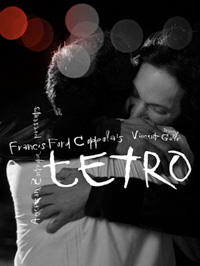
    TetroNo other director in the history of the cinema dominated a 10-year span as Francis Ford Coppola did the 1970s. Beyond directing four of the decade’s greatest films — “The Godfather”, “The Godfather, Part II”, “The Conversation” and “Apocalypse Now” — his name was on “Patton” and “The Great Gatsby” as screenwriter and “American Graffiti” as producer.

    In addition, Coppola created American Zoetrope in the hopes of building a haven for young directors to make small films free of the studios.  But he also believed what the press were saying: he was a genius who would turn whatever he touched into gold.  His ego got in the way and he alienated friend and comrade George Lucas, eventually making up with the director years later when positions of power had been reversed.

    In the years after “Apocalypse Now,” the Oscar-winning Coppola fell on hard times with one failure after another it seemed, his once golden touch lost in the jungles of the Philippines while making his Vietnam epic. There were glimmers of former greatness from time to time, such as the expressionistic brilliance of “Rumble Fish,” the Cab Calloway sequence in “The Cotton Club,” the haunting scene with Kathleen Turner and her grandparents in “Peggy Sue Got Married” and Jeff Bridges’s wonderful work in “Tucker.”

    But “One from the Heart” was a mess.  “The Outsiders” was a sentimental disaster of a film. And then there was “The Godfather, Part III,” a failure because Paramount failed the director, breaking their word after making the promise he would have complete control, refusing to pay Robert Duvall, integral to the story, half of what Al Pacino was making, forcing a major re-write (that cost…?) and casting his daughter (the poor girl) in a key role when she simply lacked the acting chops to work with that ensemble.  On and on.

    (more…)

  • Why (and how) I became a film critic

    Robert Duvall in Apocalypse NowI think this is important to state right now.  Why do Kris, Guy, Gerard, Blake, Brian and I do what we do? How did we get on this path?  Obviously, I cannot speak for them, but here’s my story and some insight into why I love film, and how deeply that love goes.

    Though my education on film began at the age of seven in a small Ontario village called Seagrave (where I live now), the actual “eureka” moment came in August of 1979, 10 minutes after walking out of the first Toronto showing of Francis Ford Coppola’s “Apocalypse Now.” For the previous three hours I had sat and watched Coppola’s surrealistic exploration of Vietnam, its images haunting me throughout. I was numb as I sat down on the street bench a few feet from the theater entrance.

    At the age of 20, I was an acting student hoping to become a film actor, but at that moment I had been galvanized in some way I could not fully explain. For years I had consumed all things cinema, seen everything I could, set my alarm to watch the late, late shows and wrote my own reviews, which I kept in a large binder.  Somehow I knew right then that acting was not for me (I was never really any good).  I wanted to write about film.

    (more…)

  • THE LISTS: Top 10 films of the 1970s

    (from left) Dustin Hoffman and Robert Redford in All the President's MenWhen critics and historians of the cinema sit down to discuss uh, cinema, the conversation almost always turns to the great decades in movie history. And n nearly conversation I’ve been a part of, the 1970s reigns supreme as the single decade of brilliance.

    It was a time of enormous artistic growth for film, as up-and-coming directors grabbed Hollywood and ran with it, merging their love for cinema and the works of John Ford, Billy Wilder, and Elia Kazan (among others) with their own fresh ideas. And the releases of “Bonnie and Clyde,” “The Graduate” and “2001: A Space Odyssey” had already announced the arrival of the new American cinema by the end of the 1960s.

    But the next 10 years brought us Francis Ford Coppola, who exploded onto the scene wit four brilliant works and mentored many of the younger directors of the time. Steven Spielberg would earn the name “whiz kid” for his incredible visual storytelling gifts that would eventually make him one of the greats of all time.

    Martin Scorsese was making unsettling character studies that alarmed the studios but thrilled critics and actors, who felt challenged by his work. Woody Allen evolved from comedy writer, to comedic actor-director, to world-class filmmaker by the end of the decade. And Oscar winning film editor Hal Ashby would make a name for himself behind the camera with a swath of works.

    Sidney Lumet, William Friedkin, Peter Bogdonavich, Bob Fosse, Roman Polanski, Bernadro Bertolucci, Alan J. Pakula, Milos Forman, and Michael Cimino would all leave their mark in the 1970s and continue directing to varying degrees of success in the 1980s and beyond.

    Society heavily impacted the work as films about the war in Vietnam dominated much of the 70s’ final years. Watergate raged mid-decade. Stories were plucked from the headlines and committed to celluloid. Movies were exciting, well made, and interesting. Films like John Frankenheimer’s “Black Sunday,” Milos Forman’s “Hair” and Don Siegel’s “The Shootist.”

    Big budget disaster films enlivened the trade, along with movies about divorce, drug addiction, mental illness, organized crime, vigilantes, prostitution, and countless other topical issues that were explored with great courage on screen. I found narrowing it down to a 10 best list to be nearly impossible and enormously frustrating because some the films left off the list should really be here. But that’s just a testament to the era’s resilience.

    (more…)

  • INTERVIEW: Dennis Hopper

    Dennis HopperThe voice on other end of the line sounds nothing like the many wild and somewhat insane characters Dennis Hopper has portrayed throughout his career, which now spans more than 50 years. This is a man who has walked with James Dean (his mentor), John Wayne (who affectionately labeled him a “pinko”) and Francis Ford Coppola.

    As a director, Hopper was part of the movement that would bring the New American Cinema into play, closing the 1960s with his biker flick “Easy Rider,” and though he won prizes at Cannes and was hailed around the world, he has rarely directed since.

    Hopper portrayed perhaps the single most terrifying character in a film with his seething work as Frank Booth in David Lynch’s “Blue Velvet.’  The same year he was nominated for an Oscar for his work as the town drunk seeking redemption with his son through basketball in “Hoosiers.”  Even Hopper was stunned that the Academy failed to nominate him for Lynch’s film instead.  He remembers roaring, “HOOSIERS?  You’re kiddin’ me, man” when being told of the nomination. “Blue Velvet” was a film the Academy obviously feared, allowing a single nomination to David Lynch for his dreamy, surrealistic direction of the classic.

    Currently Hopper is celebrating the upcoming DVD release and a low-key Oscar campaign for Best Supporting Actor in “Elegy,” a fine little film in which he portrays the poet best friend of Ben Kingsley’s introspective professor — Sir Ben as Hopper calls him.

    “I was a big fan of Isabel’s [Coixet, the film’s director] work”, he explains. “So when my agent called and said I had an offer to be in a film with Sir Ben Kingsley and Penelope Cruz, I jumped in. It was a very human story, the sort of film I like to see, and being a big fan of Philip Roth helped me along. The film had comedy and tragedy, and most of all characters I think we can all identify with.”

    (more…)

  • Some suggestions for Special Edition DVDs

    United Artists' Heaven's GateEvery week, much to the delight of my children, several packages arrive at my door containing DVDs, movies that are not yet released in the home market that I am expected to review. Tough work, ain’t it? Seriously, I would do what I do just for the free movies.

    That said, I have followed the history of DVD very closely and the manner in which several studios double dip with their releases. Most recently we have “The Godfather Restoration,” which is superb, but represents the third such DVD release for these films. The first came in 2001, The Godfather Trilogy, and then each film was released on its own so folks not wanting Part III could pass (sorry Kris).

    Another film that went through many incarnations before the Ultimate Collector’s Edition was “Blade Runner,” though last year’s final release should be the final release. Francis Ford Coppola’s “Apocalypse Now” went through several variations before coming to us in the ultimate edition, minus, of course, “Hearts of Darkness,” the splendid doc about the film’s making. What might have been cool is to see some footage of Harvey Keitel as Willard (if it exists).

    But it all leads me to wonder which films out there deserve a double disc/special edition release.

    (more…)

  • Walking away with it

    Tom Cruise in MagnoliaI remember slipping into a small theater in 1987 to see something called “Street Smart,” the new Christopher Reeve film that I had no particular interest in, to be quite honest. Two hours later I emerged knowing two things: Morgan Freeman was a brilliant actor, and he would be nominated for an Academy Award.

    In a rather lacking movie, Freeman was terrifying as Fast Black, a vicious pimp who sees in a young reporter the chance to get off of a murder rap. At one point in the film he holds a pair of scissors to the eye of one of his hookers and invites her to choose which eye she is going to lose. It was an astounding performance that launched the actor’s career, earning him awards from the Los Angeles critics, New York critics and National Society of Film Critics…as well as that Oscar nod I predicted.

    Supporting performances can often be the heart and soul of a film, anchoring the picture and actually elevating the work of the lead actor. Can you imagine what “The Wizard of Oz” would be without the perfection of the cast surrounding Judy Garland, or “The Godfather” without the magnificence supporting Marlon Brando and Al Pacino? Nor can I, and in fact, through the years, supporting performances have become more and more important, certainly earning more press, with lead actors once unwilling to be promoted for an Oscar in these “lesser” categories now only to be happy to do so.

    Tom Cruise, arguably the biggest actor on the planet in 1999, gave his finest performance in a supporting role in “Magnolia” and somehow — SOMEHOW — lost the Oscar to Michael Caine. Jack Nicholson has gone the supporting route many times, winning an Oscar for his work in “Terms of Endearment” and earning nods for “Easy Rider,” “Reds” and “A Few Good Men,” though he was criminally snubbed for “The Departed.”

    Meryl Streep has become no stranger to supporting roles, earning an Oscar nod for “Adaptation” in 2002 (she too should have won) and certainly turning heads for a should’ve-been-nominated turn in “The Manchurian Candidate.”

    Sometimes an actor in a supporting role can dominate the film, as we saw this summer with Heath Ledger in “The Dark Knight.” In “Apocalypse Now” the film actually peaks with Robert Duvall’s napalm-loving surfer, not Brando’s deranged Colonel. Like Javier Bardem in “No Country for Old Men,” Duvall so dominated the screen when he was on it. In just a few scant scenes…we could never forget him.

    The work of the supporting actor, the “job,” so to speak, may seem to be support of the lead actors, secondary figures in the canvas of other artists. But what we see more often than not is their support of the story, and in many cases, their rise to infamy as a result.

    Have your say. What are some of the most sensational supporting performances in film history?

  • Robert Duvall: the screen’s greatest, ignored too often

    Robert Duvall“There are two greats in America right now.  The first is Brando, whose best work is behind him, and the other is Robert Duvall.”

    Legendary acting guru Sanford Meisner said those words in the 1960s.  He trained Robert Duvall at the Nieghborhood Playhouse in the late 1950s and early 1960s before the actor’s screen debut in “To Kill a Mockingbird” as the children’s boogey man and savior Boo Radley. In the years since, Duvall has given some of the greatest performances captured on film, yet stands in his seventies now with just a single Oscar to his credit, a Best Actor trophy for his country and western singer in 1980’s “Tender Mercies.”

    There are many, myself included, who consider Duvall the most purely gifted actor in American cinema.  He’s always lacked the leading looks to harness the roles often awarded to other players. Instead he has toiled quietly yet effectively as a character actor, often playing second fiddle to bigger stars and stealing the film more often than not.

    (more…)

  • Cimino and Oscar

    Lots of talk about deserving (and undeserving) directors in the Oscar chatting this week. Let’s take it to specifics with one race that stood out to a few commenters.

    It seemed in the spring of 1979, following the Oscar ceremony, there was a sense in the industry that if the Academy could have taken back their votes — which saw “The Deer Hunter” and director Michael Cimino winning for Best Picture and Best Director — they would have done so.

    The first screenings of “The Deer Hunter” had begun the summer before, when executives saw the film and were stunned by its raw, visceral power, leading to buzz within the business that a masterwork had been born. Execs at United Artists sought out Cimino and inked him to a contract to make a film before before the release of the Vietnam epic, a move they would live to regret.

    By the time the film was released in December of 1978, word of mouth was so strong Cimino seemed to be defying anyone to dislike the effort or say anything negative about it. Film critics awarded it best picture and director honors, except those in Los Angeles who gave “Coming Home” highest marks, while Cimino won the directing award. Nominated for nine Oscars, “The Deer Hunter” won five, adding Best Supporting Actor (Christopher Walken), Best Sound Mixing and Best Film Editing to the aforementioned Best Picture and Best Director trophies.

    (more…)

  • Great Oscarless directors

    Alfred Hitchcock, Charlie Chaplin, Howard Hawks, Stanley Kubrick, Preston Sturges, Ernest Lubitsch, Hal Ashby, Alan J. Pakula, Sidney Lumet, Spike Lee, Paul Thomas Anderson.

    Collectively they represent some of the greatest directors in the history of the cinema, and together they share one rather unbelievable fact…not one of them is a Academy Award winner for Best Director.

    Each has the distinction of nominee, of course.  But to think that filmmakers such as James Cameron (The King of the World, remember?), Richard Attenborough, Ron Howard, Sir Carol Reed (for “Oliver,” man?), John G. Avilden, Michael Cimino, Robert Benton, Robert Redford, Robert Wise (for “The Sound of Music??”) and George Roy Hill, to name a few, have Oscars on their mantles and the giants above do not is simply insane to me.

    (more…)

  • Will Francis Ford Coppola ever see an Oscar again?

    The first time I saw “Apocalypse Now” I staggered out of the theater stunned by what I had seen on screen. I remember sitting on Bloor Street with this burning need to tell people what I just witnessed, what I had seen and how profoundly it had galvanized my soul. At that moment I began writing about film, giving up the dream of being an actor and becoming a critic-historian. Francis Ford Coppola altered the course of my life, and his films have changed the way I see and think about movies.

    (more…)