In Contention

Tag: City of God

  • Guy’s top 50 of the decade: #41-50

    Tang Wei in Lust, CautionHere we go. I’ll reserve a more complete intro for the final part on Wednesday, but a quick word on the compilation of the list that will unfold over the next five days.

    When, several months ago, I began the long, occasionally maddening but not altogether unpleasant process of sifting out the best films of the last ten years, I thought reducing a decade’s work of high-quality cinema – the first time I’ve really been of an age to attempt such an exercise – to a mere 10 films seemed an impossibility.

    So I rather naively decided that a Top 50 – the equivalent, if you will, of a decade’s worth of Best Picture nominees (though not equally allocated by year) – seemed a less punishing task. More room for the films I love, less fretting about inclusions, happy days.

    And then a funny thing happened.

    (more…)

  • And the lists just keep on coming

    Russell Crowe in Master and Commander: The Far Side of the WorldBetween now and December 31, we’re probably going to read more “best ____ of the 2000s” lists than we know what to do with. But we like lists, don’t we? And this only happens once every 10 years. Let’s not get blasé already.

    So with the floodgates already open on “films of the decade” talk, there’s plenty more to fuel the discussion. Paste Magazine has a nicely balanced Top 50 that puts “City of God” in pole position, and wins extra cinephile points for putting Claire Denis alongside Peter Jackson in the top 10.

    Meanwhile, The Times supplements their own collective with a (impossibly formatted) selection of Top Tens from assorted British industry figures, including Julian Fellowes and Richard Eyre. “An Education” scribe Nick Hornby wins top marks from me for a list that includes “Lantana,” “The Beat That My Heart Skipped” and “I’m Not There.”

    But for my money, no list I’ve seen so far is as rich and well thought-out as Telegraph critic Tim Robey’s personal Top 100 — a corrective of sorts to the “films that defined the decade” list he compiled with his Telegraph colleagues, which took some flak on the web, these pages included.

    (more…)

  • Searching for Oscar meaning in IMDb’s top 15 of the millennium

    IMDbOver at IMDb there is a new feature called “The Power of Film” (lofty title, that), which has listed out the top 15 films of the millennium as voted on by IMDB users, i.e., fans, the public, regular folks.

    The IMDb top 250 is an ever-changing mish-mash of high-,middle- and low-brow entertainment that always makes for an amusing cross section of what the public thinks of cinema from one moment to the next.  “The Godfather” and “The Shawshank Redemption” trade off the #1 spot consistently, save for the spike of interest in this major new release or that, films that insinuate themselves high early on but inevitably fall down the list as more viewers get a look.

    The new feature, unsurprisingly, features Christopher Nolan’s “The Dark Knight” at the top, but strewn throughout is a diverse mixture including the “Lord of the Rings” triology, German Oscar-winner “The Lives of Others” and Pixar entries “WALL-E” and “Up.”  And speaking of Oscar, MTV’s Terri Schwartz has spun her wheels on the idea that, with a larger slate of Best Picture possibilities, the IMDb list could prove an omen for the potential blend of eclectic and entertainment cinema so many expect the Academy’s line-up to resemble from this year forward.

    (Schwartz’s thoughts and IMDb’s list after the jump.)

    (more…)

  • Oscar nominations that made me cheer

    Over the years I have been watching and studying the Oscars in earnest, since about 1974 (age 13).  It has always been a nice surprise when an unexpected actor, director or film made the cut to the final five.  It’s a special kind of high.

    I remember reacting with surprise and genuine happiness when Giancarlo Giannini was nominated for Best Actor for his performance in “Seven Beauties,” but even better was the inclusion of Lina Wertmuller, the film’s director (becoming the first woman ever to receive a designation in the directing category — nd for a foreign language film, no less).  I loved the film, so this put me over the moon, even though Giannini’s nod likely cost John Wayne his nomination for “The Shootist.”

    In 1997 it was Atom Egoyan, nominated for Best Director and Best Adapted Screenplay for “The Sweet Hereafter,” a brilliant study of grief in small town Canada; the L.A. Times named it the best film of the year but up here in Canada, we never expected Oscar attention for Atom and his film.

    I was equally thrilled when Martin Scorsese was rewarded with a nomination for his direction of “The Last Temptation of Christ,” a bold, passionate film made from the heart by one of our greatest directors.

    (more…)

  • Is ‘Gomorrah’ this year’s ‘City of God’?

    Since May, based on nothing but a gut feeling following the film’s Cannes reception, I’ve been predicting that Matteo Garrone’s astonishing “Gomorrah” would score nominations for Best Director, Adapted Screenplay and Film Editing — in addition to a Best Foreign Language Film nod. (Garrone has recently slipped from my Best Director predictions, but he’s still on my radar.)

    It may seem a far-fetched proposition, but clearly I’m not alone in thinking it’s possible. The news this morning that distributor IFC Films has shifted the film’s L.A. release to December, in order to qualify for main-category Oscar consideration, is a clear vote of confidence. One wonders if they have “City of God” at the back of their minds — a similarly violent, kinetic foreign-language study of urban social decay that stunned pundits in 2004 when it scooped four Oscar nominations, including Best Director and Best Adapted Screenplay.

    It’s a slightly different situation, of course — “City of God”‘s amazing haul was surely partly motivated by the Academy’s embarrassment over its exclusion the previous year from the foreign-language race. “Gomorrah,” however, is eligible for the gold in that category this year, so the Academy may feel that would be sufficient recognition for it.

    Still, we all know how the directors’ branch of Academy likes to throw arthouse curveballs now and then (in addition to Fernando Meirelles, think Mike Leigh and Pedro Almodovar), while I think a Best Adapted Screenplay nod looks increasingly likely given this year’s sparse slate of contenders in that category. (The Hollywood Reporter agrees that the film’s writing may represent its best shot.)

    (more…)

  • Foreign film watch: 67 entries, but how open is the race?

    Since my last update on the Best Foreign Language Film race, a further ten latecomers have entered films, bringing the number of entries to a record 67. (The full, updated list is here.)

    The new names in the derby are Afghanistan (“Opium War”), Albania (“The Sorrow of Mrs Schneider”), Azerbaijan (“Fortress”), Egypt (“The Island”), Georgia (“Mediator”), Kazakhstan (“Tulpan”), Latvia (“Defenders of Riga”), Lebanon (“Under the Bombs”), Ukraine (“The Illusion of Fear”) and, interestingly enough, the United Kingdom (“Hope Eternal”).

    The last-named title proclaims itself the first ever Welsh-African production, and features dialogue in seven languages — including Swahili and Afrikaans. Beyond that, I haven’t a clue what it is. Incidentally, I saw the Kazakhstani entry “Tulpan” this afternoon, and will review it in my next London Film Festival roundup.

    Reflecting on the race in his Notes on a Season column, Pete Hammond declares the race “wide open,” but I’m not sure I agree. After all, the new voting system — whereby the foreign film committee votes on six of the shortlisted titles, after which a smaller executive will add a further three — is specifically designed to ensure that the most acclaimed (and most expected) films make the cut.

    Under this system, you can bet a film like “4 Months, 3 Weeks and 2 Days” would have made the shortlist last year. Ditto “City of God” in 2002. Consequently, it seems safe to say that even if the general committee snubs high-profile critics’ favourites like “Gomorrah” or “Waltz With Bashir,” the executive committee will get them on the shortlist.

    (more…)

  • REVIEW: “Gomorrah” (****)

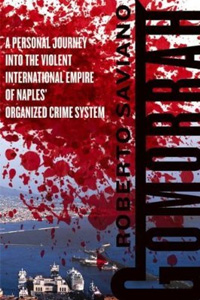
    IFC Films' GomorrahThe title “Gomorrah” is at once metaphorically apt and tonally misleading. In referencing the Biblical city destroyed by God for its sinfulness, Roberto Saviano’s best-selling non-fiction posited its own setting, Naples, as some kind of present-day equivalent.

    A city ruled and consequently ravaged by the Camorra, the notoriously brutal crime syndicate that has reportedly been responsible for over 4,000 deaths since the 1970s, it is also suffering for its sins — though in this case, the destruction comes entirely from within.

    The weightiness of the Biblical allusion, however, implies a fire-and-brimstone subjectivity that is refreshingly absent in Matteo Garrone’s thrilling remixing (adaptation is too cautious a word) of Saviano’s book. Marked alternately — and, in its best moments, simultaneously — by jolting violence, poetic kitchen-sink realism and blacker-than-black humor, this is first and foremost a work of social observation.

    As he repeatedly emphasized in his recent Q&A at London’s ICA, Garrone is more concerned with truth than tract.  Though the film lays the grim consequences of organized crime bare for all to see, his primary interest is in how such horrors complicate the everyday lives of those who live within and without the Camorra’s snare.

    The film’s social consciousness and dense, initially disorienting multi-narrative structure has earned comparisons with such recent crime sagas as “City of God” and “Traffic,” though it’s not as cinematically self-aware as the former, nor as narratively diagrammatic as the latter. (Neither term is meant pejoratively.)

    Garrone instead cites neo-realist doyen Roberto Rossellini as a key influence, and this provides a far clearer reference point: Garrone may have far busier story material here than exists in “Paisan” and “Open City” combined, but he shares Rossellini’s most academic qualities as a filmmaker, patiently following his characters through everyday domestic exchanges, and noting the physical and social textures of his story world with an anthropologist’s eye. In doing so, he further mines territory initially opened by such works as “The Sopranos” to offer up the least glamorous Mafia film ever made.

    (more…)

  • Garrone on ‘Gomorrah’: “It’s not real, but it’s true.”

    Viva Italia, is all I have to say. In the past 48 hours, I’ve been lucky enough to see the two films that have widely been heralded as marking a renaissance for the Italian film industry, a world cinema titan that had been lying dormant for a couple of years. No more.
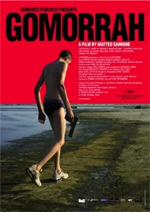
    One of them is Paolo Sorrentino’s blistering, return-to-form political thriller “Il Divo,” which I will discuss closer to its appearance at the upcoming London Film Festival. The other is Italy’s submission for the Best Foreign Language Film race, “Gomorrah.” Possible masterpieces, both of them — and as solid a case as any for abolishing the silly “one film per country” rule that so plagues this problematic Oscar category.

    Walking out of London’s Institute of Contemporary Arts after Sunday’s UK premiere of “Gomorrah,” which was followed by a lively Q&A with director Matteo Garrone, I couldn’t shake the feeling that I might have just met one of next year’s multiple Academy Award nominees.

    Far-fetched, I know, but the film’s achievement is that staggering and far-reaching. Under the foreign-language committee’s new voting system, a nomination in that category should, by rights, be a slam-dunk, while Best Director and, particularly, Best Adapted Screenplay nominations are, to my mind, well within the realm of possibility. I will resist further gushing until I post a proper review in the next day or two, but for now, I want to share some of the thoughts Garrone offered at the Q&A.

    A modest, thoroughly disarming presence, far younger in demeanor than his 40 years suggest, Garrone himself seems a little bewildered by the film he has made and the discussion it has wrought. For those who don’t know, “Gomorrah” is a documentary-style examination of the Camorra crime syndicate that terrorizes Naples, based on the bestselling non-fiction expose by Roberto Saviano.

    (more…)

  • ‘Gomorrah’ is in — do we have a frontrunner?

    Well, as speculated a few hours ago, Italy has announced their submission for Best Foreign Language Film. And, to the surprise of precisely nobody, they have gone with Matteo Garrone’s “Gomorrah” — the sprawling, breathlessly acclaimed portrait of Naples mafia life that was arguably the breakout hit of May’s Cannes festival. (It received the runner-up prize.)

    It’s almost impossible to declare frontrunners in this category, given the foreign film committee’s wilful voting habits. Still, it’s safe to say that “Gomorrah” is the most anticipated and discussed contender to officially enter the race so far.

    Whether it will prove too bleak and violent for the blue-hair voters is difficult to predict — they acknowledged the edgy brilliance of “Amores Perros” in 2001, but since then, they’ve been unable to stomach the likes of “City of God” or last year’s “4 Months, 3 Weeks, 2 Days.”

    Based on the unanimously good word for the film, I’ve long been predicting that “Gomorrah” could even score breakout noms in the Best Director and Adapted Screenplay categories (a la “City of God”), but that was when I imagined Italy picking the more parochial “Il Divo” as their foreign-language entry. As it is, they’ve chosen the title with more crossover potential — it’ll be interesting to see what momentum Garrone’s film can build from its New York Film Festival screening.

    For my part, I’m seeing the film at its UK premiere this Sunday — hopefully to be followed by a Q&A with Garrone. I can’t wait.