Tag: Mystic River
-
PAGE TO SCREEN: “Shutter Island” by Dennis Lehane
 Deep into Dennis Lehane’s 2003 novel noir “Shutter Island,” there’s a wonderfully telling exchange between the two central characters. Reflecting on the gothic heights to which their situation has spiralled, one observes, “It’s all a bit Grand Guignol, don’t you think?” His partner’s reply: “I don’t know what the fuck that means.”
Ostensibly a nod to class difference within the narrative, it’s also arguably a tongue-in-cheek dig at the novel’s self-reflexive straddling of high and low culture. “Shutter Island,” of course, is Grand Guignol of the highest order, but with an acute awareness of the term: steeped in references to throwaway pulp fiction and lurid 1950s B-movies, but written with the literary discipline and deference of a serious novelist.
Needless to say, Boston-ish setting aside (and even then, “Shutter Island” goes to significant dramatic lengths to distance itself from the city), the novel is a very different beast from the two Lehane titles successfully given the screen treatment in recent years. For all their whodunnit trappings, “Gone Baby Gone” and “Mystic River” traded largely in earnest authenticity; “Shutter Island,” by contrast, hinges on artifice.
Lehane has apparently stated his admiration for Graham Greene’s alternation between “novels” and “entertainments”: this, carefully wrought and quotation mark-enclosed as it is, is plainly his idea of a pure entertainment, a funhouse, a ride.
-
The new millennium Oscars?
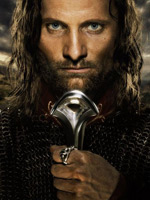 Looking back over the previous Oscar winners for Best Picture since 2000, the start of a new century (and a new millennium), I find myself wondering sometimes what the hell the Academy was thinking. It’s no secret I disagree with the Academy a lot, but I can also admit that when they get it right, they get it right.
But since 2000, their Best Pic choices have run the gamut from incredibly ridiculous, “Gladiator” and “A Beautiful Mind” being just goofy, to bang on, with “The Departed” and “The Lord of the Rings: The Return of the King.” I am told the Academy is moving in a more progressive direction, willing to take more risks, and I suppose some of these winners do just that. But they could have gone further.
Year by year, here’s a quick look, with some thoughts about who might have won, and who should have at least been nominated…
-
Kevin Bacon makes the rounds
 As “Frost/Nixon” continues to pop up as a formidable guild contender this awards season, I must say, despite my personal appreciation for the effective drama, I’m a little surprised. It isn’t the expert craftsmanship of “Slumdog Millionaire” or the creative explosion of “Synecdoche, New York,” obviously, but it is a solid, well-constructed piece of work nonetheless. And it is apparently reaping the benefits of being one of the few films of the year that is simply easy to watch.
Well, one of the elements from the film that stood out to me more than any other was Kevin Bacon’s subdued performance as Nixon chief-of-staff Col. Jack Brennan. Bacon is probably the ultimate “Wall of Shame” actor for the Academy, still waiting on his first nomination despite two decades of solid, effective work. In a sense, his career is an interesting mirror of the film he stars in this year, a fine-tuned machine that isn’t overly miraculous but is inarguable all the same.
Bacon remains one of my all time favorite interviews. Probably my favorite interview. We spoke once nearly five years ago when he was campaigning for “The Woodsman,” a 2004 drama starring Bacon as a pedophile trying to cope in society that should have earned the actor more kudos than it did. What was supposed to be a 20-minute discourse turned into nearly an hour of discussion, and for me, just a kid in college hammering out a piece for another outlet, it was the bee’s knees. He couldn’t have been cooler or nicer, offering plenty of advice for a film school grad hoping to poke his way into the business some day.
With that in mind, I was happy to stumble upon this Daily Telegraph interview with the actor, who hasn’t received a lot of press for his work in “Frost” this year. Less an example of good writing from journo Nigel Farndale than a case study in letting the subject tell the story, it does a wonderful job of casting the Hollywood particulars to the periphery in favor of concentrating on Bacon the man more than Bacon the actor.
There are plenty insightful asides regarding Bacon’s family life, his philosophy of raising children, his insistence on living away from the fray in New york, etc. Farmdale scatters the piece with this nugget or that regarding roles in “Footloose,” “JFK,” “Mystic River” and “A Few Good Men,” but mostly, its a character study of Bacon himself. There was, however, this interesting remark concerning his adeptness at portraying military types on the screen that I thought I’d spotlight:
“I don’t think I could cut it in the army but, hey, it was never going to arise. I’m an actor. I play marines. I’ve had them say ‘you could do it’ and I say ‘trust me, I could not’. I don’t think I have the marine mentality.”
He gesticulates with his fork, conducting the conversation with it. ”But I don’t question my manliness. That’s not something I struggle with. One of the fun things about being an actor is that you can put yourself in situations where you test yourself.”
As we all do if given the chance, Farndale asks about the infamous “Six Degrees of Kevin Bacon,” a game I should have to explain to anyone reading these words, but in case I do, click here. Bacon’s response was inspired, I thought:
Take me out of it and the idea of connectivity is kind of beautiful. A powerful, small world idea that says that whatever you or I are doing will affect other people down the road, for good or ill.
It’s a great interview. Check out the rest here.
-
Sean Penn on course for Oscar #2, and he deserves it
 With two of the major critics awards won, actor Sean Penn seems to be headed for his second Academy Award for Best Actor for his brilliant work in “Milk.”
Penn’s work through the 1980s and 1990s defined him as one of the greatest actors of his generation (if not the best) and certainly on the level with Marlon Brando, Jack Nicholson and early Robert De Niro. I find it incredible to see him today in “Fast Times at Ridgemont High” and try to connect that actor and character to anything he has done in his career. It gives a very clear example of his seemingly limitless range.
His first Oscar nod came for “Dead Man Walking” in 1995, with only the Independent Spirit Awards giving him the grand prize. All the others went with Nicolas Cage in “Leaving Las Vegas,” a great performance to be sure, but for my money Penn was stronger. Four years later he was something of a surprise nominee for “Sweet and Lowdown,” a fine piece of acting, but a kind of out-of-nowhere nomination, as was his third nod for “I Am Sam,” which I still struggle with watching; it represents the only time I can “see” Penn acting.
“Mystic River” won him his first and only Oscar, and I stand by it as a stunning example of the craft. I agree with The New York Times, which declared it one of the great acting performances of all time. Bill Murray was a popular choice that year for “Lost in Translation” and no argument, he would have been a most worthy winner. But I am pleased Penn won. For me, he captured the anger and rage of the character, as well as the disappointment and hurt over something so precious as a daughter, now lost. There was shame in his eyes for not having protected her, and to make up for that in his mind, he avenges her.
-
Remembering cinema’s Bush years
 As the world prepares to bid farewell to George W. Bush following tomorrow’s election, I came across an apt article in the new edition of Sight and Sound, in which critic Michael Atkinson evaluates how the Bush presidency affected American film, and how the period might be interpreted by future film historians. As always with S&S pieces, it’s not available online, but it’s an insightful (and occasionally contentious) piece worth tracking down if you want to give a cinematic spin to your sense of closure.
As has been noted before, Atkinson believes that the sense of public panic and political insecurity that characterised the presidency has been most clearly manifested in the resurgence of the superhero movie:
It’s easy to imagine that in a decade or two, the Bush years will be viewed as the discouraging ebb in the pop-cult continuum when everyone from eight to 80 was excited about ‘super powers’ … Clearly, a preadolescent bout of night terrors required succour, producing a trend that’s bound to date as badly as the Spielbergian blue light and Rambotics of the 1980s.
This is the kiddie-escapist paradigm tinctured with memories of 9/11; today, the vigilantes in primary-colour tights we hanker for don’t confront the conjectural fears of the Cold War, but the all-too-tangible, falling-bodies verities of the new millennium. In “The Dark Knight,” Christian Bale’s Batman has to wrestle, as the Bush administration didn’t, with the necessity of being perceived as evil for the sake of what’s construed as the common good.
-
Is Dennis Lehane the new Jane Austen?
 Okay, perhaps not. Maybe more like the new Elmore Leonard. But the quintessential Boston writer is clearly Hollywood’s favourite author du jour. After the adaptations of “Mystic River” and “Gone Baby Gone” reignited the careers of Clint Eastwood and Ben Affleck, respectively, it seems the studios are snapping up his titles faster than he can write them.
I hardly need to remind you about a little film coming up next year called “Shutter Island,” based on Lehane’s 1950’s-set suspenser. With Scorsese hoping for lightning to strike twice for him in Beantown, and Leonardo DiCaprio, Mark Ruffalo, Max von Sydow and Michelle Williams just some of the names on board, who isn’t excited about that?
With less fanfare, but interesting nonetheless, we also have an upcoming adaptation of Lehane’s brilliant short story “Until Gwen,” with Josh Olson, the Oscar-nominated writer of “A History of Violence,” taking both scripting and directing duties on the project.
Now Variety reports that the latest filmmaker to take on Lehane is Sam Raimi. Columbia has got in early and nabbed the author’s yet-to-be-published “The Given Day” for Raimi to direct.
-
Sean Penn might be the greatest living actor
 After writing my piece on the recent Best Actor winners and non-winners I was rather shocked at the number of comments on Sean Penn’s astounding performance in “Mystic River,” a performance I believe to rank with the best of Brando, Duvall, Nicholson and De Niro.
I love debate, I love to talk film, and best of all I love debating the merit of performance as I studied method acting in the hopes of becoming an actor before I fell in love with film criticism.
For the record, I was terrible, but remained fascinated by those who could do it, and Mr. Penn might just be the very best at what he does. Far too often his off-screen antics have over-shadowed his brilliant work as an actor, and while he has mellowed in his later years, he is still every bit as surly and rebellious as he ever was, though as a father and husband perhaps he understands the need for boundaries these days. I had the pleasure of interviewing Penn at the Toronto International Film Festival a few years back, and always believe that there should be no trace of the characters he portrays in his films for him to be judged a great actor. There were none. The person sitting across from me, relaxing when he seemed to know I was here to discuss acting as an art and craft, was not anyone I had seen on film, nor the hot-tempered photography beater of his youth.
We all became aware of Penn in “Taps” back in the early 80s, but it was his hysterical turn in “Fast Times at Ridgemont High” that made him a star. I find it difficult sometimes to connect the actor who portrayed the doomed killer in “Dead Man Walking” and the deeply distrubed man in “The Assassination of Richard Nixon” to the actor who portrayed the goofy, sunny, surf-loving Jeff Spicoli. Pauline Kael said Penn had the sort of talent that bites you on the nose and she was not off the mark at all.
-
Best actor contenders join an eclectic list of recent winners
 Sean Penn, Benicio Del Toro and Frank Langella seem to be the names bandied about for Oscar consideration this year, which would place them in some impressive company of nominees and winners these last 20 years. Of course, that said, there have also been some bizarre choices for the Best Actor award, which has often left me shaking my head in disgust and wondering what these voters were actually seeing.
Since 1988, there have been 10 winners that perhaps should not have been, the award arguably deserved by another of the nominees, or worse, an actor not nominated! Consider Dustin Hoffman in “Rain Man,” a widely acclaimed performance that asked that he not connect with anyone in the film, never make eye contact, rock back and forth and speak in a nasally voice.
Stop what you are doing right now and try what he did in the film, and trust me it is very easy to do. Now do you deserve an Oscar for doing what Hoffman did in that film? The real perfortmance in “Rain Man” was that of Tom Cruise, who we watched evolve over the course of the film, and of course the best performance of that year was Gene Hackman as the tough investigator in “Mississippi Burning.” Hackman was nominated, but he stood no chance in the wake of the juggernaut of support for Hoffman, who in fact should have won years before for his miraculous work in “Tootsie!”
-
Clint Eastwood — anything he does grabs Oscar’s attention
 Let me begin with something very personal, something I prefer not to do in this column. Movies have not mattered much this past week, as my wife of 18 years, the love of my life was diagnosed with a malignant brain tumor. This Thursday we journey to Sunnybrook Hospital in Toronto to allow the finest surgeons in the country to go in and take the tumor out, with the hope she does not have to have chemotherapy or radiation. There is a chance I could lose her, and that I couldn’t bear. The past few days have been a blur, and yet it is her who urged me back to the computer, with a gentle, “You can’t let the movie writing stop because of this…please…write…” God I love that girl. She is at this moment snoozing behind me as I write this.
Later this year we will see the release of “Changeling,” the latest from Clint Eastwood who over the last 16 years has become one of the finest directors working in movies. Now seriously, had anyone ever told me in the 70s that one day I would be celebrating the works of Eastwood the director by writing a book about him and his work, I would have laughed in their face at the thought.
Dirty Harry, the man who acted with apes, becoming a world class director? Yet here we are in 2008 and Eastwood has won two Academy Awards for Best Director, twice been honored by the Directors Guild of America, and won countless critics prizes for his work. Revered by actors, beloved by the studios for whom he works, and respected by his colleagues, he has quietly risen to the very peak of the directing world, sitting alongside Steven Spielberg and Martin Scorsese. His films have the lean feel and look of the best work of John Huston and Howard Hawks to whom story was paramount.
-
Actors winning Best Director — always deserved?
 Of course not. Quite often the Academy gets behind an actor for the simple reason they pulled of the film without screwing too much up.
How else can one explain Mel Gibson’s win for “Braveheart” but failure to be nominated for his masterpiece “The Passion of the Christ” and “Apocalypto,” easily two of the finest directed films of the last ten years? Somewhere along the road, the Academy fell in love with actors who try their hand at directing (unless your name is Sean Penn or Barbara Streisand) and began giving away Oscars, quite often over more deserving directors.
Poor Martin Scorsese has watched actors win the Best Director prize over his work three times. In 1980, of course, Robert Redford won for his drama “Ordinary People” over Scorsese’s searing “Raging Bull,” while ten years later Kevin Costner won the Oscar for “Dances with Wolves,” besting Scorsese for “Goodfellas.” But hey — this is the Academy…right? Clint Eastwood also bested Scorsese’s “The Aviator” in 2004 with a win for “Million Dollar Baby.”
One year after Redford won his Academy Award for Best Director, Warren Beatty took home the award, much deserved for his criminally under-appreciated epic “Reds.” But he would watch in shock as “Chariots of Fire” ran to the Best Picture award over his film. The following year, a minor British actor, Richard Attenborough directed “Gandhi,” which the Academy fell in love with, honoring the achievements of the film’s subject rather than the effort itself, which even at the time seemed old-fashioned and rather ordinary. Attenborough himself, on the way to accept the Directors Guild Award for the film, stopped to chat with Steven Spielberg to make clear what everyone in the room seemed to know: that Spielberg should have won the award for “E.T.: The Extra-Terrestrial!”