This week’s “Most Influential” poll closes up shop at 2:00pm PST, so get your votes in if you haven’t already. The film leading the pack should come as no surprise, but I’m surprised to see “Casablanca” so high. “The Matrix” is just barely ahead of “Taxi Driver” for the third and final slot, while truly influential staples like “It Happened One Night” and “The Great Train Robbery” are apparently down for the count.
Tag: Taxi Driver
-
Define ‘upset’
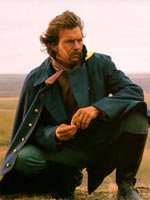 Let’s get this straight: an upset and an injustice are two very different things. When a nominee that isn’t widely expected to win beats one that is, that’s an upset. When a highly deserving underdog loses to a less deserving favourite, that’s an injustice. The latter arguably happens more frequently in Oscar history than the former, but that’s no reason to blur the line.
I mention this in connection with a poll that Sasha Stone spotted yesterday, in which the following were named the biggest Oscar upsets of all time in the Best Picture category:
1. “Shakespeare in Love” over “Saving Private Ryan” (1998)
2. “Crash” over “Brokeback Mountain” (2005)
3. “Dances With Wolves” over “GoodFellas” (1990)
4. “Rocky” over “Taxi Driver” (1976)
5. “How Green Was My Valley” over “Citizen Kane” (1941)Now I remember the 1990 awards clearly — I was 8 years old, and it was the first Oscar season that I followed keenly from beginning to end. And even I, at that tender age, knew that “Dances With Wolves” was a gimme, a slam-dunk, a no-brainer. However critically acclaimed Scorsese’s masterpiece was, it hadn’t a prayer against the film that swept the Guilds and the Globes — Kevin Costner enjoyed as great a stranglehold on the Oscar as Danny Boyle does today. “GoodFellas” winning would’ve been the upset, not the other way round.
-
THE LISTS: Top 10 films of the 1970s
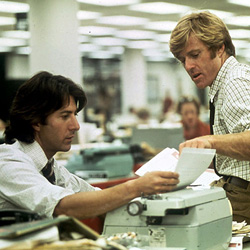 When critics and historians of the cinema sit down to discuss uh, cinema, the conversation almost always turns to the great decades in movie history. And n nearly conversation I’ve been a part of, the 1970s reigns supreme as the single decade of brilliance.
It was a time of enormous artistic growth for film, as up-and-coming directors grabbed Hollywood and ran with it, merging their love for cinema and the works of John Ford, Billy Wilder, and Elia Kazan (among others) with their own fresh ideas. And the releases of “Bonnie and Clyde,” “The Graduate” and “2001: A Space Odyssey” had already announced the arrival of the new American cinema by the end of the 1960s.
But the next 10 years brought us Francis Ford Coppola, who exploded onto the scene wit four brilliant works and mentored many of the younger directors of the time. Steven Spielberg would earn the name “whiz kid” for his incredible visual storytelling gifts that would eventually make him one of the greats of all time.
Martin Scorsese was making unsettling character studies that alarmed the studios but thrilled critics and actors, who felt challenged by his work. Woody Allen evolved from comedy writer, to comedic actor-director, to world-class filmmaker by the end of the decade. And Oscar winning film editor Hal Ashby would make a name for himself behind the camera with a swath of works.
Sidney Lumet, William Friedkin, Peter Bogdonavich, Bob Fosse, Roman Polanski, Bernadro Bertolucci, Alan J. Pakula, Milos Forman, and Michael Cimino would all leave their mark in the 1970s and continue directing to varying degrees of success in the 1980s and beyond.
Society heavily impacted the work as films about the war in Vietnam dominated much of the 70s’ final years. Watergate raged mid-decade. Stories were plucked from the headlines and committed to celluloid. Movies were exciting, well made, and interesting. Films like John Frankenheimer’s “Black Sunday,” Milos Forman’s “Hair” and Don Siegel’s “The Shootist.”
Big budget disaster films enlivened the trade, along with movies about divorce, drug addiction, mental illness, organized crime, vigilantes, prostitution, and countless other topical issues that were explored with great courage on screen. I found narrowing it down to a 10 best list to be nearly impossible and enormously frustrating because some the films left off the list should really be here. But that’s just a testament to the era’s resilience.
-
Peter Finch and the posthumous Oscar
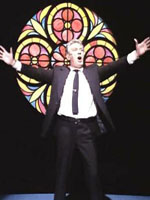 Peter Finch’es wide-eyed, frantic performance as newsman Howard Beale in Sidney Lumet’s “Network” became a touchstone for North America in 1976 because we too were “mad as hell and not going to take it anymore.”
Vietnam was over, though the vets were struggling with their various personal horrors. Nixon had resigned, leaving a mistrustful America in his wake. And up here in Canada, we were dealing with a Prime Minister who was often more playboy than politician. Lumet’s searing film, from an original screenplay by Paddy Chayevsky, was timely indeed.
Whispers of a posthumous Oscar have circulated Heath Ledger’s performance in “The Dark Knight” for weeks now, bringing Finch’s seizure of the Best Actor trophy back to the forefront of discussion. But was Finch’s win a recognition of the performance or was it fueled by his unfortunate dead in January of 1977?