In Contention

Tag: The Truman Show

  • Guard your secrets

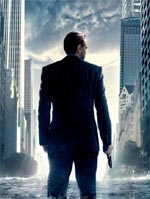
    Yes, another “Inception” post — the wilting lettuce garnish and half-nibbled canapés that make up this year’s summer-movie buffet aren’t providing us with a wealth of conversation topics, you may have noticed.
    Brent Lang’s lengthy piece in The Wrap on the film’s marketing strategy covers a familiar angle: positioning the film as the Great White Hope for original material in rehash-crazy Hollywood, while noting the commercial risks posed by its cerebral subject matter in the current climate. (Less familiar is the description of “Public Enemies” as a “high-concept” blockbuster — huh? — but Lang gets his point across.)

    Two things in the article, however, struck me as worthy of mention. The first, which may or may not be significant, is that Lang relies largely on the internet community for quotes, tapping Drew McWeeny of HitFix, Mike Sampson of JoBlo, Steve Weintraub of Collider and Alex Billington of FirstShowing ahead of any print journos or industry representatives.

    (more…)

  • Which films will be remembered in 50 years?

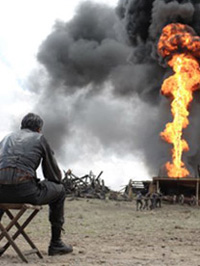
    Daniel Day-Lewis in There Will Be BloodIt is nothing new for a film to be released, find no audience, no critical favor, and disappear to be discovered by a new generation and raised to the level of masterpiece. In fact, this has been going on since the silents.

    Charlie Chaplin’s masterpiece “City Lights” was released four years after the advent of sound, and though popular at the time with both audiences and critics, it was some years later that it was finally hailed as Chaplin’s finest work. “The Wizard of Oz,” one of the most beloved films of all time that celebrates a 70th anniversary this month, was a dismal box office flop when released in 1939.  It wasn’t terribly popular with the critics either, but years later it was finally championed as a work of art and, of course, now the film is considered one of the greatest films of all time and perhaps a more worthy Best Picture choice than the eventual winner that year, “Gone with the Wind.”

    The “Citizen Kane” tale is so well documented I need not continue, and John Ford’s magnificent “The Searchers,” written off as just another John Wayne western, was discovered by film school professors who taught its brilliance to such young minds as Martin Scorsese, John Milius and Francis Coppola. Even Stanley Kubrick’s “2001: A Space Odyssey” failed out of the gate with both audiences and critics, but within a year of its release, many of those same critics had changed their minds about the film.  Within 10 years it was being declared as important a film as “Citizen Kane.”

    When “Gandhi” won eight Academy Awards in 1982, no one was terribly surprised. Yet within a year there were rumblings within the Academy that a mistake had been made and the rightful winner should have been “E.T. : The Extra-Terrestrial,” now recognized as a sublime work of art. And that same year, “Blade Runner” began its life as a major flop, only to re-discovered on home video over the years and become a cult classic.

    Looking back over the last decade or so, which films released since will be recognized 50 years from now? Which films that were passed over by audiences, critics and/or the Oscars will be hailed as masterpieces in the years to come?  I took a stab as choosing a group of films I believe could fall under this label.

    (more…)

  • TORONTO: Ed Harris on ‘Appaloosa,’ acting and film crticism

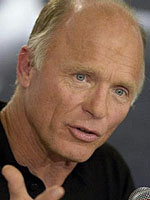
    Ed HarrisWalking into to interview with any actor/director can be a tad intimidating, even after 20 years of doing it.  They have a tendency to be…difficult.  But 30 minutes into my interview with Ed Harris, he pays me a compliment that could keep wind in my sails for the duration of the fest: “Thank you for your integrity, intelligence and dedication to your job.  This has been a pleasure.”  He smiled as we shook hands and he walked me to the door

    Harris has been an actor I have admired since first seeing him as squeaky clean John Glenn in “The Right Stuff” back in 1983, which he followed with a chilling turn as a mercenary in “Under Fire,” his bright blue eyes windows into hell’s furnace. His career has moved along an interesting trajectory, shifting between supporting roles and leads with ease, often dominating whatever film he takes on with powerhouse acting.

    Oddly enough, he did not receive his first Oscar nomination until 1995 when he gave a sterling performance as Gene Kranz in “Apollo 13,” followed by another brilliant turn in “The Truman Show” as a God-like TV producer. He nurtured his dream project, “Pollock,” through its funding, before taking up the reins as director and grabbing another Oscar nod in front of the camera. And in 2002 he was nominated for a fourth time for his AIDS-afflicted writer in “The Hours,” a critically acclaimed ensemble piece from director Stephen Daldry.

    It is doubtful that “Appaloosa” will see any Oscar attention.  Though it is beautifully shot and the art direction is sublime, the film was something of a letdown, despite strong work from Harris and co-stars Viggo Mortensen and Jeremy Irons.

    “I gave the book to Viggo here at this festival in 2005,” Harris said, “when we were here for ‘A History of Violence.’ There was no one else I really wanted to do the film with, and I certainly never considered anyone else. I just thought he and I would make a strong partnership on screen. We don’t hang out, I mean we’re friends, but we don’t see much of each other. He agreed to do it, and Viggo’s the sort of guy where his word is his bond, so that gave me the start to keep moving on the film. It didn’t really occur to me that the film was a western, what struck me was the relationship between these two men in 1882, that’s what really grabbed me about the film. That it happened to be a western was incidental.”

    (more…)