In Contention

Tag: Gandhi

  • THE LONG SHOT: British reserve

    “The British are coming!” crowed screenwriter Colin Welland from the Oscar stage in 1982, hoisting aloft his just-awarded awarded statuette for “Chariots of Fire” – and anticipating one of the bigger upsets in the history of the Best Picture race, as the modest British sports drama upended Warren Beatty’s grand political epic “Reds.”

    His rallying cry was both premature and behind the beat. Welland may or may not have been aware that the Brits had crashed this particular party several decades previously. In 1948, Laurence Olivier’s “Hamlet” became the first non-US production to land the Academy’s top prize, while the 1960s were something of a golden period for England at the Oscars: while films like “Lawrence of Arabia,” “Tom Jones” and “Oliver!” emerged triumphant, so many Brits vacuumed up the acting prizes that Hollywood industry gossips – the bloggers of yore – began to complain. “It’s not fair,” whined Hedda Hopper. “The weather’s so foul on that tight little isle of theirs, that to get in out of the rain, they gather in halls and practise ‘Hamlet’ on each other.”

    But Welland’s promise of a similar period of ubiquitous Brititude was kept only in fits and starts: Richard Attenborough, Ben Kingsley and “Gandhi” may have ruled the roost the following year, but it would be a whole quarter-century before another predominantly UK production (and coincidentally, also one with an Indian bent) took the top prize. In the early 1990s, Limey actors enjoyed a four-year run of wins in the lead acting races – from Daniel Day-Lewis through to Emma Thompson – only for their luck to dry up until Helen Mirren initiated another mini-streak 14 years later. “The British are coming… for occasional visits,” might have been a more accurate boast, if not quite as rousing.

    (more…)

  • LIFE WITHOUT OSCAR: 1981 and 1982

    Catch up with the idea behind this series here.

    Can I just take a moment here to publicize that the 1980’s are by far, my least favorite decade in cinema. Despite the great titles that I’ll be spotlighting here and my feelings that it was the best time for blockbuster filmmaking, it’s just a generally depressing era. Genuine artistic voices were in short supply so if anyone has recommendations for these years, definitely throw them my way.

    Perhaps I should start with “Chariots of Fire,” one of only a handful of Best Picture winners I have yet to see. The unheralded British production was a surprise winner over Warren Beatty’s “Reds,” which I have also not seen.

    I was, however, conceived in 1981 so cut me some slack on these titles. I’ll get to them. As I was preparing to enter the world, all four acting winners were on their way out, averaging 71 years old, including Henry Fonda’s first ever win.

    Another British production about a true story, “Gandhi,” took top honors in 1982. This was also the year “Tron” was disqualified from the Best Visual Effects category because the Academy thought using a computer was cheating.

    (more…)

  • Oscar might go for “Button”

    Cate Blanchett in The Curious Case of Benjamin ButtonThere is no good reason for me to think this, of course.  Call it a gut feeling, but I have a sneaking feeling the Academy might ignore “Slumdog Millionaire,” despite its countless awards, and go for homegrown studio product this year.  Let’s face it, the Academy has proven they march to their own drummer over and over again.
    “Slumdog” has already become a pop culture phenomenon around North America and Britain, making far more money than the filmmakers ever thought it would. Hell, before the festival season started the film was doomed, set for direct-to-DVD distribution.  Yes, Danny Boyle has won the DGA award, a solid predictor, but I’m not convinced.  Hollywood loves to congratulate itself, which we saw in 1997 with “Titanic” somehow winning a record 11 awards over the vastly superior “L.A. Confidential.”  David Fincher’s “Button” has been around for years, waiting for the right director, the right effects, the right time.

    So often in the past the Academy has gone for a film that is conservative and offends no one, ignoring the better work.”Driving Miss Daisy” over “Do the Right Thing” (which wasn’t even nominated), “Gandhi” over “E.T.: The Extra-Terrestrial,” “Oliver!” over “2001:A Space Odyssey.”  The list goes on and on.  “Button” is a handsomely mounted project, beautifully shot, meticulously crafted, with strong performances from the cast,and rock solid direction from Fincher.

    “Slumdog” may well prevail, but as a devil’s advocate, I am throwing it out there that “Button” could surprise, taking wins for both Best Picture and Best Director.  Am I crazy?

  • Getting carried away with ‘WALL-E’ and the LAFCA

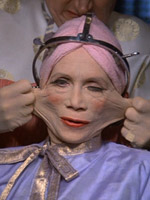
    BrazilI have been griping about the state of the movie year since after the Toronto International Film Festival, and frankly I took some heat for bitching about it. So yes, I feel some vindication about the way the season is shaping up: 2008 is a hugely disappointing year at the movies, with only a handful of really brilliant films. After the bounty of last year, obviously our hopes were high, which is a mistake, but it seems we have endured one failure after another this year.

    So the Los Angeles Film Critics Association voted “WALL-E” best film of the year.  Does this increase the film’s Oscar chances for a Best Picture nod? It will certainly draw some more attention but at the end of the day the film will land in the feature animation category, which is where it belongs.

    I agree with Kris that “WALL-E” is over-appreciated and hugely overrated. Yes, it was a good film, a beautiful picture that was a stunning visual experience, but it’s not the masterpiece it is being hailed as. In my opinion it is indicative of the weak movie year we are suffering through.  I have three more films to see to wrap up my 2008 coverage, and at this writing, “The Dark Knight” is my choice as best film of the year, with Nolan my best director.  So I have to say it was cool to see both slide in as runner-ups.

    But let’s be realistic about the L.A. Film Critics.  They like to make a statement. They did it in 1985 with “Brazil,” an unreleased film from Terry Gilliam that somehow won their Best Picture prize and forced Universal to finally put it in theaters.

    (more…)

  • Attenborough: Oscar got it wrong

    As awards geeks, bitching about the Academy’s supposed mistakes is pretty much our favourite sport. The question of who should and shouldn’t have won provides endless material for discussion — frequently on these pages.

    One of the titles that comes up often in the “shouldn’t have won” category is Richard Attenborough’s “Gandhi,” that well-mounted, well-acted and thoroughly indigestible biopic that managed to beat such more-beloved nominees as “Tootsie” and “E.T. The Extra-Terrestrial.” It was an unpopular choice even at the time. After the ceremony, NYT critic Vincent Canby famously wrote: “”E.T.” and “Tootsie” are films. “Gandhi” is a laboriously illustrated textbook.”

    Interestingly, Lord Attenborough, of all people, agrees. In a recent interview with BBC Radio Five, he admits that “E.T.” was robbed, being “an infinitely more creative and fundamental piece of cinema” than his own winning film. Attenborough continues:

    [Business partner] Diana and I went to see “E.T.” in Los Angeles shortly before all the awards and we used language, when we came out, to the extent of saying ‘we have no chance – “E.T.” should and will walk away with it’.

    Without the initial premise of Mahatma Gandhi, the film (“Gandhi”) would be nothing. Therefore it’s a narrative film but it’s a piece of narration rather than a piece of cinema, as such. “E.T.” depended absolutely on the concept of cinema and I think that Steven Spielberg, who I’m very fond of, is a genius. I think “E.T.” is a quite extraordinary piece of cinema.

    I couldn’t have said it any better myself. I’ve never been a fan of Attenborough as a filmmaker (“Shadowlands” excepted), but he sure is a classy guy. There are a lot of undeserving Oscar winners out there who must know they got lucky, but few of them have the guts to come right out and say so.

    Anyone else want to come forward? Kevin Costner? Gwyneth Paltrow? John G. Avildsen? Anyone?

  • Alone: when you hate a movie everyone else seems to love

    Miramax Films\' The English PatientIn 1996 I remember sitting in a packed screening room watching “The English Patient”; it was close to the end when Ralph Fiennes leaves Kristin Scott-Thomas in the cave, promising to come back, never to return, leaving her (through no fault of his own) to perish.

    I couldn’t help thinking at the time: “For fuck’s sake woman, DIE so we can all go home.”  I hated the film — hated it, hated it, hated it — and yet the reviewes were pretty much raves.  Of course the damned thing won nine Academy Awards including Best Picture and Best Director. I did not believe the love connection between the leads (there was no heat) nor that anyone, quite frankly, could fall for an ice queen like Scott-Thomas, much less risk their life for her.

    And yet all around me was this avalanche of praise.  Even the person I did a TV show with named the film the best of the year.  I went with “Trainspotting.”  “The English Patient” was being hailed as this great historical epic while I championed “The Crucible,” which Fox fumbled in releasing, and as the critic who disliked the film, I looked very silly.

    I admire the craftsmanship with which Anthony Mingehlla made his film, but I think he surpassed it with “The Talented Mr. Ripley” and the wonderful “Cold Mountain.”  And of course “The Englsih Patient” was not the first critically acclaimed film I disliked, nor will it be the last, but it does put one in an odd position. You second guess yourself (sometimes) and wonder if you missed something along the way.

    (more…)

  • Beyond the biopic

    Halfway through watching the recently uncovered trailer for Ron Howard’s “Frost/Nixon,” I felt my stomach sinking with involuntary dread, and it took me a beat or two to figure out why.
    The problem didn’t appear to be the film itself; in fact, the relatively zippy trailer promises something somewhat tighter and wittier than I’ve been expecting from the odd (to my eyes) pairing of Ron Howard and Peter Morgan.

    No, what had me grimacing in anticipation of things to come were the glimpses we are offered of Frank Langella as Tricky Dick – a showcase that, in the space of two minutes, manages to tick so many Academy boxes that Langella could probably nab a nomination for the trailer alone.

    The studied gait, the mannered vocal cadences, the escalating, booming rage in his confrontations with Michael Sheen’s David Frost (anyone want to lay bets on the “when the president does it, it is not illegal” clip being used in the Best Actor presentation on Oscar night?) … all the elements appear to be in place for the kind of superficially impressive inhabitation of celebrity that has lately dazzled the voters on a yearly basis.

    Let it be said, I’m not dismissing Langella’s performance – he may be very good indeed. (Though now that The Guardian has pointed out the vocal similarities between Langella’s Nixon and Sean Connery, that discordant parallel will remain firmly lodged in my brain.) And after a long career with two recent near-misses at an Oscar nomination (“Good Night, and Good Luck” and the wonderful “Starting Out in the Evening”), I could hardly begrudge the man some recognition.

    But at the same time, if someone were to issue a moratorium on rewarding biopic performances for the next decade or so, I would be right on board. For the last ten years running, at least one of the four winning performances each year has been a portrayal of a real-life figure. Daniel Day-Lewis just broke a three-year biopic run in Best Actor category; over in Best Actress, a mere two of the last nine victors played fictitious characters.

    I’m not so contrary as to assert that none of them were deserving, but I don’t mind admitting that I’m a little fatigued. More than that, I’m exasperated at how easily, and consistently, impressed the Academy has been by this particular trick.

    (more…)

  • The 80s yielded one great Best Pic winner: ‘Platoon’

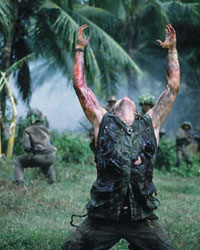
    Ten awards for Best Picture were handed out throughout the 1980s, one of the worst decades for film in history, and I’d wager that only “Platoon,” the Oscar winning giant of 1986, can lay claim to being a great film.

    Oh, that is not to say there were not great films made in the 80s; there were indeed, but nobody went to see them, despite rave reviews. Many of the decade’s very best films were released and abandoned, to be re-discovered on video, at that time a very new addition to the film industry.

    “Raging Bull” ended up being the finest film of the decade, hell one of the five greatest films of all time, yet Oscar did not see it that way. Somehow, Martin Scorsese’s masterpiece lost the Oscar for Best Picture and the New York Film Critics Circle award for Best Film to Robert Redford and “Ordinary People” — a well crafted film, but hardly the raw and angry work of the former.

    That same year would see the releases of “The Empire Strikes Back” — a superior film to the first “Star Wars” installment, yet snubbed for a nomination for Best Picture — and Richard Rush’s “The Stunt Man,” which might have been a strong choice for a nomination as well.

    (more…)