In Contention

Tag: Goodfellas

  • 9/23 OSCARWEB ROUND-UP: Brolin on Stone and Allen, remembering ‘Goodfellas’ and a ‘Boonmee’ how-to

    • In a joint venture with Interview magazine, Roger Ebert corners Casey Affleck on “I’m Still Here.” [Chicago Sun-Times]

    • Kevin Gray talks “Wall Street” and Woody Allen with Josh Brolin. [Vulture]

    • Steve Pond runs a comb through the contenders so far to gauge strengths and weaknesses. [The Odds]

    (more…)

  • INTERVIEW: Jacques Audiard

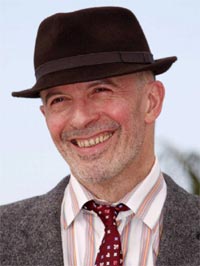
    Jacques Audiard at the Cannes premiere of A ProphetAs pundits continue to posit art-versus-genre arguments around the 10 titles vying for Best Picture, the finest film to be nominated in any category at this year’s Academy Awards is to be found a little further down the list – and it’s one that would bridge the discussion rather nicely.

    Nominated last week for the Best Foreign Language Film Oscar, and bedecked with numerous accolades besides, Jacques Audiard’s “A Prophet,” is a brazen, brilliant marriage of pulp, prestige and politics.

    A bloody prison drama that phrases intricate social analysis in the language of gangster cinema at its most hardboiled, it’s Audiard’s beefiest excursion yet into the noir territory that he visited in his last two films, lean thrillers “Read My Lips” and “The Beat That My Heart Skipped.”

    Critics have been quick to make comparisons to assorted American genre masters since the film’s Cannes premiere nine months ago , with “GoodFellas” and even “The Godfather” routinely surfacing in discussions around the film. But while Audiard acknowledges his kinship to U.S. cinema – this is a man, after all, whose last feature was a remake of a 1978 James Toback thriller – he takes such talk with a healthy pinch of salt.

    “People keep saying, oh, it’s like Scorsese, or it’s like Coppola, and of course that’s very flattering,” the native Parisian says over the phone, via the translation (and occasional embellishment) of his co-writer Thomas Bidegain.

    (more…)

  • Define ‘upset’

    Let’s get this straight: an upset and an injustice are two very different things. When a nominee that isn’t widely expected to win beats one that is, that’s an upset. When a highly deserving underdog loses to a less deserving favourite, that’s an injustice. The latter arguably happens more frequently in Oscar history than the former, but that’s no reason to blur the line.

    I mention this in connection with a poll that Sasha Stone spotted yesterday, in which the following were named the biggest Oscar upsets of all time in the Best Picture category:

    1. “Shakespeare in Love” over “Saving Private Ryan” (1998)
    2. “Crash” over “Brokeback Mountain” (2005)
    3. “Dances With Wolves” over “GoodFellas” (1990)
    4. “Rocky” over “Taxi Driver” (1976)
    5. “How Green Was My Valley” over “Citizen Kane” (1941)

    Now I remember the 1990 awards clearly — I was 8 years old, and it was the first Oscar season that I followed keenly from beginning to end. And even I, at that tender age, knew that “Dances With Wolves” was a gimme, a slam-dunk, a no-brainer. However critically acclaimed Scorsese’s masterpiece was, it hadn’t a prayer against the film that swept the Guilds and the Globes — Kevin Costner enjoyed as great a stranglehold on the Oscar as Danny Boyle does today. “GoodFellas” winning would’ve been the upset, not the other way round.

    (more…)

  • Will BAFTA stick by their own?

    I have a bit of a love-hate relationship with the BAFTA Awards. On the one hand, they can be far more daring and playful in their choices than the American Academy — this is an organisation, after all, that has handed their Best Film award to such enduring works as “The Purple Rose of Cairo,” “GoodFellas” and “Lacombe, Lucien,” while nominating the Oscar-snubbed likes of “Eternal Sunshine of the Spotless Mind” and “The Usual Suspects.”

    Their technical awards are invariably more imaginatively awarded, too — take a look at their Best Film Editing category, for example, which in recent years has crowned “Eternal Sunshine,” “City of God” and “Mulholland Drive” as winners. And they can often be counted upon for gratifying upsets, as when Pedro Almodovar pushed past Sam Mendes for Best Director in 2000, or when “Trainspotting” blindsided “Sense and Sensibility” in the 1996 screenwriting race.

    For an awards show that fancies itself world-class, however, BAFTA can be infuriatingly parochial in their selections, stubbornly rewarding their own in the face of bigger, bolder competition. I doubt most of the voters could say with a straight face that “Four Weddings and a Funeral” was the very best film of 1994, nor “The Full Monty” of 1997, but they cleaned up nonetheless.

    For the last two years running, that kind of provincialism has ruled the voting, with this year’s awards looking particularly suspect. I think “Atonement” is a fine film, but handing it their top award seemed tokenistic at best, not least when the only other gong it took was for Best Art Direction.

    It’s a trend that Variety thinks could continue this year. In an article previewing the British contenders in the acting categories, they point out that Limeys have taken 16 acting BAFTAs in the last decade, compared to seven Oscars. Needless to say, they are frequently justified. It’s fair to say that this year, several British names will be cropping up in awards lists on either side of the Atlantic, and deservedly so — particularly in the Best Actress category, where thesps like Kristin Scott Thomas, Sally Hawkins and the ubiquitous Kate Winslet are all likely to figure.

    (more…)
  • Best of the 90’s

    John Travolta and Uma Thurman in Quentin Tarantino\'s Pulp FictionTime is the enemy of all films as it erodes what was once exciting and original. Truly great movies are able to withstand the test of time, but I wonder if enough time has passed to take a look back at the 1990s cinema and make some decisions.

    There was a major breakthrough in the decade with filmmaker Quentin Tarantino, who did not so much open the door for indies as he did kick it in and stomp on it with his “Pulp Fiction,” a gloriously acted, directed and written masterpiece about criminals in Los Angeles.  When Godard spoke of making films with a guy, a girl and a gun, was this what he had in mind?

    Though Tarantino has strugled to follow up his legendary 1994 effort with an equally powerful offering, there is little doubt he will, or at least could if he wanted to. (Though he keeps stopping and starting on his latest ambitious project.)  After all, he is still growing as a director.  And just look at Steven Spielberg, who for my money has grown artistically through the last 15 years more so than any other major filmmaker. It was as though “Schindler’s List” and the release of winning the Oscar set him free.

    Anyway, for the record and argument, here are my ten best films of the 1990s:

    1. “Pulp Fiction”
    2. “Schindler’s List”
    3. “Goodfellas”
    4. “Unforgiven”
    5. “Saving Private Ryan”
    6. “The Sweet Hereafter”
    7. “Magnolia”
    8. “L.A. Confidential”
    9. “The Shawshank Redemption”
    10. “The Silence of the Lambs”

    You?