In case you weren’t aware, @TheAcademy is Tweeting the Governors Awards experience. Here’s an epic reunion:
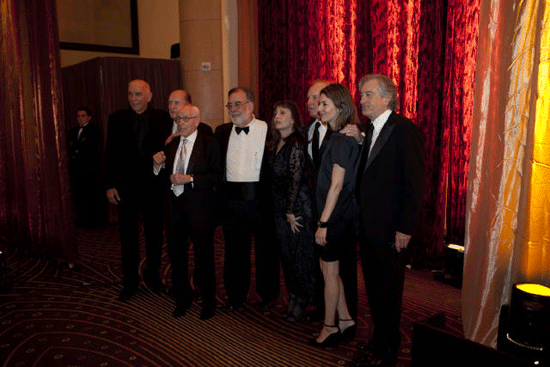
In case you weren’t aware, @TheAcademy is Tweeting the Governors Awards experience. Here’s an epic reunion:
 Ah, lists. The gift that keeps giving — particularly in the world of film blogging, where they provide snappy short-form content, invite numerous comments and generate multiple hits when spread across a zillion pages.
Last year’s flood of end-of-decade countdowns surely satisfied even the most ardent list fanatic for a good few months, but with no such milestone to mark this year, The Guardian has returned to an old chestnut: the greatest films of all time.
The gimmick they’ve used for the project (the results of which have been unfolding on their website over the past week) is to subdivide the larger collective according to genre: the 25 best comedies, romances, action films, and so on. As if any all-time best isn’t prone to enough criticism, this doubles the opportunities for debate: now we can kvetch not only about the films that made the cut (or didn’t), but whether they’ve even been categorized correctly.
 Catch up with the idea behind this series here.
Kubrick gets robbed again as his visionary, “A Clockwork Orange” loses out to a well-executed genre flick in 1971. The Oscars like nothing more than a slightly better version of the crap that Hollywood continually churns out. It’s almost as if one film doing it really well justifies them lazily attempting to film the same thing over and over. All that said, “The French Connection” is quite good.
You can directly trace the recent win for “The Departed” back to this precedent, not to mention the debt Eminem and Three 6 Mafia owe to Isaac Hayes, who picked up a Best Song Oscar for “Shaft” this year.
“The Godfather” won in 1972 and nobody can really complain about that, can they? Apparently, “Cabaret” was the heavy favorite at the time, but thank Christ that didn’t happen (although it did win Best Director and seven other Oscars). The ceremony is best remembered as the one where Marlon Brando sent an Indian to turn down his Oscar.
It also saw 14-year old Michael Jackson perform the nominated song, “Ben.”
Oh, and Peter O’Toole lost.
 In exactly one week’s time, we’ll have a brand new list of Oscar nominations to pore over, pick apart and eventually file away in our subconscious with the other 81 editions of this annual collective. For Oscar geeks, nomination day is in many ways more exciting than the ceremony itself, celebrating a broader spectrum of work and throwing up far more surprises along the way.
For all that, once the winners are announced, the nomination list as a whole tends to be disregarded, returned to only by trivia buffs and the geekiest of Oscar geeks. (Guilty on both counts.) And that’s shame, because a field of five nominees can often be more illuminating viewed collectively than even the worthiest of individual champions.
Today’s list, then, is devoted to that most elusive of Oscar holy grails: the perfect nominee field.
Yes, more often than not, the Academy will nominate several notable achievements in a single category. But rarer than hen’s teeth are the robust Oscar categories that feature a full house of five outstanding nominees, five contenders that would all be worthy of a win in any other year. No unremarkable coaster nominees sliding in on the coattails of a popular picture. No bad films with an expensively studio-bought nominations. No filler. No fat. Just five superb achievements.
 For those of us not important/famous/rich enough to have attended last night’s honorary Oscars presentation, the Governors’ Awards — tickets began at $350, apparently — Steve Pond has a comprehensive report of the proceedings, complete with pictures and some gossipy details.
I’ve complained before about the Academy denying us Joe Public movie fans the chance to see industry titans Lauren Bacall, Gordon Willis, Roger Corman and John Calley finally take a trip to the Oscar podium, but what’s done is done. And to go by Pond’s account, the upshot for them (if not for us) is that they got to bask in the spotlight for longer than the main ceremony would have allowed — though Calley was, unfortunately, too ill to attend.
Indeed, despite featuring only four award presentations, the night ran for three-and-a-half hours, the length of most Oscarcasts. Still, despite some organizational hiccups, a good, relaxed time seems to have been had by all.
 • Digital marketing consultant Chris Dorr points out missed online opportunities with “Bright Star.” [Thompson on Hollywood]
• Steve Pond jumps on the “Up in the Air” train, says it renders the expectations irrelevant. [The Odds]
• Lying about seeing “The Godfather.” [The Guardian]
 With “Get Low” bringing actor Robert Duvall back to the spotlight, and Sony’s purchase of the film no doubt landing him in the Oscar race for Best Actor (whether released this year or next), I thought perhaps a look back at the legend’s substantial carer and best performances might be fun.
Since his first brilliant turn as Boo Radley, both boogey man and savior to the children in “To Kill a Mockingbird,” Duvall has been one of America’s greatest actors. A self-described late bloomer, he did not see great success until he was in his 30s, but once there he never stopped, giving us an array of brilliant performances that have made him one of the most beloved, finest actors in American history.
Over the years I have had the chance to spend some time with Duval and it should seem obvious by now that I admire the man. Sure there have been missteps along the way — what great actor does not err — but films like “Newsies,” “The Scarlett Letter” and “Kicking and Screaming” are few and far between in a career spanning more than 50 years.
With “Get Low,” a decent campaign should see the veteran actor with his seventh Oscar nomination, his fourth for Best Actor, and given the Academy’s wont for waxing sentimental or fixing past wrongs, they might just give it to him for having passed on the opportunity 12 years ago.
Here are my picks for his 10 best performances…
 With the Oscar season officially here it seemed only logical to dedicate an installment of The Lists to the little golden guy. And as we push forward past the fests and into the thick of it, I figured the best idea would be a broad assessment of the Academy’s chosen best through the years, a bone of contention for a great many, as you read in this space and in the comments section year in and year out.
But I must say, putting this list together was a joy. The percentage of times I think the Academy has gotten it “right” is quite low, of course, but when I skimmed the cream of the crop I was left with, I felt, a wonderful collective representative of the finest of American cinema.
Of course, that should itself be seen as damning the organization with faint praise. After all, the Academy has failed to recognize a great many foreign classics with its top prize. And by a great many I mean any.
The most celebrated decade in cinema, the 1970s, has three representatives on the collective, each of them at the very top. The 1990s and 1980s came in right behind with two to show for themselves, while the 1930s, 1940s and 1960s each had one entry.
I’d say that’s a pretty decent cross-section.
It goes without saying a list like this is incredibly subjective, but I’d be very curious to hear the readership’s thoughts on 82 years of this award, so when you rattle through my list, be sure to offer up your own in the comments section. We have a diverse group here so I’m sure there will be a number of unique takes.
 Toronto Film Festival
Sitting down with Robert Duvall is more than a little intimidating. The man does not suffer fools, nor does he have a lot of time for small talk or stupid questions. He likes to talk, but he also likes an informed conversation. As he nears 80, he is still a force of nature, with a powerful presence and voice that goes up and down depending on his excitement.
Duvall and I first met in 1997 when “The Apostle” exploded out of Toronto, landing the veteran actor a much-deserved Oscar nomination for Best Actor. The performance was a volcanic, furious portrait of a man trying to atone for his sins by building a church in the backwoods of Louisiana after killing a man in a fit of rage. For 13 years Duvall shopped the project around Hollywood, being turned down by the major and minor studios until his accountant suggested he finance the film himself. In a position to do so, he did just that, eventually selling the film at TIFF after a famed bidding war.
I got to know him when he invited me to spend some time with him on the set of “John Q” while it was shooting here in Toronto, the invitation coming during the 2000 Film Festival when I interviewed him a few times for his soccer picture, “A Shot at Glory,” in which he co-starred with soccer star Ally McCoist. In the years since, Duvall has kept himself busy with great roles and performances in films such as “Broken Trail,” for which he won the Emmy Award for Best Actor, and “Kicking and Screaming,” a soccer comedy with Will Farrell that seemed like an odd choice for the actor.
Recognized as one of America’s greatest thespians, Duvall has given an array of brilliant performances over the years, from his breakthrough, shy Boo, in “To Kill a Mockingbird” through to his mafia lawyer Tom Hagen in “The Godfather” and “The Godfather Part II” and perhaps most memorable of all, Kilgore in “Apocalypse Now.” He came into his own in the 1970s, at a time when other major talents such as Jack Nicholson, Dustin Hoffman, Al Pacino, Robert De Niro and Gene Hackman were also turning in brilliant performances, changing the face of American acting.
 Over at IMDb there is a new feature called “The Power of Film” (lofty title, that), which has listed out the top 15 films of the millennium as voted on by IMDB users, i.e., fans, the public, regular folks.
The IMDb top 250 is an ever-changing mish-mash of high-,middle- and low-brow entertainment that always makes for an amusing cross section of what the public thinks of cinema from one moment to the next. “The Godfather” and “The Shawshank Redemption” trade off the #1 spot consistently, save for the spike of interest in this major new release or that, films that insinuate themselves high early on but inevitably fall down the list as more viewers get a look.
The new feature, unsurprisingly, features Christopher Nolan’s “The Dark Knight” at the top, but strewn throughout is a diverse mixture including the “Lord of the Rings” triology, German Oscar-winner “The Lives of Others” and Pixar entries “WALL-E” and “Up.” And speaking of Oscar, MTV’s Terri Schwartz has spun her wheels on the idea that, with a larger slate of Best Picture possibilities, the IMDb list could prove an omen for the potential blend of eclectic and entertainment cinema so many expect the Academy’s line-up to resemble from this year forward.
(Schwartz’s thoughts and IMDb’s list after the jump.)
 The words sound like they might be spoken by a young up-and-comer experiencing his first big break, someone fresh off the bus with stars in his eyes and the unbreakable, still unsoiled spirit of art coursing through his veins.
“Here I’ve finished this film and now I can dream up some new adventure that I know I can finance and keep doing that and learning from it and learning how to make movies.”
Except this isn’t a young up-and-comer experiencing his first big break. This is a filmmaker whose contributions to the cinema have altered the course of the medium. And only now is he able to do what he really wants to do.
At 70 years old, Francis Ford Coppola is embarking on the career he says he thought he was going to have from the start, back when he was a post-UCLA film student training as an assistant to filmmaker Roger Corman. When he and colleague George Lucas established American Zoetrope in the Bay Area in the late 1960s, the sky was the limit. But life had other plans.
“In a sense we never really got it going,” he says. “We were all there at Zoetrope in San Francisco wanting to make personal films and films that were not usually expensive so they could afford to be more extravagant in ideas and freedom, and yet I was never able to get any money to do ‘The Conversation.’ In the despair of the on-coming poverty I took this job that was offered to me and it turned out to be ‘The Godfather’ and it was like getting hit with a tsunami of success. I didn’t know that was going to happen to me and that opened up all sorts of possibilities.”
Possibilities that came with fiscal consequences, of course. The next thing Coppola knew after a wave of creative successes in the 1970s, he was in debt and “had to make a movie every year for 10 years in a row.”
 And with that, our poll series comes to a screeching halt. I’ve already offered some thoughts on how all of this turned out. I hope readers unfamiliar with some of the films I’ve been harping on will take that to heart and at least seek them out. You owe it to yourself as a film lover, believe you me.
Here is your ranked list. For background on all of these shenanigans, click here. I want to thank everyone who participated in the polls and made this a real community effort.
1. “Citizen Kane” (Orson Welles, 1941)
2. “Star Wars” (George Lucas, 1977)
3. “2001: A Space Odyssey” (Stanley Kubrick, 1968)
4. “The Godfather” (Francis Ford Coppola, 1972)
5. “The Wizard of Oz” (Victor Fleming, 1939)
6. “Psycho” (Alfred Hitchcock, 1960)
7. “Jaws” (Steven Spielberg, 1975)
8. “Pulp Fiction” (Quentin Tarantino, 1994)
9. “Snow White and the Seven Dwarfs” (David Hand, 1937)
10. “Toy Story” (John Lasseter, 1995)
Honorable mention: “Annie Hall,” “Apocalypse Now,” “Battleship Potemkin,” “The Birth of a Nation,” “Casablanca,” “The Godfather Part II,” “Gone with the Wind,” “The Matrix,” “Metropolis” and “Rashomon”
One of these days I’ll cook up my own list. Until then, once again, thanks for participating.
I’ve got family coming into town this afternoon, and since this week’s poll had three runaway winners in “2001: A Space Odyssey,” “The Godfather” and “Pulp Fiction,” and I doubt three more hours will close the gap on the stragglers (poor “Jurassic Park”), I think it’s time for a new installment. Next week will be the final round one poll and we’ll be closer to the end and your view of the 10 most influential films of all time.
Once again, check the background on this series here. Have a look in the left sidebar and chalk up no more than three films to survive and move on to the next round. This week should make for an easier selection than last week. As always, though, it’s a random assortment. Blame the fates if you find yourself facing a Sophie’s Choice.
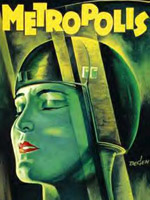 Well, here’s something I guess. Rope of Silicon points us to TCM’s list of the top 15 most influential “classic” films of all time. I actually started working up such a list for the site a while back but abandoned it for whatever reason. It was going to include all comers, though, not just classic films. They seem to be listed in chronological order over at TCM.com. The 15:
“The Birth of a Nation” (1915)
“Battleship Potemkin” (1925)
“Metropolis” (1927)
“42nd Street” (1933)
“It Happened One Night” (1934)
“Snow White and the Seven Dwarfs” (1937)
“Gone with the Wind” (1939)
“Stagecoach” (1939)
“Citizen Kane” (1941)
“The Bicycle Thief” (1947)
“Rashomon” (1950)
“The Searchers” (1956)
“Breathless” (1959)
“Psycho” (1960)
“Star Wars” (1977)
My list certainly included most of those, which are by and large hard to argue with. “Birth,” “Battleship,” “Metropolis,” “Night,” “Snow White,” “Wind,” “Kane” and “Star Wars” were definitely included in my tally. If we were to extend it beyond the “classic” realm, I think we’d have to include “Jurassic Park” and the “Lord of the Rings” franchise. “Toy Story” would have to have a secure place, while “Pulp Fiction” obviously sparked a revolution some would argue had roots in “sex, lies and videotape” (also a contender for an “all-time” list).
Since TCM’s idea of “classic” obviously stretches into the late 1970s, I think it’s rather foolish to leave off “Jaws” and/or “The Godfather” considering what they meant to big business theatrical revenue before “Star Wars” came along. And going way back, “The Great Train Robbery” had people running from the theater screaming after the final image of a bandit firing his gun at the camera. There’s something to be said for one of the first films to enthrall like that.
And what about “The Jazz Singer?” How do you leave that title off a list of “classic” cinema? I guess it had to be narrowed to 15 but there are a couple of films on that list that could have been bumped, I think.
Let’s put it to the readership. Assuming an “all-time” list rather than limiting it to the classics, what would you say have been the most influential films? I could make a mean case for “Die Hard,” but I’ll anxiously await your input. Rattle off your lists and maybe we’ll settle things with a series of polls.
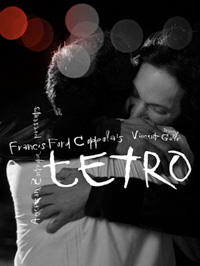 No other director in the history of the cinema dominated a 10-year span as Francis Ford Coppola did the 1970s. Beyond directing four of the decade’s greatest films — “The Godfather”, “The Godfather, Part II”, “The Conversation” and “Apocalypse Now” — his name was on “Patton” and “The Great Gatsby” as screenwriter and “American Graffiti” as producer.
In addition, Coppola created American Zoetrope in the hopes of building a haven for young directors to make small films free of the studios. But he also believed what the press were saying: he was a genius who would turn whatever he touched into gold. His ego got in the way and he alienated friend and comrade George Lucas, eventually making up with the director years later when positions of power had been reversed.
In the years after “Apocalypse Now,” the Oscar-winning Coppola fell on hard times with one failure after another it seemed, his once golden touch lost in the jungles of the Philippines while making his Vietnam epic. There were glimmers of former greatness from time to time, such as the expressionistic brilliance of “Rumble Fish,” the Cab Calloway sequence in “The Cotton Club,” the haunting scene with Kathleen Turner and her grandparents in “Peggy Sue Got Married” and Jeff Bridges’s wonderful work in “Tucker.”
But “One from the Heart” was a mess. “The Outsiders” was a sentimental disaster of a film. And then there was “The Godfather, Part III,” a failure because Paramount failed the director, breaking their word after making the promise he would have complete control, refusing to pay Robert Duvall, integral to the story, half of what Al Pacino was making, forcing a major re-write (that cost…?) and casting his daughter (the poor girl) in a key role when she simply lacked the acting chops to work with that ensemble. On and on.
 Kris is taking some heat in some quarters for his comments on “WALL-E,” and while he has never said it was a bad film, he didn’t fall over himself seeking superlatives for it either. In fact, the movie did not do much for Kris, which is an unpopular sentiment, given the critics awards and rave reviews for the film.
Why is this not okay with some people? Similarly, why is not okay to say that one does not feel “Citizen Kane” is the greatest film of all time? I don’t think it is and you have no idea the heat I take for that. Kris made a bold decision, one he believed in, one he felt was right, one that was honest.
When will people realize that at the end of the day we are all critics with an opinion, but some of us are fortunate enough to do it for a living? Does that set us apart? Not really.
Watching a film is connected to the oldest of rituals, similar to the ancient Greeks filing in to see a play and watching with rapt attention the players on stage. They then left the play and discussed it, just as we do today with cinema. Maybe we like the film, maybe we don’t…it is all opinion-based and at the end of the day, no one is really wrong.
 When critics and historians of the cinema sit down to discuss uh, cinema, the conversation almost always turns to the great decades in movie history. And n nearly conversation I’ve been a part of, the 1970s reigns supreme as the single decade of brilliance.
It was a time of enormous artistic growth for film, as up-and-coming directors grabbed Hollywood and ran with it, merging their love for cinema and the works of John Ford, Billy Wilder, and Elia Kazan (among others) with their own fresh ideas. And the releases of “Bonnie and Clyde,” “The Graduate” and “2001: A Space Odyssey” had already announced the arrival of the new American cinema by the end of the 1960s.
But the next 10 years brought us Francis Ford Coppola, who exploded onto the scene wit four brilliant works and mentored many of the younger directors of the time. Steven Spielberg would earn the name “whiz kid” for his incredible visual storytelling gifts that would eventually make him one of the greats of all time.
Martin Scorsese was making unsettling character studies that alarmed the studios but thrilled critics and actors, who felt challenged by his work. Woody Allen evolved from comedy writer, to comedic actor-director, to world-class filmmaker by the end of the decade. And Oscar winning film editor Hal Ashby would make a name for himself behind the camera with a swath of works.
Sidney Lumet, William Friedkin, Peter Bogdonavich, Bob Fosse, Roman Polanski, Bernadro Bertolucci, Alan J. Pakula, Milos Forman, and Michael Cimino would all leave their mark in the 1970s and continue directing to varying degrees of success in the 1980s and beyond.
Society heavily impacted the work as films about the war in Vietnam dominated much of the 70s’ final years. Watergate raged mid-decade. Stories were plucked from the headlines and committed to celluloid. Movies were exciting, well made, and interesting. Films like John Frankenheimer’s “Black Sunday,” Milos Forman’s “Hair” and Don Siegel’s “The Shootist.”
Big budget disaster films enlivened the trade, along with movies about divorce, drug addiction, mental illness, organized crime, vigilantes, prostitution, and countless other topical issues that were explored with great courage on screen. I found narrowing it down to a 10 best list to be nearly impossible and enormously frustrating because some the films left off the list should really be here. But that’s just a testament to the era’s resilience.