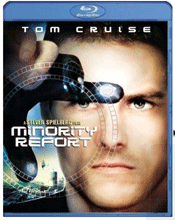
 I love Steven Spielberg’s 2002 “Minority Report” for a number of reasons — it’s the director’s most searching and adventurous film since a certain 1993 Oscar champ, it’s got ideas as big as its set pieces and it’ll likely remain history’s only $100 million summer blockbuster to star Samantha Morton.
All good things. But what I like most about the film is that it contains one of the cinema’s few visions of the future that I actually look forward to living in — I know I’m not the only person who was reduced to pre-adolescent gosh-wow effusiveness by its gadgetry. (For one, I know that any attempt to interest my mom in a faddish computer gizmo will result in the reply, “Until I can control the whole thing with my hands, like in “Minority Report,” I’m not interested.”)
Good news, mom: according to this neat piece in the Guardian’s technology pages, we’re getting there. Eight years after the release of Spielberg’s film, journalist Charles Arthur offers a progress report of sorts on the film’s various futuristic inventions — pointing out the significant strides already made towards the realization of dynamic iris recognition, personalized advertising (already broached in an online capacity) and even “pre-crime” technology.

 It is nothing new for a film to be released, find no audience, no critical favor, and disappear to be discovered by a new generation and raised to the level of masterpiece. In fact, this has been going on since the silents.
 Looking back over the previous Oscar winners for Best Picture since 2000, the start of a new century (and a new millennium), I find myself wondering sometimes what the hell the Academy was thinking. It’s no secret I disagree with the Academy a lot, but I can also admit that when they get it right, they get it right.
 As film junkies, we all know it happens. Usually every single year there are one or more films the Academy passes over for Best Picture consideration, in some cases because there are, after all, just five slots available, but in others because, well — they blew it.
