In Contention

Tag: My Fair Lady

  • Emma vs. Audrey

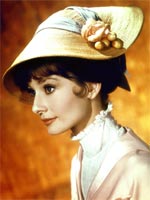
    British papers have probably made more of Emma Thompson’s recent dismissal of Audrey Hepburn than her slightly flip comments warranted, but it has prompted an interesting amount of side-taking over the merits of one of Old Hollywood’s most beloved (or so we thought) icons. If you’re new to this story, Thompson’s jabs at Hepburn were made with specific reference to her performance in “My Fair Lady,” for which Thompson herself is scripting the upcoming big-screen remake:

    [T]here needs to be a new version. I’m not hugely fond of the film. I find Audrey Hepburn fantastically twee. Twee is whimsy without wit. It’s mimsy-mumsy sweetness without any kind of bite. And that’s not for me. She can’t sing and she can’t really act, I’m afraid. I’m sure she was a delightful woman – and perhaps if I had known her I would have enjoyed her acting more, but I don’t and I didn’t, so that’s all there is to it, really.

    It was Cecil Beaton’s designs and Rex Harrison that gave it its extraordinary quality. I don’t do Audrey Hepburn. I think that she’s a guy thing… It’s high time that the extraordinary role of Eliza was reinterpreted, because it’s a very fantastic part for a woman.
    (more…)

  • LIFE WITHOUT OSCAR: 1963 and 1964

    Catch up with the idea behind this series here.
    The Beatles weren’t the only British invasion happening around 1963 as “Tom Jones” took the big prize at the Academy Awards and British talent racked up no less than 9 of the 20 acting nominations. It also became one of the few comedies to win, slaying proud heavyweights like “Cleopatra” in the process.

    Also worth mentioning is Sidney Poitier’s historic Best Actor win for “Lilies of the Field.” Normal business resumed the following year as the lavish musical, “My Fair Lady” swept the board, although Julie Andrews got a bit of sweet revenge by stealing the Best Actress award away from Audrey Hepburn, who was cast in the role Andrews made famous on stage.

    Not winning an Oscar that year? You guessed it, Peter O’Toole. And maybe the biggest snub in Oscar history occured when none of the songs from “A Hard Day’s Night,” including the title number received a nomination for Best Song. Nice job Academy, it’s only The Beatles.

    (more…)

  • Mulligan set for ‘My Fair Lady’

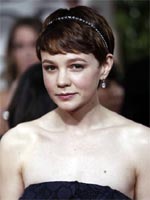
    Between Carey Mulligan and Mia Wasikowska, it seems the industry has no need for other 20-something actresses — they’ll divvy up all the plum parts between them.

    Days after Mulligan’s name was connected to the English-language remake of “The Girl With the Dragon Tattoo” comes the news that she’s to play Eliza Doolittle in the long-mooted remake of “My Fair Lady.”

    Almost two years ago, it was announced that a new version of the 1964 Best Picture winner was in the works, with Keira Knightley and director Joe Wright in the frame. Some games of musical chairs have apparently been played since then — John Madden (“Shakespeare in Love”) in now in the director’s chair, while Emma Thompson is on script duty.

    At last night’s premiere for the “Nanny McPhee” sequel, Thompson confirmed that Mulligan — with whom she co-starred, of course, in “An Education” — is on board, adding that she “would love” Hugh Grant to fill Rex Harrison’s Oscar-winning shoes as Professor Henry Higgins.

    (more…)

  • And the pointless remake of the day is…

    … “My Fair Lady.” Variety reports that Columbia is putting together a new version of the classic Lerner & Lowe musical, George Cukor’s 1964 filmization of which copped the 1964 Best Picture Oscar. 

    The studio is calling it an “update,” something of a misnomer considering it will in fact retain the 1912 London milieu of the original. Their reasoning for this move escapes me, but Columbia co-president Doug Belgrad claims:

    “This update will preserve the magic of the musical while fleshing out the characters and bringing 1912 London to life in an authentic and exciting way.”

    I thought we already had the various interpretations of Shaw’s “Pygmalion” (not least Anthony Asquith’s still-surprisingly-fresh 1938 film) for character depth, but apparently we need another. London theatre impresario Cameron Mackintosh is also on board, and his justification for the project strikes me as even more tenuous than Belgrad’s. Apparently the story of Eliza Doolittle’s metamorphosis from Cockney guttersnipe to society belle “couldn’t be more timely in a contemporary world obsessed with overnight celebrity.” To which I can only ask, if the story is so relevant and contemporary, why not really update it?

    (more…)