In Contention

Tag: Naked

  • LIFE WITHOUT OSCAR: 1993 and 1994

    Catch up with the idea behind this series here.

    1993 was the year I first became interested in making movies and tracking box office. There are two words responsible for both and they rhyme with Yourassic Lark. The director of that beast would also helm our Best Picture winner that year, finally earning the Academy’s respect. I’m talking about Steven Spielberg and “Schindler’s List” of course, but if you ask me, “Jurassic Park” is the better film.

    Tom Hanks won Best Actor in both 1993 and 1994, becoming the first person since Spencer Tracy to take the prize two years in a row. I’d begrudge him the honor, but he’s just so darn likable. Honestly though, Denzel Washington should have gotten some love for “Philadelphia” too. This win marks the only time an acceptance speech was adapted into a movie (“In & Out”).

    1993 is also personally notable as the first time I had seen one of the Best Picture nominees by the time of the ceremony (“The Fugitive”).

    1994 was easily won by “Forrest Gump,” despite the presence of what IMDb users consider the greatest movie of all-time being in the mix. Really, IMDb users? “The Shawhsank Redemption?” It was also David Letterman’s one and only shot at hosting, which has been much-maligned but remains one of my favorite turns at the gig. Infinitely better than Whoopi Goldberg in 1993.

    Uma. Oprah.

    (more…)

  • Mike Leigh celebrates “hidden city” of London

    My attention was drawn to this article last week, but since the London Film Festival kicks off this week (and Mike Leigh’s “Another Year” will be competing for top honors there), now seems an appropriate time to link to it. Picking up on the role England’s capital city has played in a number of Leigh’s films — including his latest — the Wall Street Journal quotes the Salford-born director on his self-proclaimed status as an “ethnic London filmmaker”:

    It’s precisely the city’s specificity that engenders the grittiness of Leigh’s “Naked,” for example, or the quiet melancholy of “Another Year.” “By definition, London is a kind of place that means so many things,” Leigh said. “I’ve lived in London exactly 50 years. When you reflect on your life in a slab of 50 years…I adore London. I think it’s a wonderful, glorious city. That does inform the stuff that you’re talking about.”

    (more…)

  • Simon Channing Williams (1945-2009)

    Simon Channing WilliamsThese days, there aren’t many producers in the often too-cosy British film industry who genuinely earn the adjective “fearless,” but Simon Channing Williams, who passed away last Saturday after a long battle with cancer, was one of them.
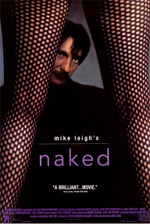
    As much credit as auteur Mike Leigh deserves for changing the landscape of British cinema with his stinging social comedy and defiantly unorthodox creative process, Channing Williams merits the same appreciation for backing Leigh on every one of his projects since his breakthrough feature “High Hopes” in 1988 — however tenuously defined or commercially unsound they may have appeared to be at the outset.

    The constance of Channing Williams’ collaboration gave Leigh the wherewithal and confidence to push his art into ever more challenging and surprising directions, encompassing the icy philosophising of “Naked,” to the warm domestic melodrama of “Secrets and Lies,” the brittle classicism of “Vera Drake” to the loose-limbed yet black-edged comedy of last year’s “Happy-Go-Lucky.” It truly stands as one of the industry’s greatest producer-director partnerships, and it’s hard to imagine a future Leigh film without Channing Williams’ name attached. As Leigh himself commented:

    He was a natural-born producer, a great leader, always an enabler, a protector; never a dictator or an interferer. Infinitely generous, his life was all about doing things for people, and bringing out the best in everybody. He was the ultimate fixer, and a phenomenal organiser. He relished the impossible challenge, and loved the cut-and-thrust of negotiations, at which he was a genius.

    (more…)

  • Revisiting ‘Naked’

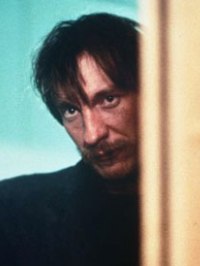
    I’m pleased that at least one person correctly identified Tuesday’s mystery quote (despite my initial absentminded misquoting) as coming from Mike Leigh’s 1993 film “Naked,” a brilliant, bruising urban portrait that still stands, for this writer, as the auteur’s finest film to date. It won Leigh and lead actor David Thewlis richly deserved awards at Cannes, though unsurprisingly, its talkiness (the film is less a narrative than it is a series of ingeniously constructed conversations) and unrelenting pessimism never really caught fire with audiences, least of all Stateside.

    Incredibly, it is only this week that the film has been released on DVD in its home country – a move that, however overdue, at least cunningly coincides with the local DVD release of Leigh’s latest, “Happy-Go-Lucky.” Bringing them out simultaneously is a clever move, not least because the films complement and inform each other so nicely. Very much two sides of the same coin, the films examine the fragile moods and  tensions of middle-class London society through the eyes of two protagonists (dissolute bum Johnny in “Naked” and cheery schoolteacher Poppy in “Happy-Go-Lucky”) poles apart in terms of perspective and ideology.

    Watching the films together, as I did back in April (thanks to the wonder of VHS), puts into quite striking relief the changes (physical, political and sociological) that Britain and its capital have endured in the space of fifteen years. Some would say the contrast points to a change in Leigh himself, though I’m not so convinced – partly because “Happy-Go-Lucky” isn’t as optimistic in its worldview as the title suggests, and partly because “Naked” was preceded by the infinitely warmer and gentler “Life is Sweet,” the closest tonal match for the new film in Leigh’s oeuvre. Like any artist, the man’s moods don’t follow a regular arc.

    (more…)