In Contention

Tag: Braveheart

  • LIFE WITHOUT OSCAR: 1995 and 1996

    Catch up with the idea behind this series here.

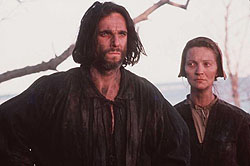
    I saw “Braveheart” on video and I’m not positive if that was before or after it won Best Picture at the Oscars. Whenever it was, Mel Gibson’s historical epic immediately became this 13 year old’s favorite movie of all time. My second favorite movie of all time back then was “Apollo 13,” so it was a good Oscars for me.

    1996 became famously known as the “Year of the Indie” and “The English Patient” walked away with just about every award under the sun. I seem to remember Andrew Lloyd Webber quipping, “I’m glad there wasn’t a song in “The English Patient,”” while collecting his prize for “Evita.”

    Cuba Gooding Jr. completed the first phase of his future career as a punchline by winning Best Supporting Actor for “Jerry Maguire,” while Juliette Binoche etched her name at the top of Lauren Bacall’s shitlist by winning Best Supporting Actress in a huge upset.

    Speaking of punchlines, Whoopi Goldberg delivered them in ’95 before Billy Crystal’s triumphant return in ’96. Goldberg, who remains my least favorite MC of all the broadcasts I’ve watched, thought that following Vanessa Williams’s performance of “Colors of the Wind” with a glance behind her and the line, “What color is my wind?” constituted great comedy.

    But I digress.

    (more…)

  • 10/27 Oscarweb Round-up

    Mel Gibson in Braveheart• Patrick Goldstein thinks tapping Ricky Gervais as emcee suddenly classes up the Golden Globes. [The Big Picture]

    • In case you’ve missed it, a thorough and, I’d say, fair profile of James Cameron in 11,000 words. [New Yorker]

    • Mel Gibson admits the subject of his Oscar-winning biopic “Braveheart” was a “monster.” [The Times]

    (more…)

  • 1/2 Oscarweb Round-up

    David Fincher• David Poland looks at the race nine weeks out from the angle of release marketing and strategy. [Movie City News]

    • Nathaniel Rogers is knee deep in his annual (extensive) year in review features.  Read it.  Now. [The Film Exerience]

    • Jeffrey Wells passes on some notes from a friend making some dubious comparisons between “Milk” and “Braveheart.” [Hollywood Elsewhere]

    • Old news you’ve probably read by now, but Tina Brown’s latest foray into the world of journalism proves just how much of a disreputable rag it can be. [The Daily Beast]

    • David Usborne is quick to dive in the mud with the hacks and bring a respectable UK outlet down there with him. [The Independent]

    • Joe Queenan chats with Mickey Rourke across the pond. [The Guardian]

    • Anne Thompson seems to think a Christmas release hurt “Revolutionary Road”‘s Oscar chances. [Thompson on Hollywood]

    Dave Karger takes a stand with some late-December Oscar predictions. [Entertainment Weekly]

    • David Carr speaks up for “Iron Man” over “The Dark Knight,” calls the latter’s third act a “mess.”  Oy. [The Carpetbagger]

    • Tom Roston sits down with “Defiance” and “X-Men Origins: Wolverine” star Liev Schreiber. [Los Angeles Times]

    • As a David Fincher retrospective cranks up in the Big Apple, Dennis Lim looks back over the director’s career to date. [New York Times]

    • Patty Rhuke spotlights the similarities between “Forrest Gump” and “The Curious Case of Benjamin Button,” comparisons certain parties involved would probably rather go away. [USA Today]

  • Who joins the great Best Picture snubs this year?

    It happens every year, a great film, in some cases destined to be remembered more than the eventual Oscar winner is snubbed for a Best Picture nod, or gets nominated and loses to an inferior film that happened to capture the public’s attention at that particular point in history.

    Some of the greatest films of all time lost the top award, “Citizen Kane” among them, arguably the greatest of all time (though I disagree). “The Treasure of the Sierra Madre”, easily John Huston’s best work, joins the list, as does “The Searchers,” which is in my opinion the finest western ever made and contains the greatest John Wayne performance of all time.

    Remember “Rocky” winning over “All the President’s Men,” “Network” and “Taxi Driver?” Or “Kramer vs. Kramer” over “Apocalypse Now?” In the last twenty years, Oscar has pulled some howlers, some choices that left me nearly putting my foot through the television upon the announcement. The first time I remember being really, truly angry at a lame decision was in 1981 when “Chariots of Fire” bested Warren Beatty’s “Reds,” which I believe to be among the best films of the 80s.

    (more…)

  • Actors winning Best Director — always deserved?

    Of course not. Quite often the Academy gets behind an actor for the simple reason they pulled of the film without screwing too much up.

    How else can one explain Mel Gibson’s win for “Braveheart” but failure to be nominated for his masterpiece “The Passion of the Christ” and “Apocalypto,” easily two of the finest directed films of the last ten years? Somewhere along the road, the Academy fell in love with actors who try their hand at directing (unless your name is Sean Penn or Barbara Streisand) and began giving away Oscars, quite often over more deserving directors.

    Poor Martin Scorsese has watched actors win the Best Director prize over his work three times. In 1980, of course, Robert Redford won for his drama “Ordinary People” over Scorsese’s searing “Raging Bull,” while ten years later Kevin Costner won the Oscar for “Dances with Wolves,” besting Scorsese for “Goodfellas.” But hey — this is the Academy…right? Clint Eastwood also bested Scorsese’s “The Aviator” in 2004 with a win for “Million Dollar Baby.”

    One year after Redford won his Academy Award for Best Director, Warren Beatty took home the award, much deserved for his criminally under-appreciated epic “Reds.” But he would watch in shock as “Chariots of Fire” ran to the Best Picture award over his film. The following year, a minor British actor, Richard Attenborough directed “Gandhi,” which the Academy fell in love with, honoring the achievements of the film’s subject rather than the effort itself, which even at the time seemed old-fashioned and rather ordinary. Attenborough himself, on the way to accept the Directors Guild Award for the film, stopped to chat with Steven Spielberg to make clear what everyone in the room seemed to know: that Spielberg should have won the award for “E.T.: The Extra-Terrestrial!”

    (more…)