In Contention

Tag: Out of Africa

  • LIFE WITHOUT OSCAR: 1985 and 1986

    Catch up with the idea behind this series here.

    1985 saw “Out of Africa” win the top prize in another instance where I’ve only seen one of the Best Picture nominees. I don’t know what it is about this period, but hardly any of the films jump out as necessary viewing when looking back on what to catch up on. I’ve been meaning to see “The Color Purple” for a while, but also, don’t really care.

    Spielberg’s drama came into the ceremony with 11 nominations and went home with a goose egg, tying an Oscar record. Spielberg himself didn’t get a directing nod, Akira Kurosawa jumping in instead for “Ran.” Fans of ladies daytime TV would be happy to see two of their favorites, Oprah and Whoopi Goldberg, were both nominated this year.

    Oliver Stone’s “Platoon” earned top honors in 1986, competing against a number of films made outside of the Hollywood studio system. One of them, “Children of a Lesser God,” was the first Best Picture nominee ever directed by a woman. It’s also the first and only time an Oscar winner couldn’t attend because they were busy filming “Jaws: The Revenge” (cough, Michael Caine).

    Finally, the winner of Best Documentary Short was a montage called “Precious Images” that may as well have been made by the Academy. It’s the first piece of film they show every new student at my film school and used to joke that if you could name every film in it, you could get free tuition. Check it out here, movie nerds!
    (more…)

  • Cheer up, Meryl — you have your masterpiece

    Meryl StreepYou may well have spotted this very funny (and frequently accurate) Onion piece doing the web rounds today, in which a writer claiming to be Meryl Streep shoots down her career with all the withering disdain of Miranda Priestly.
    The gist of the argument is that, as fine an actor as Streep is, she has — whether through bad luck or bad choices — never made a truly great film.

    I can see the temptation to agree. Certainly the latter stretch of Streep’s filmography is spotty: even if you remove the outright embarrassments, (“Prime,” “Mamma Mia!”) or even the respectable-but-still-throwaway entertainments (“Julie & Julia,” “The Devil Wears Prada”), you’re left with a lot of worthily middlebrow titles engineered more as performance showcases than as vital, durable cinema.

    (more…)

  • And often, the Academy gets it right…

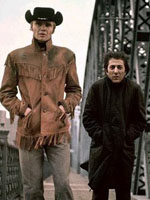
    United Artists' Midnight CowboyAs much as I rant about some of the bizarre choices made by the Academy, let’s be fair…there are times when they are right on the money.

    The AMPAS allowed for an embracing of the New American cinema with their awards for Best Picture and Best Director for “Midnight Cowboy” in 1969, and only they had the courage (and the smarts) to recognize that “The Godfather Part II” was a superior film to the first in handing it the same two trophies. They had awarded “The Godfather” Best Picture two years earlier, but much of the precursor circuit (and all of the critics groups) largely ignored the sequel, opting instead for films such as “Alice Doesn’t Live Here Anymore” and “Chinatown,” among others.

    The five awards betsowed on “One Flew Over the Cuckoo’s Nest” in 1975 are among the group’s best choices ever, in particular the honors for actor Jack Nicholson and director Milos Forman.

    Though far too often dismissed as a chick flick, “Terms of Endearment” was a marvelous slice of life that the Academy embraced with five Oscars, including Best Picture, Best Actress, Best Supporting Actor and Best Director. By the way, is it not odd that first time winner James L. Brooks has never again been nominated in the directing category again, despite two Best Picture nominees in “Broadcast News” and “As Good As It Gets?”

    I remember cheering loudly the many wins for “Amadeus,” “Out of Africa” and “Platoon” three years in a row, and though I believe “Goodfellas” is a better film, I was pleased to see a western, “Dances with Wolves,” win seven Oscars.

    No arguments from me between 1991 and 1993, with “The Silence of the Lambs,” “Unforgiven,” and “Schindler’s List” all most deserving winners. And though I prefer “Pulp Fiction,” I understand why “Forrest Gump” took the top prize in 1994.

    Bravo, too, to the Academy for honoring “The Lord of the Rings: The Return of the King,” a bonafide movie masterpiece, and again the following year for “Million Dollar Baby.”

    So you see, for all my bitching (and we all do it…come on), I concede that the Academy does, from time to time, nail the best.

  • Why I will miss Sydney Pollack

    It has now been nearly four days since filmmaker Sydney Pollack passed away. The loss was not crippling for me, however, because of equal parts expectancy and, strangely, indifference.

    As fine a filmmaker as Pollack was, he was always something of an afterthought in my cinema-going experience.

    I want to be measured here, because the last thing I mean is disrespect. In fact, I’m aiming more toward appreciation of a sort of confident casualness that has been eradicated in this fresh new world of cock-sure filmmaking youths and the veterans who, at times, struggle to keep up, and at others, tap into their own former risk-taking ways to establish a new vision of the “old school.”

    Pollack was never about that. He seemed to make his way from film to film with grace and a willingness to take stock of the lessons that came. I never knew him — can’t offer any first hand accounts of exchange — but if anything about his May 26 death strikes a profound chord with me, it is to know that an ever agreeable constant has been removed from this business, this art form. Sometimes the disconnect of casual dependency can sting as much as the loss of the closest of comrades.

    (more…)