In Contention

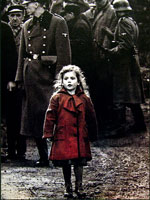
Tag: Schindler’s List

  • Class of 1993

    There are a lot of reasons I wish I was 10 years old again — the free food and lodging, the still-tempered cynicism, the safe knowledge that there were only three Indiana Jones movies — but chief among them on this Oscar Nomination Eve is that if I was, I’d have the 1993 Academy Award slate coming my way.

    If you’ve forgotten that Oscar year — or if it was before your time — refresh your memory here. Seriously, has the Academy ever cobbled together quite such an impeccable lineup across multiple categories?

    Start at the top, with a Best Picture lineup that balances top-flight Hollywood prestige (“Schindler’s List”), daring international arthouse (“The Piano”) and peerless populism (“The Fugitive”). Move down through those hard-earned semi-surprise acting nods for the likes of Laurence Fishburne and Stockard Channing, down to the Best Supporting Actor race that I’ve already cited as the strongest in the category’s history.

    (more…)

  • LIFE WITHOUT OSCAR: 1993 and 1994

    Catch up with the idea behind this series here.

    1993 was the year I first became interested in making movies and tracking box office. There are two words responsible for both and they rhyme with Yourassic Lark. The director of that beast would also helm our Best Picture winner that year, finally earning the Academy’s respect. I’m talking about Steven Spielberg and “Schindler’s List” of course, but if you ask me, “Jurassic Park” is the better film.

    Tom Hanks won Best Actor in both 1993 and 1994, becoming the first person since Spencer Tracy to take the prize two years in a row. I’d begrudge him the honor, but he’s just so darn likable. Honestly though, Denzel Washington should have gotten some love for “Philadelphia” too. This win marks the only time an acceptance speech was adapted into a movie (“In & Out”).

    1993 is also personally notable as the first time I had seen one of the Best Picture nominees by the time of the ceremony (“The Fugitive”).

    1994 was easily won by “Forrest Gump,” despite the presence of what IMDb users consider the greatest movie of all-time being in the mix. Really, IMDb users? “The Shawhsank Redemption?” It was also David Letterman’s one and only shot at hosting, which has been much-maligned but remains one of my favorite turns at the gig. Infinitely better than Whoopi Goldberg in 1993.

    Uma. Oprah.

    (more…)

  • THE LISTS: The top 10 Best Picture winners of all time

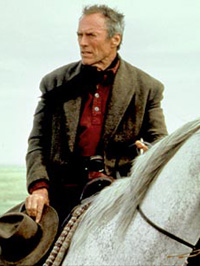
    Clint Eastwood in UnforgivenWith the Oscar season officially here it seemed only logical to dedicate an installment of The Lists to the little golden guy.  And as we push forward past the fests and into the thick of it, I figured the best idea would be a broad assessment of the Academy’s chosen best through the years, a bone of contention for a great many, as you read in this space and in the comments section year in and year out.

    But I must say, putting this list together was a joy.  The percentage of times I think the Academy has gotten it “right” is quite low, of course, but when I skimmed the cream of the crop I was left with, I felt, a wonderful collective representative of the finest of American cinema.

    Of course, that should itself be seen as damning the organization with faint praise.  After all, the Academy has failed to recognize a great many foreign classics with its top prize.  And by a great many I mean any.

    The most celebrated decade in cinema, the 1970s, has three representatives on the collective, each of them at the very top.  The 1990s and 1980s came in right behind with two to show for themselves, while the 1930s, 1940s and 1960s each had one entry.

    I’d say that’s a pretty decent cross-section.

    It goes without saying a list like this is incredibly subjective, but I’d be very curious to hear the readership’s thoughts on 82 years of this award, so when you rattle through my list, be sure to offer up your own in the comments section.  We have a diverse group here so I’m sure there will be a number of unique takes.

    (more…)

  • Could Kubrick’s Holocaust film get made after all?

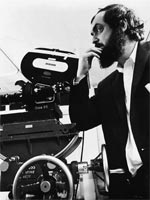
    Stanley Kubrick“Aryan Papers” is a title that is probably familiar to keen students of the great Stanley Kubrick, representing as it does a sadly missed opportunity in his abruptly curtailed career.

    For the uninformed, however, it’s the name of a Holocaust-themed Kubrick screenplay that he was due to direct for Warner Bros. in early 1990s, before the arrival of Steven Spielberg’s similarly targeted “Schindler’s List” compelled director and studio to shelve the project.

    Now it appears that Kubrick’s family is seeking to resurrect the project, which is still owned by Warner Bros., with Kubrick’s brother-in-law (and executive producer on his last four features) Jan Harlan leading the charge.

    (more…)

  • The films you’re supposed to love, but don’t

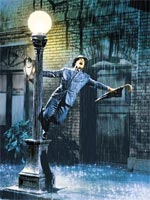
    Gene Kelly in Singin' in the RainBound to raise many a film buff’s hackles, The Guardian carries an entertaining piece today by novelist Tim Lott on the subject of “the worst best films ever made” — in other words, the roundly lauded and canonized classics that routine appear on “all-time greatest” lists but, well, simply aren’t all that.

    It’s a wholly subjective issue, of course, and Lott is unashamedly provocative (if overly glib) in tackling it, taking down some seriously big targets along the way. Films in the firing line include “The Searchers” (which he accuses of both racism and “rude mechanicals”), “Les Enfants du Paradis” (“dated, overlong and absurdly wordy”), “On the Waterfront” (“a masterclass in ham acting”) and “Death in Venice” (“a colossal piece of soft-focus masturbation”).

    I disagree on most counts, but now and then his venom strikes a chord of with me. I wouldn’t go as far as he does in calling “La Dolce Vita” a “turgid, lazy mess of half-realised conceits,” but I agree that it’s not a film that has aged particularly well; compared to the still-pristine “8½,” its experiments in anti-narrative look idle and incomplete. And I’m glad someone else has the courage to say that subsequent decades of radical reinvention in the field of the movie musical make “Singin’ in the Rain” look like a very ordinary achievement indeed. (I’ll just come out and say it: I can’t stand Gene Kelly.)

    (more…)

  • More history than that

    Sasha Stone points out a bit of sweep trivia that an Awards Daily reader passed her way.  But I think it goes even deeper than a SAG/DGA/BAFTA/Globe/BFCA sweep.

    To the best of my knowledge, the only film to ever FULLY dominate by winning the WGA, PGA, DGA, Golden Globe, USC Scripter and BAFTA  — six of the biggest precursor awards in the circuit — is Steven Spilberg’s “Schindler’s List” in 1993.  And the BFCA and SAG ensemble awards didn’t exists back then, So if “Slumdog” continues its streak by winning the WGA, BAFTA and Oscar, it will be the winningest awards film in 16 years, and really, of all time.  Unless I somehow missed a beat in there, but I don’t think I did.

    Now THAT’s history.

  • And often, the Academy gets it right…

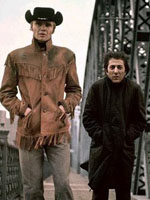
    United Artists' Midnight CowboyAs much as I rant about some of the bizarre choices made by the Academy, let’s be fair…there are times when they are right on the money.

    The AMPAS allowed for an embracing of the New American cinema with their awards for Best Picture and Best Director for “Midnight Cowboy” in 1969, and only they had the courage (and the smarts) to recognize that “The Godfather Part II” was a superior film to the first in handing it the same two trophies. They had awarded “The Godfather” Best Picture two years earlier, but much of the precursor circuit (and all of the critics groups) largely ignored the sequel, opting instead for films such as “Alice Doesn’t Live Here Anymore” and “Chinatown,” among others.

    The five awards betsowed on “One Flew Over the Cuckoo’s Nest” in 1975 are among the group’s best choices ever, in particular the honors for actor Jack Nicholson and director Milos Forman.

    Though far too often dismissed as a chick flick, “Terms of Endearment” was a marvelous slice of life that the Academy embraced with five Oscars, including Best Picture, Best Actress, Best Supporting Actor and Best Director. By the way, is it not odd that first time winner James L. Brooks has never again been nominated in the directing category again, despite two Best Picture nominees in “Broadcast News” and “As Good As It Gets?”

    I remember cheering loudly the many wins for “Amadeus,” “Out of Africa” and “Platoon” three years in a row, and though I believe “Goodfellas” is a better film, I was pleased to see a western, “Dances with Wolves,” win seven Oscars.

    No arguments from me between 1991 and 1993, with “The Silence of the Lambs,” “Unforgiven,” and “Schindler’s List” all most deserving winners. And though I prefer “Pulp Fiction,” I understand why “Forrest Gump” took the top prize in 1994.

    Bravo, too, to the Academy for honoring “The Lord of the Rings: The Return of the King,” a bonafide movie masterpiece, and again the following year for “Million Dollar Baby.”

    So you see, for all my bitching (and we all do it…come on), I concede that the Academy does, from time to time, nail the best.
  • Best of the 90’s

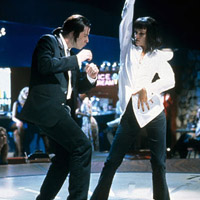
    John Travolta and Uma Thurman in Quentin Tarantino\'s Pulp FictionTime is the enemy of all films as it erodes what was once exciting and original. Truly great movies are able to withstand the test of time, but I wonder if enough time has passed to take a look back at the 1990s cinema and make some decisions.

    There was a major breakthrough in the decade with filmmaker Quentin Tarantino, who did not so much open the door for indies as he did kick it in and stomp on it with his “Pulp Fiction,” a gloriously acted, directed and written masterpiece about criminals in Los Angeles.  When Godard spoke of making films with a guy, a girl and a gun, was this what he had in mind?

    Though Tarantino has strugled to follow up his legendary 1994 effort with an equally powerful offering, there is little doubt he will, or at least could if he wanted to. (Though he keeps stopping and starting on his latest ambitious project.)  After all, he is still growing as a director.  And just look at Steven Spielberg, who for my money has grown artistically through the last 15 years more so than any other major filmmaker. It was as though “Schindler’s List” and the release of winning the Oscar set him free.

    Anyway, for the record and argument, here are my ten best films of the 1990s:

    1. “Pulp Fiction”
    2. “Schindler’s List”
    3. “Goodfellas”
    4. “Unforgiven”
    5. “Saving Private Ryan”
    6. “The Sweet Hereafter”
    7. “Magnolia”
    8. “L.A. Confidential”
    9. “The Shawshank Redemption”
    10. “The Silence of the Lambs”

    You?