In Contention

Tag: Star Wars

  • Towne toasts Arndt’s success

    I had the loveliest time last night at a reception in honor of “Toy Story 3” writer Michael Arndt hosted by the great Robert Towne.  The night began to wrap up and with nearly all guests having left, things segued to the hotel bar as USA Today’s Anthony Breznican, director Lee Unkrich, composer Michael Giacchino, Arndt and I ended up hunkered down talking the night away.

    It’s a conversation that remains happily off the record, but spending a solid hour or two talking with Arndt about the craft and mechanics of screenwriting is something I’ll always cherish.  Firstly, here is a guy (we first met four years ago during the “Little Miss Sunshine” ride) well aware of the luck he’s stumbled into and so modest and borderline embarrassed by his success that you just can’t help but root for him.  But the passion he has for the form is an absolute treat for anyone interested in being a writer.

    Unkrich, meanwhile, has the most undying passion for Stanley Kubrick and, specifically, “The Shining” (his favorite film, and one referenced a number of times in the film).  He flashed a number of photos on his iPhone of collectibles from the film that he’s been accruing as of late (one of them being the axe Jack Nicholson wields in the film’s most famous sequence) and recalled his trip to London’s Stanley Kubrick Archive.
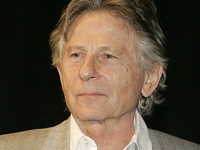
    (more…)

  • Ford does Letterman

    I’m not all that high on Roger Michell’s “Morning Glory” or Harrison Ford’s gravelly-voiced portrayal of a curmudgeonly news man, but I enjoyed his sit-down with David Letterman last night.  Part two after the jump.  (Mike Ryan, meanwhile, charts the actor’s response to “Star Wars” questions throughout the years at Movieline.)

    (more…)

  • 9/28 Oscarweb Round-up

    Roman Polanski• Oscar-winning director Roman Polanski arrested in Zurich for 1977 rape charge. [CNN]

    • Steven Zeitchik reports that Summit was set to be the first out of the gate with awards screeners this year with “The Hurt Locker.” Would it have made a difference? [Risky Biz Blog]

    • Nathaniel Rogers considers Julianne Moore’s Oscar chances in “A Single Man.” [The Film Experience]

    (more…)

  • In praise of model and practical effects work in ‘Moon’

    MoonThe success of Neill Blomkamp’s “District 9,” (thoughts) and hopefully (eventually), Duncan Jones’s “Moon” (review) has fed into what I’ve been consistently calling a banner year for sci-fi cinema in 2009.  That is, of course, assuming “Avatar” does come along and lay a giant egg in December.

    One of the galvanizing aspects to, well, two of these films, anyway, is the independent focus.  The modestly budgeted aspect that keeps the spirit of high concept indie filmmaking alive.  And in the case of Jones’s film, the use of practical effects free of frivolous CGI is cause for celebration.  At least that’s what Guardian writer Phelim O’Neill is getting at with a recent piece that declares the film’s old-school effects should be a model for today’s sci-fi films.

    In particular, it’s the model work in the film that is so exciting to O’Neill.  There is a humorous “then and now” photo of George Lucas that has made the rounds, the underlying point being that the director lost his creative drive when he began using heavy CGI in the “Star Wars” franchise.  Personally, I think that’s silly, because, well, the “Star Wars” films are bad with models or without them (my opinion).  But there is something about the tangible quality of practical effects that makes the reward of watching a film that much richer.  “Moon” is one level on that scale.  “The Dark Knight” is another.  It doesn’t have to be a money concern. C reatively, it can have a more visceral impact.

    (more…)

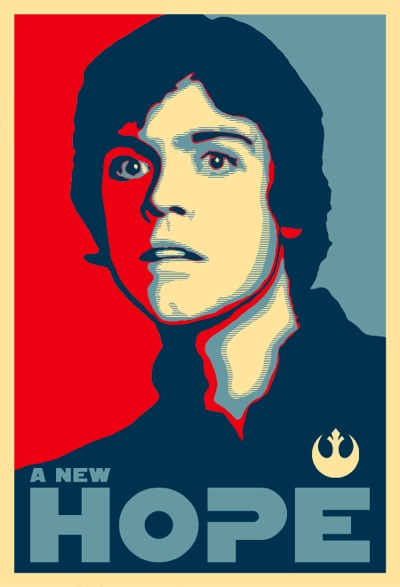
  • North by northwest, via Tatooine

    I don’t even like “Star Wars,” but I would hang this on my wall in a heartbeat:

    North by Northwest meets Star Wars

    (Courtesy: io9)

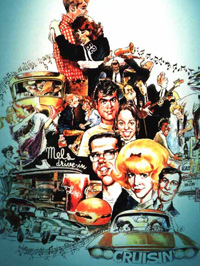
  • ‘American Graffiti’ — why it still resonates, 36 years later

    American GraffitiGeorge Lucas grew up in a small town, Modesto, California, where on Friday nights the guys hopped in their freshly washed and waxed cars and cruised the streets, rock and roll blaring out of the rolled down windows. Everyone knew each other so the streets were alive as though one big party were happening.

    Lucas, with William Huyck and Gloria Katz, would later write the screenplay for “American Graffitti,” a remarkable little film set in 1962 and a small town in California on the last night of summer before school begins. Loosely based on experiences Lucas had as a teenager, the film would become a touchstone for a generation, having an impact on pop culture no one expected. For the generations after the 1970s that have seen the film, it has the same curious effect, and without sounding self-important or condescending, that impact will grow as they, and we, continue to age.

    Why?  We knew people like this.  We were people like this.

    The film is familiar for almost anyone who ever went to high school, perhaps more so to small town natives. We all knew the town tough guy who hung around with the high school kids long after he had left school because he needs the adoration they give him. There was the class geek: glasses-wearing, short, trying a little too hard to please, but likable just the same.

    The class jock, who would also be the class president dating the head of the cheerleader sqaud, and the intellectual, who could not wait to get out of the town and see what the world held for him. All of us, sometime in our lives at school, knew people like this, perhaps even were people like this.

    (more…)

  • Your ranked list of the 10 most influential films of all time

    Citizen KaneAnd with that, our poll series comes to a screeching halt.  I’ve already offered some thoughts on how all of this turned out.  I hope readers unfamiliar with some of the films I’ve been harping on will take that to heart and at least seek them out.  You owe it to yourself as a film lover, believe you me.

    Here is your ranked list.  For background on all of these shenanigans, click here.  I want to thank everyone who participated in the polls and made this a real community effort.

    1. “Citizen Kane” (Orson Welles, 1941)
    2. “Star Wars” (George Lucas, 1977)
    3. “2001: A Space Odyssey” (Stanley Kubrick, 1968)
    4. “The Godfather” (Francis Ford Coppola, 1972)
    5. “The Wizard of Oz” (Victor Fleming, 1939)
    6. “Psycho” (Alfred Hitchcock, 1960)
    7. “Jaws” (Steven Spielberg, 1975)
    8. “Pulp Fiction” (Quentin Tarantino, 1994)
    9. “Snow White and the Seven Dwarfs” (David Hand, 1937)
    10. “Toy Story” (John Lasseter, 1995)

    Honorable mention: “Annie Hall,” “Apocalypse Now,” “Battleship Potemkin,” “The Birth of a Nation,” “Casablanca,” “The Godfather Part II,” “Gone with the Wind,” “The Matrix,” “Metropolis” and “Rashomon”

    One of these days I’ll cook up my own list.  Until then, once again, thanks for participating.

  • POLL: the most influential films of all time, round one, part four

    I decided to bump today’s poll an hour to give some extra lead time to the sad news of director Marc Rocco’s passing, but I don’t think it ultimately mattered much.  The three survivors of last week’s slate were “Casablanca,” “The Matrix” and “Star Wars.”  On to a new set of 10.

    Again, the groupings in these polls are decided at random.  So no yelling at your humble servant.  But I expect more than a few to be dismayed at having to choose three from the sterling collective you’ll find in the left sidebar.  C’est la vie.

    Choose your trio and be heard!  Two more weeks of round one after this and we’ll be moving on.  Once again, for background on this series, click here.

  • Which moments hooked you?

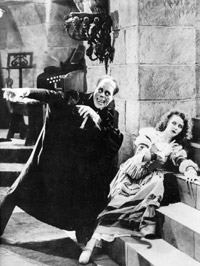
    (from left) Lon Chaney and Mary Philbin in The Phantom of the OperaI love the current poll series about the most influential films of all time, but it got me thinking about the moments in movies that hooked me on cinema forever. You know, the ones we see as kids that have an enormous impact on us, forever bonding us to this art form we all so love?
    For me, as I’ve mentioned before, it was a scene in “The Ten Commandments,” Cecil B. DeMille’s remake of his own epic, which I saw in 1972 (I think) in a re-release of the picture. In the days before video (yep, that old) the studios would re-release their films every few years and this was a major re-release for Paramount. My dad, also a movie junkie (though not as bad as his son), had talked about this for years and now that it was back we were going.

    Admittedly, I was a tad cynical at 12 years old.  I fully expected to be disappointed.  Still I wanted to see it because I enjoyed going to the movies. Little did I know my life would be changed forever.

    We piled into the car and made the drive to the theater, which was packed with familes similar to ours. The lights went down and for the next four and a half hours I was swept back in time, stunned by the size and scope of the film, amazed at the colors, and most of all, astonished at Charlton Heston. Never before had I realized how an actor could command the screen.  I never felt like I was watching a performance, either.  In awe I watched the Exodus scene as literally thousands of actors moved out of Egypt, led by Moses.

    (more…)

  • TCM’s top 15 most influential classic movies

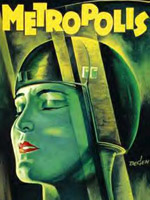
    MetropolisWell, here’s something I guess.  Rope of Silicon points us to TCM’s list of the top 15 most influential “classic” films of all time.  I actually started working up such a list for the site a while back but abandoned it for whatever reason.  It was going to include all comers, though, not just classic films.  They seem to be listed in chronological order over at TCM.com.  The 15:

    “The Birth of a Nation” (1915)
    “Battleship Potemkin” (1925)
    “Metropolis” (1927)
    “42nd Street” (1933)
    “It Happened One Night” (1934)
    “Snow White and the Seven Dwarfs” (1937)
    “Gone with the Wind” (1939)
    “Stagecoach” (1939)
    “Citizen Kane” (1941)
    “The Bicycle Thief” (1947)
    “Rashomon” (1950)
    “The Searchers” (1956)
    “Breathless” (1959)
    “Psycho” (1960)
    “Star Wars” (1977)

    My list certainly included most of those, which are by and large hard to argue with.  “Birth,” “Battleship,” “Metropolis,” “Night,” “Snow White,” “Wind,” “Kane” and “Star Wars” were definitely included in my tally.  If we were to extend it beyond the “classic” realm, I think we’d have to include “Jurassic Park” and the “Lord of the Rings” franchise.  “Toy Story” would have to have a secure place, while “Pulp Fiction” obviously sparked a revolution some would argue had roots in “sex, lies and videotape” (also a contender for an “all-time” list).

    Since TCM’s idea of “classic” obviously stretches into the late 1970s, I think it’s rather foolish to leave off “Jaws” and/or “The Godfather” considering what they meant to big business theatrical revenue before “Star Wars” came along.  And going way back, “The Great Train Robbery” had people running from the theater screaming after the final image of a bandit firing his gun at the camera.  There’s something to be said for one of the first films to enthrall like that.

    And what about “The Jazz Singer?”  How do you leave that title off a list of “classic” cinema?  I guess it had to be narrowed to 15 but there are a couple of films on that list that could have been bumped, I think.

    Let’s put it to the readership.  Assuming an “all-time” list rather than limiting it to the classics, what would you say have been the most influential films?  I could make a mean case for “Die Hard,” but I’ll anxiously await your input.  Rattle off your lists and maybe we’ll settle things with a series of polls.

  • 11/26 Oscarweb Round-up

    WALL-E• Jeff Wells is beside himself because Oscar prognosticators understand “Che” has a snowball’s chance in hell at a best Picture nomination. [Hollywood Elsewhere]

    • Noah Forrest podcasts “Changeling” screenwriter J. Michael Straczynski. [Movie City News]

    • Anne Thompson gets the “Australia” goods from Hugh Jackman. [Thompson on Hollywood]

    • Tom O’Neil, meanwhile, wonders if pundits are underestimating the film…nah. [Gold Derby]

    • The economy takes a bite out of one of the season’s biggest Oscar bashes. [Vanity Fair]

    • Pete Hammond is a party pooper, makes sure we all understand a SAG strike could put a damper on the season. [Notes on a Season]

    • Nathaniel Rogers talks to “Rachel Getting Married” gals Rosemarie DeWitt and Jenny Lumet. [The Film Experience]

    • Peter Bart joins my Brandon Walters bandwagon, says director Baz Luhrmann has created a star. [Peter Bart]

    • Kevin Kelly talks to “WALL-E” and “Star Wars” sound whiz Ben Burtt. [Spout Blog]

    • Patrick Goldstein digs into the emotional chill factor of “The Curious Case of Benjamin Button.” [The Big Picture]

    • A Harvey Milk Cliff’s Notes for your “Milk” screening preparations. [USA Today]

  • 11/9 Oscarweb Round-up

    Warner Bros. Pictures' Watchmen• Steve Weintraub has a sweet four-video series on Ben Burtt’s process for creating the sounds of “WALL-E” and the “Star Wars” films.  Worth a look if you’re into the tech arena like we are. [Collider]

    • Bad news for Baz Luhrmann’s “Australia.”  A forced happy ending. [News.com.au]

    • Cherry Jones gives her approval of Meryl Streep’s turn in “Doubt.” [Gold Derby]

    • But elsewhere, the odds are being stacked against the film. [Vulture]

    • Dave Karger and Missy Schwartz discuss the season’s most unknown commodities: “The Curious Case of Benjamin Button” and “Revolutionary Road.” [Oscar Watch]

    • Brad Brevet finds some striking similarities between the new “Watchmen” poster and an old “Dark Knight” international one-sheet. [Rope of Silicon]

    • In the midst of AFI Fest, John Horn gets some quality time with “Slumdog Millionaire” director Danny Boyle. [Los Angeles Times]

    • Meanwhile, Anne Thompson responds to a second “Slumdog” screening. [Thompson on Hollywood]

    • The new gadgetry of Bond. [New York Daily News]

    • Amy Raphael profiles Kelly Macdonald as “Choke” lands across the pond. [The Guardian]

    • Also in the U.K., Toby Jones continues to stir the waters with below-the-radar portrayals. [The Times]

    • Deborah Solomon cranks out a Q&A with “Frost/Nixon” director Ron Howard. [New York Times]

    • Jeffrey Wells defends the violence of Matteo Garrone’s “Gomorrah” against the potential ignorance of the foreign film committee. [Hollywood Elsewhere]

  • Amazing

    I didn’t notice this until today, but it looks like “The Dark Knight” leap-frogged “Pineapple Express” on Tuesday, the first non-weekend day it has over-earned the stoner comedy over the past week and a half.  And it’s been on top of it since.  It’s also nipping at the heels of the “Tropic Thunder” daily take at the moment.

    Stunning.

    Saturday is the day, by the way, that the film knocks “Star Wars” down a notch on the domestic chart.  Unless it can manage $6.5 million tomorrow (which is certainly possible).

  • Edward Norton and the not-so-jolly green giant

    What can be said of the fearless Edward Norton, who recently became an on-screen comic book hero?  I never understood his choice to take on the role of Bruce Banner, a.k.a. The Incredible Hulk.  And now, post-release, I’m still puzzled.

    He walked into a franchise that became a fast mess just five years ago.  And according to IMDb, he turned the role down back then. Given the actor’s commitment to characterization in his performances, it makes sense that he would turn the other cheek.  After all, so much of Bruce Banner, or at the least what audiences might want to see, is a technological creation. Unlike any of the characters in “Iron Man” or in the upcoming “The Dark Knight,” Mr. Norton doesn’t get to sport a good makeup job and put his true talents on display. He has to disappear all together.  It seems so unlike him.

    (more…)