In Contention

Tag: One Flew Over the Cuckoo’s Nest

  • LIFE WITHOUT OSCAR: 1975 and 1976

    Catch up with the idea behind this series here.

    These two years offer two of the best slates of Best Picture nominees ever in my opinion. ’75 of course belonging to the second ever winner of the top five awards, “One Flew Over the Cuckoo’s Nest.” I’ve got no qualms with that particular film, but for my money, “Barry Lyndon” is inch perfect, every frame.

    1976 is viewed as one of the biggest Oscar travesties of all time. “Rocky” beating out films like “Network,” “Taxi Driver,” and “All the President’s Men” doesn’t sit well with most cinephiles. Guess what though, “Rocky” is in my top five films of all time and totally deserved it. Don’t listen to the haters, Sly!

    Stallone would join Charlie Chaplin and Orson Welles as the only people nominated for acting and writing the same film at that time. Lina Wertmuller would also make history as the first female ever nominated for Best Director, possibly taking Marty Scorsese’s spot.

    The underdog box office champion winning top honors didn’t help the broadcast from becoming the lowest rated ever, and the first to last longer than three and a half hours.

    (more…)

  • THE LISTS: Top 10 Oscar nominee fields

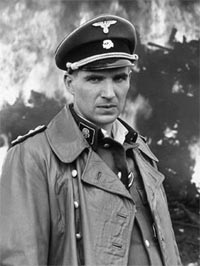
    Ralph Fiennes in Schindler's ListIn exactly one week’s time, we’ll have a brand new list of Oscar nominations to pore over, pick apart and eventually file away in our subconscious with the other 81 editions of this annual collective. For Oscar geeks, nomination day is in many ways more exciting than the ceremony itself, celebrating a broader spectrum of work and throwing up far more surprises along the way.

    For all that, once the winners are announced, the nomination list as a whole tends to be disregarded, returned to only by trivia buffs and the geekiest of Oscar geeks. (Guilty on both counts.) And that’s shame, because a field of five nominees can often be more illuminating viewed collectively than even the worthiest of individual champions.

    Today’s list, then, is devoted to that most elusive of Oscar holy grails: the perfect nominee field.

    Yes, more often than not, the Academy will nominate several notable achievements in a single category. But rarer than hen’s teeth are the robust Oscar categories that feature a full house of five outstanding nominees, five contenders that would all be worthy of a win in any other year. No unremarkable coaster nominees sliding in on the coattails of a popular picture. No bad films with an expensively studio-bought  nominations. No filler. No fat. Just five superb achievements.

    (more…)

  • THE LISTS: Top 10 films of the 1970s

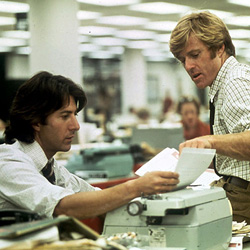
    (from left) Dustin Hoffman and Robert Redford in All the President's MenWhen critics and historians of the cinema sit down to discuss uh, cinema, the conversation almost always turns to the great decades in movie history. And n nearly conversation I’ve been a part of, the 1970s reigns supreme as the single decade of brilliance.

    It was a time of enormous artistic growth for film, as up-and-coming directors grabbed Hollywood and ran with it, merging their love for cinema and the works of John Ford, Billy Wilder, and Elia Kazan (among others) with their own fresh ideas. And the releases of “Bonnie and Clyde,” “The Graduate” and “2001: A Space Odyssey” had already announced the arrival of the new American cinema by the end of the 1960s.

    But the next 10 years brought us Francis Ford Coppola, who exploded onto the scene wit four brilliant works and mentored many of the younger directors of the time. Steven Spielberg would earn the name “whiz kid” for his incredible visual storytelling gifts that would eventually make him one of the greats of all time.

    Martin Scorsese was making unsettling character studies that alarmed the studios but thrilled critics and actors, who felt challenged by his work. Woody Allen evolved from comedy writer, to comedic actor-director, to world-class filmmaker by the end of the decade. And Oscar winning film editor Hal Ashby would make a name for himself behind the camera with a swath of works.

    Sidney Lumet, William Friedkin, Peter Bogdonavich, Bob Fosse, Roman Polanski, Bernadro Bertolucci, Alan J. Pakula, Milos Forman, and Michael Cimino would all leave their mark in the 1970s and continue directing to varying degrees of success in the 1980s and beyond.

    Society heavily impacted the work as films about the war in Vietnam dominated much of the 70s’ final years. Watergate raged mid-decade. Stories were plucked from the headlines and committed to celluloid. Movies were exciting, well made, and interesting. Films like John Frankenheimer’s “Black Sunday,” Milos Forman’s “Hair” and Don Siegel’s “The Shootist.”

    Big budget disaster films enlivened the trade, along with movies about divorce, drug addiction, mental illness, organized crime, vigilantes, prostitution, and countless other topical issues that were explored with great courage on screen. I found narrowing it down to a 10 best list to be nearly impossible and enormously frustrating because some the films left off the list should really be here. But that’s just a testament to the era’s resilience.

    (more…)
  • And often, the Academy gets it right…

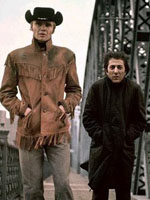
    United Artists' Midnight CowboyAs much as I rant about some of the bizarre choices made by the Academy, let’s be fair…there are times when they are right on the money.

    The AMPAS allowed for an embracing of the New American cinema with their awards for Best Picture and Best Director for “Midnight Cowboy” in 1969, and only they had the courage (and the smarts) to recognize that “The Godfather Part II” was a superior film to the first in handing it the same two trophies. They had awarded “The Godfather” Best Picture two years earlier, but much of the precursor circuit (and all of the critics groups) largely ignored the sequel, opting instead for films such as “Alice Doesn’t Live Here Anymore” and “Chinatown,” among others.

    The five awards betsowed on “One Flew Over the Cuckoo’s Nest” in 1975 are among the group’s best choices ever, in particular the honors for actor Jack Nicholson and director Milos Forman.

    Though far too often dismissed as a chick flick, “Terms of Endearment” was a marvelous slice of life that the Academy embraced with five Oscars, including Best Picture, Best Actress, Best Supporting Actor and Best Director. By the way, is it not odd that first time winner James L. Brooks has never again been nominated in the directing category again, despite two Best Picture nominees in “Broadcast News” and “As Good As It Gets?”

    I remember cheering loudly the many wins for “Amadeus,” “Out of Africa” and “Platoon” three years in a row, and though I believe “Goodfellas” is a better film, I was pleased to see a western, “Dances with Wolves,” win seven Oscars.

    No arguments from me between 1991 and 1993, with “The Silence of the Lambs,” “Unforgiven,” and “Schindler’s List” all most deserving winners. And though I prefer “Pulp Fiction,” I understand why “Forrest Gump” took the top prize in 1994.

    Bravo, too, to the Academy for honoring “The Lord of the Rings: The Return of the King,” a bonafide movie masterpiece, and again the following year for “Million Dollar Baby.”

    So you see, for all my bitching (and we all do it…come on), I concede that the Academy does, from time to time, nail the best.

  • Actor/movie star — who walks the line the best?

    Continuing the conversation from a few days ago on actors that are more than icons, only one name comes to mind: JACK.

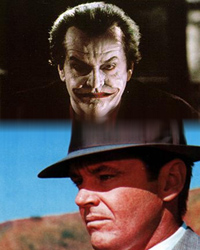
    For more than 40 years Jack Nicholson has been one of the most dominat acting forces in movies, with an impressive array of performances that both challenge him as an artist and also please audiences from time to time with his wild man portrayals.

    In fact, after “Batman,” in which he stole the film from under the nose of Michael Keaton, Nicholson was often accused of playing “Nicholson.” It’s a claim I find absurd considering his performances in subsequent films such as “Hoffa,” “A Few Good Men,” and “The Crossing Guard,” one of his most daring performances ever. Recently the actor has given at least two of his most courageous performances, in “The Pledge” for director Sean Penn, and going totally against type in “About Schmidt,” reminding audiences of the great thespian lurking within the body of the movie star they know so well.

    (more…)