Tag: The Departed
-
THE LONG SHOT: It was always you
 “Let me get this straight. The one’s about a precocious computer geek who’s also a bit of an asshole.”
“Yeah.”
“And the other’s about King George VI.”
“Yeah.”
“And King George VI has a disability.”
“Well, he has a stutter. I mean, it’s not crippling or anything — ”
“But it’s an obstacle that needs to be overcome.”
“Yeah.”
“And I assume, at the end, he does. And becomes King.”
-
LIFE WITHOUT OSCAR: 2005 and 2006
 Catch up with the idea behind this series here.
We all remember Jack Nicholson’s raised eyebrows as he said the word, “Crash” at the end of the 2005 ceremony. What has to be, objectively, one of the biggest surprises of the last twenty years in the Best Picture category is, subjectively, one of the worst catastrophes the Academy has ever produced. “Crash” is a wretched film, but let’s focus on the positive. This was the first time a Best Picture winner was a film that premiered at festivals and was picked up for distribution.
Ang Lee became our first non-white Best Director winner, George Clooney became the first person to receive acting and directing nods in the same year for different films, no film won more than 3 Oscars for the first time in nearly sixty years and the Best Documentary winner grossed more than the Best Picture winner. No shortage of talking points then.
2006 was the year of Scorsese, finally winning the big prizes for “The Departed.” Biopics continued to reign in the acting categories, with Forest Whitaker joining last year’s Philip Seymour Hoffman in the category of non-traditional leading men walking away with Best Actor honors.
Jon Stewart and Ellen DeGeneres were charged with hosting duties, both more famous in the TV realm and both serviceable MCs. Again it was up to Jack Black and Will Ferrell to bring the night’s best entertainment.
So what should you throw into your Netflix queue other than “Crash?”
-
DiCaprio contest winner!
Thanks to everyone who submited a graph detailing a favorite Leonardo DiCaprio performance. After poring through 60-plus entries, I settled on this one as, for me, the most convincing argument, courtesy of Peter Labuza:
For me, DiCaprio was best in Martin Scorsese’s “The Departed.” In a film that is constantly moving and full of energy, DiCaprio brings everything in his body to the internal. While many of the actors in the film rush their words to give the film a jolt, DiCaprio anchors the drama by slowing things down, processing each layer of his character and the façade he has to create. Like “Shutter Island,” DiCaprio’s character loses his mind, but we don’t need Scorsese’s swinging camera and haunted atmosphere to see it—it’s all there in DiCaprio’s face.
I also happen to agree with the choice. So, drop me a line, Peter, and let’s get you your prize.
-
INTERVIEW: Leonardo DiCaprio and Martin Scorsese on building the perfect psychosis in ‘Shutter Island’
 *PLEASE NOTE: There will be spoilers of both “Inception” and “Shutter Island” in this two-part interview with actor Leonardo DiCaprio and director Martin Scorsese.
Audience members flock the stage of the television Academy’s Leonard H. Goldenson Theatre in North Hollywood, cameras and signables at the ready, as Leonardo DiCaprio patiently weathers the Black Friday-like storm of appreciation.
They’ve all just seen “Shutter Island,” many for the first time. During a post-screening Q&A they’ve heard him tell stories of an “anxiety-ridden,” “intense” shoot, of playing through multiple versions of his character for the purposes of creative editing and of his perspective on virtually growing up on camera over the last two decades.
But they want to be closer. They want to be around greatness, talent, fame: that unmistakable glow of movie stardom. And yet DiCaprio has made a career of translating his celebrity into precious fuel for an insatiable creative fire. Rather than rest on paycheck laurels of notoriety, he consistently places himself at the crossroads of art and commerce, even putting his money where his mouth is as producer if need be. And two financially successful films that embraced creative risks in 2010 prove that the actor shows no signs of changing course.
-
Scorsese/DiCaprio retrospective set to kick-start ‘Shutter Island’ campaign
 People have scoffed at the idea of a Martin Scorsese’s “Shutter Island” campaign for months now. The film didn’t hit with the critics, therefore it must be an also ran, right? The thing is, it made decent bank and is packed with elements I know for a fact are well-respected from the industry, whether it’s Thelma Schoonmaker’s typically expert film editing, Robert Richardson’s throwback lensing, Dante Ferretti’s creepy production design or, indeed, Leonardo DiCaprio’s fantastic lead performance.
All of that goodwill can build momentum in a year of 10 Best Picture nominees, and let’s face it, every DiCaprio/Scorsese collaboration has been nominated in the top category, in years of five, no less. With Halloween right around the corner, now is the perfect time for Paramount Pictures to remind everyone of the film. The studio is therefore kicking off the season’s festivities with a two-day American Cinemateque retrospective on their eight-year partnership.
-
THE LONG SHOT: I’m just here for the movies
 “You’re the Oscar guys, aren’t you?” asked the spike-heeled PR officer upon eyeing the press badge dangling from my neck, her voice exuding the steely sweetness they teach you on the first day of public relations boot camp. It was midway through the Venice Film Festival and I was too beat — or my mouth just too full of complimentary cheese — to rephrase her blunt description. I nodded in reply: yes, I am indeed “the Oscar guys.” One of them, at any rate.
“Thought so,” she said, eyes darting across the room, perhaps in search of my chart-brandishing entourage. “Not much for you here, is there?”
On the one hand, I could hardly argue, not least since we’d both just emerged from a film — Chilean auteur Pablo Larrain’s brilliant nightmare of a black comedy “Post Mortem” — that stands as much chance of securing an invitation to the Kodak Theater as Kim Kardashian does to the Kennedy Center Honors.
Five days into the festival, and the only film screened that belonged in the Oscar conversation (following the critical belly-flop of Julian Schnabel’s “Miral,” at least) was high-gloss opener “Black Swan,” and even that was generating “too cool for the Academy” conclusions. Oscar-watching at European festivals, even blogger-inundated Cannes, is a pretty spotty sport compared to the FYC frenzy of Telluride and Toronto.
-
PAGE TO SCREEN: “London Boulevard” by Ken Bruen
 When Oscar-winning screenwriter William Monahan (“The Departed”) brings Irish crime writer Ken Bruen’s 2001 novel “London Boulevard” to screen in his directorial debut, he won’t be adapting the text so much as returning it to its natural source.
A short, sharp, deliciously black-hearted thriller that reads not unlike a readymade screenplay in its brisk, dialogue-dominated prose, Bruen’s novel makes its debt to Hollywood clear not only in its construction (brief, propulsive chapters of only a couple pages’ length resemble individual cinematic scenes) and its assorted winking namechecks of bygone films and stars, but in its very conception.
The title – not a location (locals will know that there is no London Boulevard in the British capital) but a metaphor of sorts – is our first clue to what Bruen is up to: the novel is itself an adaptation, and Billy Wilder’s gothic Hollywood noir “Sunset Boulevard” is the source material.
The novel’s allusions to the 1950 classic aren’t exactly subtle. Where Wilder’s film gave us Joseph C. Gillis, a destitute L.A. screenwriter who seeks shelter in the mansion of faded movie goddess Norma Desmond to escape the repo man, “London Boulevard” crosses the Channel, jumps a half-century forward, and replaces Gillis with Mitchell, a middle-aged ex-con who dodges the ghosts of his past (and his own compulsive criminal urges) by shacking up in the plush Holland Park pad of Lillian Palmer, a washed-up theater diva plotting her triumphant West End return.
-
REVIEW: “Shutter Island” (**1/2)

Berlin International Film Festival
(EDIT: Star rating adjusted upon consideration.)
To filch an aphorism from Mike Skinner, “Shutter Island” represents of continuation of Martin Scorsese’s decade-long quest to find the hardest way to make an easy living.
If that sounds like a jab, it’s not. Since the self-amusing personal statements of “Kundun” and “Bringing Out the Dead” perplexed far more than they pleased, Scorsese has weaved over to the middle of the road, flirting with broad Oscar-bait and crowdpleasers (successfully marrying the two in “The Departed”) while playfully maintaining an auteur’s consistency of theme and aesthetic.
It’s a tricky game to play, and when the elements align, it can work to smashing effect — as in “The Departed,” a nifty pop movie-movie winkingly intended as the prototypical “Scorsese film” that casual cinemagoers attributed to him, but that he’d never actually made.
When they don’t, however, you get “Shutter Island,” a film awash with beauty and trademark stylistic flourishes, attached to a narrative that he never seems all that into. A near letter-faithful adaptation of Dennis Lehane’s pulpy source novel, itself something of a genre lark for the author, it surprises principally by offering more intrigue as a Scorsese picture than as an entertainment. As an artistic investigation of B-movie construction, it has all the impeccable craft, and a measure of the cinephile intelligence, of “The Departed” or “Cape Fear”; but a lot of the fun is missing.
-
Guy’s top 50 of the decade: #21-30
 A little late, but we’re at the halfway mark now, and I must say I couldn’t be more delighted and flattered by your warm response to the list so far.
I mentioned in my intro to the first installment that I’d prefer you to view this as a loose playlist than as a rigid ordered assessment, and I’m thrilled that some of you have already taken me at my word, seeking out less-seen titles like “Last Resort” on Netflix and the like. On behalf of the movies, I thank you.
With that said, today’s bracket of ten perhaps offers less buried treasure than yesterday’s, even turning up a pair of Best Picture Oscar winners. Hey, sometimes films get popular for a reason — I’m not such a snob, after all.
That said, I suspect at least one of the following inclusions might prompt some healthy disagreement. The list continues after the cut.
-
Searching for Oscar meaning in IMDb’s top 15 of the millennium
 Over at IMDb there is a new feature called “The Power of Film” (lofty title, that), which has listed out the top 15 films of the millennium as voted on by IMDB users, i.e., fans, the public, regular folks.
The IMDb top 250 is an ever-changing mish-mash of high-,middle- and low-brow entertainment that always makes for an amusing cross section of what the public thinks of cinema from one moment to the next. “The Godfather” and “The Shawshank Redemption” trade off the #1 spot consistently, save for the spike of interest in this major new release or that, films that insinuate themselves high early on but inevitably fall down the list as more viewers get a look.
The new feature, unsurprisingly, features Christopher Nolan’s “The Dark Knight” at the top, but strewn throughout is a diverse mixture including the “Lord of the Rings” triology, German Oscar-winner “The Lives of Others” and Pixar entries “WALL-E” and “Up.” And speaking of Oscar, MTV’s Terri Schwartz has spun her wheels on the idea that, with a larger slate of Best Picture possibilities, the IMDb list could prove an omen for the potential blend of eclectic and entertainment cinema so many expect the Academy’s line-up to resemble from this year forward.
(Schwartz’s thoughts and IMDb’s list after the jump.)
-
PAGE TO SCREEN: “Shutter Island” by Dennis Lehane
 Deep into Dennis Lehane’s 2003 novel noir “Shutter Island,” there’s a wonderfully telling exchange between the two central characters. Reflecting on the gothic heights to which their situation has spiralled, one observes, “It’s all a bit Grand Guignol, don’t you think?” His partner’s reply: “I don’t know what the fuck that means.”
Ostensibly a nod to class difference within the narrative, it’s also arguably a tongue-in-cheek dig at the novel’s self-reflexive straddling of high and low culture. “Shutter Island,” of course, is Grand Guignol of the highest order, but with an acute awareness of the term: steeped in references to throwaway pulp fiction and lurid 1950s B-movies, but written with the literary discipline and deference of a serious novelist.
Needless to say, Boston-ish setting aside (and even then, “Shutter Island” goes to significant dramatic lengths to distance itself from the city), the novel is a very different beast from the two Lehane titles successfully given the screen treatment in recent years. For all their whodunnit trappings, “Gone Baby Gone” and “Mystic River” traded largely in earnest authenticity; “Shutter Island,” by contrast, hinges on artifice.
Lehane has apparently stated his admiration for Graham Greene’s alternation between “novels” and “entertainments”: this, carefully wrought and quotation mark-enclosed as it is, is plainly his idea of a pure entertainment, a funhouse, a ride.
-
Is the auteur a dying breed?
 By far the boldest, baldest expression of auteur identity I’ve seen in recent times came in the opening credits of Lars von Trier’s “Antichrist.” It’s a sequence that consists of precisely two emphatically scrawled title cards — “Lars von Trier” and “Antichrist” — in that order. No actors, no production credits, no “a film by,” nothing. Lars von Trier. Antichrist.
It’s an insistent, slightly tongue-in-cheek declaration of full creative ownership — the film that follows is entirely the product of his own imagination, and all other collaborators are merely at the service of his vision. It may strike some as an arrogant, even hostile, approach, but it drives home the point that he’s one of the few contemporary filmmakers who can legitimately claim the title “auteur” — the term coined by New Wave doyen Francois Truffaut to assert the rise of directorial control in a previously producer-centered artform.
How many directors in the current film lanscape can boast that kind of brand-name power? It’s a question raised by critic Kaleem Aftap in an interesting — and highly debatable — piece in today’s Independent, in which he argues that, in America at least, the notion of auteurism is on the way out:
Films directed by Truffaut himself, Jean-Luc Godard, Martin Scorsese and Francis Ford Coppola (used to be) must-see events. At its height, the draw of the auteur was such that films by the Italian modernist Michelangelo Antonioni would regularly appear in the top 25 box-office hits of the year. The right director’s name on a poster was enough to sell tickets and what the directors would do next was something to be genuinely excited about. Now barely any film is sold on the director’s name alone.
-
Tell me something good
I quite enjoyed this NYT series of “memos to Hollywood” from Manohla Dargis and A.O. Scott, which include some well-deserved chiding of the Internet, the MPAA ratings board, and romantic comedy producers, among others. But I was disappointed that when it came to the ever-popular sport of bashing the Academy Awards, Scott only had this tired argument to hand:
It’s just not working: the Academy Awards broadcast, with its mixture of snark and high-mindedness; the pool of pseudoserious, faux-prestigious specialty-division B-pictures; the long, dreary slog of the awards “season.” You’re losing touch with the mass audience on one side and the tradition of popular art on the other. Take some risks, rejigger the formula, expand the membership pool. Do something!
He’s not wrong, exactly: we can all fill page upon page with a list of the Academy’s recurring failings. Year after year, they demonstrate an aversion to both daring specialist cinema and successful genre work that renders them irrelevant as a yardstick of artistic worth — but it was ever thus. (And to be fair, both critics’ groups and festival juries are capable of making blindingly short-sighted decisions on occasion. Awards are a fundamentally problematic institution, whoever dishes them out.)
-
2/22 Oscarweb Round-up (OSCAR DAY EDITION)
 • David Carr tugs the heart strings with a nice write-up on “Smile Pinki” subject Pinki Kumari Sonkar. [The Carpetbagger]
• Tom O’Neil warns of the kiss of death that the Independent Spirit Award for Best Actor has become. [Gold Derby]
• Another tired Oscar bitch-slap piece from traditional media. [New York Times]
• Gideon Levy tears “Waltz with Bashir” a new one. [Haaretz]
• Kate Winslet and the “Fakebooking” craze. [Daily Telegraph]
• Elizabeth Snead catches up with Aaron Eckhart at the Indie Spirits to get his thoughts on a potential Oscar win for “Dark Knight” co-star Heath Ledger. [The Dish Rag]
• Speaking of the Spirits, Roger Ebert responds to the swift show, goes out of his way to praise Rourke’s “show-stopping” speech. [Chicago Sun-Times]
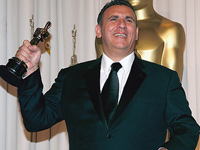
• Producer Graham King re-visits his Oscar win for “The Departed” two years ago. [The Independent]
• Anne Hathaway shows a little humility. Probably a good thing after that cringe-worthy BFCA acceptance speech. [USA Today]
-
The new millennium Oscars?
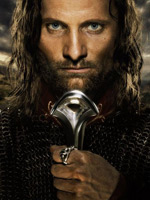 Looking back over the previous Oscar winners for Best Picture since 2000, the start of a new century (and a new millennium), I find myself wondering sometimes what the hell the Academy was thinking. It’s no secret I disagree with the Academy a lot, but I can also admit that when they get it right, they get it right.
But since 2000, their Best Pic choices have run the gamut from incredibly ridiculous, “Gladiator” and “A Beautiful Mind” being just goofy, to bang on, with “The Departed” and “The Lord of the Rings: The Return of the King.” I am told the Academy is moving in a more progressive direction, willing to take more risks, and I suppose some of these winners do just that. But they could have gone further.
Year by year, here’s a quick look, with some thoughts about who might have won, and who should have at least been nominated…
-
‘Departed’ sequel sorta, kinda, maybe mooted
As far as these sort of rumours go, it’s not completely fabricated, but it’s hardly solid either. Still, Mark Wahlberg (perhaps looking towards brighter things than “Max Payne”) has been dropping vague hints concerning a potential follow-up to 2006’s Best Picture. The Guardian tells it like this:
“They were talking about bringing in a couple of new guys like [Robert] De Niro, maybe Brad Pitt or someone like that playing the bad guy, a corrupt politician or something,” Wahlberg told Digital Spy. “Then, like the Hong Kong trilogy that the movie is based on, come back and do a prequel and bring everyone else back who was in the first.”
Indeed, “Infernal Affairs,” the Hong Kong thriller from which Scorsese’s film was adapted, inspired both a prequel and sequel, so it’s hardly an outrageous notion. Wahlberg did add that he’d only be on board “if we can make it better than the first,” which is a pretty tall order. I won’t start holding my breath just yet, but it sure sounds like a fun idea.
-
THE LISTS: Top 20 movie endings of all time
 Alright, this was painstaking indeed. After The Times of London saw fit to rock out a list of the 20 best movie endings of all time last week, I thought I’d try my own hand at such a collective.
There are some omissions that might surprise some folks (“Bonnie and Clyde,” “The Graduate,” “Carrie”). At the same time, there are films that, on any other day, would easily slip into the list (“A Clockwork Orange,” “Once Upon a Time in the West,” “Reservoir Dogs”).
Rest assured they were taken into account, but they didn’t speak to me on whatever levels must have been necessary to push into the top 20. But I can say these are the denouements that most affected me, be it viscerally or emotionally.
Send in your picks for the top five movie endings of all time and I’ll publish a collective readers’ list in a few weeks. Email me or post your list below in the comments section.
Here’s what I came up with:
20. “The Iron Giant” (Brad Bird, 1999)
“You stay. I go. No following.”
Animation genius Brad Bird made his feature directorial debut with this effort, packing an emotional punch by film’s end with shades of “E.T.: The Extra-Terrestrial” — and an energizing final shot to boot.19.”Jacob’s Ladder” (Adrian Lyne, 1990)
“He looks kind of peaceful, the guy.”
Capping off one of the most bizarre cinematic visions ever captured (and, ultimately, quite underrated as well), this closing scene is a twist that has been lifted in various other forms ever since. (see next)18. “The Sixth Sense” (M. Night Shyamalan, 1999)
“I think I’m okay, really. I think it just went in and out.”
Hot prospect M. Night Shyamalan tainted the original power of the twist ending by attempting to make a career of it, but in the final moments of this early effort, his buried talent poked through the surface.17. “The Shawshank Redemption” (Frank Darabont, 1994)
“Get busy livin’ or get busy dyin’. That’s God damn right.”
Less a closing scene than a closing sequence, the entire third act of Frank Darabont’s Stephen King adaptation manhandles the heartstrings and lifts the spirit.16. “Se7en” (David Fincher, 1995)
“John Doe has the upper hand.”
Andrew Kevin Walker crafted a near masterpiece that culminates as perfectly as it could have, death and despair, ambition and art, plus a Hemingway rebuttal for the ages.15. “The Conversation” (Francis Ford Coppola, 1973)
“We’ll be listening to you.”
The calmly paranoid conclusion to a mind-bender from a mid-“Godfather” Francis Coppola, this finale put Gene Hackman in a position to give perhaps the greatest performance of his career.The full list after the jump!