In Contention

Tag: Happy-Go-Lucky

  • Mike Leigh celebrates “hidden city” of London

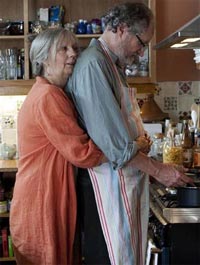
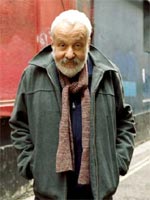
    My attention was drawn to this article last week, but since the London Film Festival kicks off this week (and Mike Leigh’s “Another Year” will be competing for top honors there), now seems an appropriate time to link to it. Picking up on the role England’s capital city has played in a number of Leigh’s films — including his latest — the Wall Street Journal quotes the Salford-born director on his self-proclaimed status as an “ethnic London filmmaker”:

    It’s precisely the city’s specificity that engenders the grittiness of Leigh’s “Naked,” for example, or the quiet melancholy of “Another Year.” “By definition, London is a kind of place that means so many things,” Leigh said. “I’ve lived in London exactly 50 years. When you reflect on your life in a slab of 50 years…I adore London. I think it’s a wonderful, glorious city. That does inform the stuff that you’re talking about.”

    (more…)

  • REVIEW: “Another Year” (***1/2)

    Cannes Film Festival

    “On a scale of one to ten, how happy are you?” asks one character of another in Mike Leigh’s new film “Another Year.” “One,” is the doleful reply, as if Leigh himself is swearing off the sunnier skies of his previous feature, “Happy-Go-Lucky.”

    He needn’t have made the point so emphatically. For a director who has worked, across his career, with a thriftily light bag of oft-used themes, milieus and even actors, Mike Leigh has remarkably never settled for making the same film twice.

    His detractors paint much of his oeuvre with the broad brush of kitchen-sink miserablism, ignoring the considerable tonal and structural differences between a “Naked” and, say, an “All or Nothing” – but then overestimating the radicalism of a “departure” like the aforementioned “Happy-Go-Lucky,” a tarter and more searching film than the feel-good breeze many pretended it was.

    Detractors and admirers alike will probably label Leigh’s latest a return to normal service for the prickly Brit: a leisurely character study, sober-sided but flecked with streaks of broad humor, dwelling on the personal insecurities of London’s tea-swilling middle classes. A cast peppered with familiar faces from past Leigh works – Jim Broadbent, Lesley Manville, Ruth Sheen, Imelda Staunton and so on – will further the impression of business as usual, but “Another Year” turns out to be one of the filmmaker’s most structurally ambitious and emotionally expansive works.

    (more…)

  • THE LONG SHOT: A little bit of English

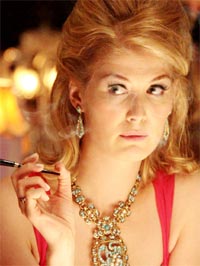
    Rosamund Pike in An EducationYesterday, while talking with one of my sane friends whose thoughts drift to film awards perhaps one day a year, the conversation turned to the BAFTAs, which announce the nominations for their 2009 film awards tomorrow.

    “The BAFTAs, they’re like the Oscars for British films, right?” she asked.

    “Not quite,” I replied. “They’re open to all films.”

    “But the British films always win, right?”

    “No, not always.” I stared into my pint. “Well, a lot of the time, yeah.”

    “Why not just make them for British films, then?”

    “Because they want to be like the Oscars.”

    “So why do they keep rewarding the Brits?”

    The conversation could have circled this way for some time, but fortunately, it was time for another round – and by the time I returned from the bar, the topic had shifted to Pat Robertson.

    My friend’s innocent but pertinent questions only grazed the surface of the peculiar identity crisis suffered by the BAFTA Awards, a longstanding institution, kindly regarded by many, that only joined the pack of Oscar precursors nine years ago. Since they did so, it’s become increasingly difficult to ascertain who they are, what they stand for in awards season.

    (more…)

  • Predict the NSFC Awards

    Tomorrow my personal favorite precursor body, the National Society of Film Critics, will announce their 2009 winners.

    Regular awards-watchers will know that the NSFC is generally the most highbrow of the critics’ groups, as well as the most independent-minded — last year, they went wholly against the Oscar grain, giving Best Picture to “Waltz With Bashir” and four major awards to “Happy-Go-Lucky.” They can, however, be ahead of the curve when it comes to late-breaking Oscar heavies — think “The Pianist” or “Million Dollar Baby.”

    This year, however, I’m guessing they’ll stick to the status quo: with such modest box-office, it seems critics want to give “The Hurt Locker” all the help it can get in the race. With that in mind, Kathryn Bigelow’s film could become the first to sweep the big three critics’ prizes since “L.A. Confidential” in 1997.

    My predictions after the cut. What are yours?

    (more…)

  • indieWIRE lists the decade’s worst Oscar snubs

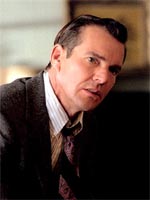
    Dennis Quaid in Far From HeavenThe end-of-decade reflective mood is obviously catching. In yesterday’s Long Shot column, I looked back on the last ten years of the Academy Awards, singling out some of their most inspired choices and positive developments. You responded in great numbers, rare goodwill towards the Academy dominating the comments thread for a change.

    Of course, however, we all know that it’s more fun to bury the Oscars than to praise them. So today, indieWIRE’s Peter Knegt has compiled something of a flipside to my piece, listing the 50 most egregious snubs in the past decade of Oscar nominations.

    It’s an eclectic list, Knegt’s only requirement for inclusion being that a nomination for the film or individual in question had to be at least within the realm of possibility.

    (more…)

  • THE LONG SHOT: What are precursors for, anyway?

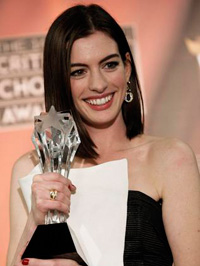
    Anne Hathaway at the 2009 Critics Choice AwardsI didn’t time my holiday to coincide with the sleepiest week of awards season, but that’s how it panned out anyway. While I spent 10 days drinking my way along the canals of France’s Burgundy region, divorced from my computer screen and, I admit, any thoughts of Oscar whatsoever, the industry, too, took a collective siesta.

    As people assimilated the minimal revelations of this year’s festival run (Gosh, people like “Precious?” Who knew?) and steeled themselves for the annual madness ahead, the Producers Guild of America clearly aimed to take advantage of the lull by announcing the expansion of its feature film nominees to 10. The blogosphere stirred briefly, dutifully posted the press release, and went back to sleep.

    The PGA was probably hoping for more of a reaction than it got, but that’s what happens when you ape a larger organization’s move three months after the fact…as everyone suspected you would, anyway.

    The truth, however, is that the news was as dispiriting as it was unsurprising. Because for all the organization’s feeble claims that the copycat move was made purely in the interests of artistic diversity, all it does is expose a serious identity crisis that afflicts many of the season’s precursors.

    (more…)

  • Wearing the ‘Wild Things’

    The roll-call of hipster names affiliated with Spike Jonze’s take on “Where the Wild Things Are” is beginning to border on the obnoxious. (I say that with nothing but love and anticipation.) But if Yeah Yeah Yeahs frontwoman Karen O was going to be involved, it only makes sense that she should bring her stylist to the party.

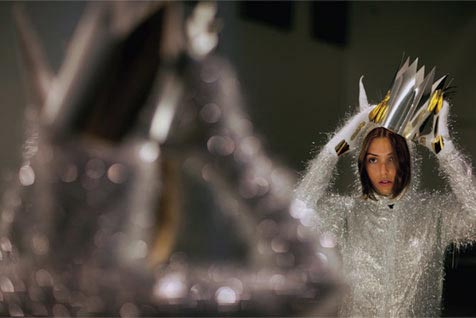
    Christian Joy, the outré fashion designer best known for her eccentric, home-made creations for O’s live shows, has teamed with Urban Outfitters to design a set of five “Wild Things”-inspired costumes. The outfits lend Maurice Sendak’s visions a bit of rock-star sparkle, though I can’t be the only one who thinks they recall Sally Hawkins’s “Happy Go Lucky” wardrobe more than anything else.

    Either way, your Halloween problems are solved. More after the jump.

    Christian Joy for Where the Wild Things Are

    (more…)

  • Focus backs Mike Leigh’s latest

    Mike LeighHere’s something to brighten the day. It would seem that a new Mike Leigh joint (sorry, I couldn’t resist) is on its way sooner rather than later — great news considering the four-year gap between “Vera Drake” and “Happy-Go-Lucky.”

    Screen International reports that Focus Features International has secured worldwide rights to the still-untitled project, and will co-fund the film together with the UK Film Council and Film4 (the same folks behind the auteur’s last effort). Poignantly, this will be the last producing credit for the dearly departed Simon Channing Williams, Leigh’s longtime collaborator.

    If memory serves, this marks Leigh’s first go-round with Focus, and it sounds like a pretty good pairing to me — perhaps a necessary change after Miramax’s slightly indifferent handling of “Happy-Go-Lucky.”

    A formidable cast of Leigh veterans is already in place, with the “Vera Drake” team of Imelda Staunton and Phil Davis being joined by “Topsy-Turvy’s” Jim Broadbent — a heavyweight trio, by any standards. No plot details, of course, though the article promises “an intimate portrait of people’s lives” (from Leigh? I’d never have guessed) based on “unique improvisational techniques.” (Well, knock me down with a feather.)

    I’m totally in. But you knew that.

  • Simon Channing Williams (1945-2009)

    Simon Channing WilliamsThese days, there aren’t many producers in the often too-cosy British film industry who genuinely earn the adjective “fearless,” but Simon Channing Williams, who passed away last Saturday after a long battle with cancer, was one of them.

    As much credit as auteur Mike Leigh deserves for changing the landscape of British cinema with his stinging social comedy and defiantly unorthodox creative process, Channing Williams merits the same appreciation for backing Leigh on every one of his projects since his breakthrough feature “High Hopes” in 1988 — however tenuously defined or commercially unsound they may have appeared to be at the outset.

    The constance of Channing Williams’ collaboration gave Leigh the wherewithal and confidence to push his art into ever more challenging and surprising directions, encompassing the icy philosophising of “Naked,” to the warm domestic melodrama of “Secrets and Lies,” the brittle classicism of “Vera Drake” to the loose-limbed yet black-edged comedy of last year’s “Happy-Go-Lucky.” It truly stands as one of the industry’s greatest producer-director partnerships, and it’s hard to imagine a future Leigh film without Channing Williams’ name attached. As Leigh himself commented:

    He was a natural-born producer, a great leader, always an enabler, a protector; never a dictator or an interferer. Infinitely generous, his life was all about doing things for people, and bringing out the best in everybody. He was the ultimate fixer, and a phenomenal organiser. He relished the impossible challenge, and loved the cut-and-thrust of negotiations, at which he was a genius.

    (more…)

  • Under the radar: ‘Song of Sparrows’

    Song of SparrowsAs the box office charts reveal, spring can be a harsh season for the discerning filmgoer — with the industry shifting its focus from prestige product before February’s Oscar winners can even shake off their hangovers, we have to dig deeper than usual for fare with more on its mind than monsters, aliens and petrol.

    The good news is that this fallow period affords a few miniature gems more breathing room than they would otherwise receive in the crush of awards season. With so little else to entice them, more adventurous viewers may be inclined to take a chance on a range of challenging stragglers from last year’s festival circuit, the brilliant “Hunger” and “Sugar,” and the much-acclaimed “Goodbye Solo,” among them.

    Joining this selection of specialist titles in New York last week (and in LA this Friday) is “Song of Sparrows,” an unusual and thoroughly winning comedy-drama from Majid Majidi, the veteran Iranian auteur best known for such gently humanist works as “The Colour of Paradise” and “Children of Heaven.”

    The latter film made him the only Iranian filmmaker to date to receive an Oscar nomination — no minor distinction considering his compatriots include Abbas Kiarostami and Samira Makhmalbaf. Though “Song of Sparrows,” Iran’s official 2008 Oscar submission, fell short of repeating that feat, it displays many of the same aesthetic and thematic principles — its mellow, deliberate pacing, its observational, sentimentality-skirting use of child’s perspective, its unwavering concern with issues of faith and community — that distinguished his earlier works.

    (more…)

  • All in good taste

    There’s no real reason to pay attention to the Chlotrudis Awards,which took place on Sunday. After all, they’re a casually organised set of honours determined by an enthusiastic group of Boston-based film lovers — that apparently get mentioned on IMDB and precisely nowhere else.

    But hey, when their taste is this exemplary, they deserve a bit of notice. After all, in the thick of awards season, people actually bother with the innumerable, obscure regional critics’ awards and their largely yawnsome copycat choices. The Chlotrudis Awards, by contrast, go commendably against the grain.

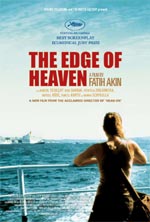
    Any organisation that singles out the exceptional, Oscar-snubbed work of Kristin Scott Thomas and Elsa Zylberstein in “I’ve Loved You So Long” is in my good books, while “The Edge of Heaven” is a pretty fresh, adventurous choice for Best Picture of 2008. “Happy-Go-Lucky,” meanwhile, continues to generate affection, taking Supporting Actor kudos for Eddie Marsan and half a Best Director award — in another inspired move, Mike Leigh and Guy Maddin (“My Winnipeg”) tied for that honour.

    OK, so nobody really notices or cares about these awards, but it’s the principle that counts. I applaud them. Check out a full list of winners and nominees here, if you’re so inclined.

  • Mike Leigh on Hollywood, Mickey and losing an Oscar

    Mike LeighIf, like yours truly, you’re one of those who believe that British auteur Mike Leigh was robbed on Sunday night, you’ll thoroughly enjoy his Oscar diary. Ever the Hollywood outsider, Leigh attended the Academy Awards with his two adult sons as his guests, and he reflects on the ensuing madness with all the droll, dry humour present in so many of his films.

    As you would expect, he’s not all that bothered about losing the Original Screenplay award for “Happy-Go-Lucky,” not least because he learned shortly before the ceremony that the bookies had him as a 54-1 outsider. (He mordantly notes that his son Toby then placed £20 on him, “just in case.”) In any case, he professes to liking “Milk” a great deal, and rather enjoyed the ceremony as a whole, describing it with typical British reserve as “far less tacky and schmaltzy than usual.” What I really liked, however, is his candour on the awards themselves:

    The truth is, you only get the loser’s hump about the winners if you think that they’re crap, and tonight I get a real buzz out of nearly all the awards. Chuffed for jolly Michael O’Connor (best costumes, The Duchess), who assisted Lindy Hemming on Topsy-Turvy, and delighted that Benjamin Button got only technical awards!

    Wanted Mickey Rourke to win best actor (I voted for him) and, no disrespect to Kate and the other girls, I desperately miss Sally (Hawkins). I genuinely can’t see how any of their performances are as original, creative, profound, witty or versatile as hers. But there you go.

    Sure, most directors would probably say that about their leading ladies, but in this case, he happens to be right. I’m also interested to hear that he’s on Team Rourke — I recall sitting behind Leigh at “The Wrestler’s” first London screening back in October and observing his evident enthusiasm for the film then.

    (more…)

  • You were right, I was wrong: Guy’s final predictions

    (Expanded thoughts and reasonings on yesterday’s list of predictions.)

    It’s years like 2008 when I throw my hands up and admit (albeit with great reluctance) that my family and friends have been right for the last two decades. Carla, Tom, Kim, Auntie Mavis: I give up. I am insane to care as much as I do about the Oscars. They are stupid. They don’t matter, and I really should find something more important and rewarding to care about, like, oh, needlepoint classes or professional darts championships.

    But who am I kidding? I will always care about the Oscars, even in years like this when the race is so dry, and its significance so questionable, that I take great care in not caring. In a year when so few of my personal favourites have cracked the contenders list, it has at least been interesting to sit back and watch the furore unfold over the Academy voters’ spectacularly self-sabotaging antics this year.

    I’ve been wrong about a lot of things this year (Kris scoffed at my naive suggestion back in July that “Happy-Go-Lucky” could be a Best Picture nominee, and he was right to), and right about … well … “Milk’s” nomination for Best Costume Design. (Hey, let me salvage some glory from this year’s meagre spoils.) I don’t expect to be a hell of a lot more successful with the following predictions, but you never know. It’s still been a lot of fun riding out the season with you this year – here’s to a better slate of contenders (and a lot less grousing from me) in 12 months’ time.

    BEST PICTURE
    Apart from the fact that it is the most imaginative and entertaining of this year’s feeble clutch of nominees, the reason “Slumdog Millionaire” has a stranglehold on this category is because it’s the only one of the five that has any discernible relationship to contemporary cinema. The other four all feel to varying degrees like the finely-tooled Best Picture winners of decades past, but the younger, more curious Academy members have been moving away from such self-consciously packaged ‘prestige product’ in the past few years – even if they need a lot of pointing towards what to reward in its stead.

    (more…)

  • Best Original Screenplay: The case for ‘WALL-E’

    I think it was some smart person on Nat Rogers’ most recent podcast who remarked that if you really want to get a picture of what was going on cinematically in any given year, you’d be better off bypassing Oscar’s Best Picture category and heading straight for the Best Original Screenplay nominees – a category that has a far higher tolerance for eccentricity, controversy and the occasional foreign tongue than any other.

    Case in point: 2002. When the top categories were splintered between the respectable but less-than-relevant likes of “Chicago” and “The Pianist,” Original Screenplay afforded voters the luxury of choosing between Pedro Almodovar, Todd Haynes and Alfonso Cuaron. Two years later, the category gave recognition to the otherwise shamefully sidelined “Eternal Sunshine of the Spotless Mind,” just as, a decade earlier, “Pulp Fiction” fans sought refuge there from a merciless shower of Gump. As I’ve said before, from “Citizen Kane” to “The Crying Game,” Best Original Screenplay tends to be the connoisseur’s favourite Oscar category.

    And so it is this year, when the writers’ branch really demonstrated admirable ingenuity and adventurousness in their selections, in the face of some otherwise uninspired voting. For me, it’s by far the most exciting of this year’s major Oscar categories, both for the calibre its competition and the unpredictability of its outcome. It’s one category where the Guild award is of little to no use to prognosticators, as only one title (“Milk”) features on both the Oscar and WGA lists.

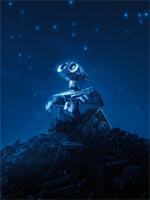
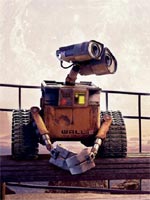
    Like Kris, I’m placing my money on Andrew Stanton, Jim Reardon and “WALL-E” emerging triumphant here, and thus becoming the first animated film in Oscar history to win a major category. This morning, meanwhile, I was interested to see that the majority of the Gurus of Gold are thinking the same way. It’s a healthy vote of confidence for a prediction that, let’s face it, would represent a significant leap for Academy voters. Just last year, the Reel Geezers (AMPAS members both) immediately discounted “Ratatouille” from consideration in the category because it was a “cartoon.” How do we know that most of the notoriously conservative Academy voters won’t feel the same way?

    (more…)

  • Denby nails it

    If you saw his TV chat with Charlie Rose and A.O. Scott, you won’t be surprised to read that critic David Denby doesn’t think much of this year’s Oscar crop. (And if you didn’t, you could probably guess.) Anyway, in this very lucid New Yorker piece, he expands on the points he raised on the show, tearing apart every Best Picture nominee but “Milk,” and lamenting the exclusion of “Happy-Go-Lucky” and “Rachel Getting Married.” I don’t agree with everything he says (and I do think he’s unnecessarily cynical about “Slumdog Millionaire”), but he’s bang on-target here:

    In the well-acted “Frost / Nixon,” a nice journalistic coup—David Frost’s pushing Richard Nixon into semi-confessional mode, in 1977—has been elevated to a great transformative moment in history, which, alas, it was not. These two films (“Frost/Nixon” and “The Reader”) may have been controlled more by their directors and their writers than by their studios, but they’re still the kind of middlebrow pictures that the Academy used to nominate in the bad old studio-dominated days—the contemporary equivalents of “Judgment at Nuremburg” and “Guess Who’s Coming to Dinner?” They are “important” pictures that “say” something about public issues. They’re good for the industry’s image.

    Note the quotation marks. The rest here.

  • Standard crowns ‘Hunger’ best film

    I have to hand it to the Evening Standard Awards: they are a breath of fresh air in a suffocating awards season. While their choices can have a bit of an over-democratic, drawn-from-a-hat feel to them (Stephen Daldry for Best Director? On what planet?), they are never afraid to veer from the herd.

    And so they have done this year, justly and imaginatively handing their Best Film prize to Steve McQueen’s magnificent “Hunger” at last night’s London awards dinner. It’s a small but prestigious citation for the film, voted as it is by a panel of leading British critics, including Standard stalwart Derek Malcolm and the Telegraph’s excellent Tim Robey.

    If you ask me (which no one did, but I’ll say it anyway), they royally fluffed Best Actor, curiously settling on a tie between Michael Sheen and the admittedly very good Pat Shortt, which rather embarrassingly left Michael Fassbender — easily the most deserving nominee — the lone loser.

    They redeemed themselves, however, with an inspired choice in Best Actress. Bypassing the obvious Kate Winslet option, they instead honoured Tilda Swinton for her extraordinary, bruising work in “Julia,” which I’m beginning to think may well be the thesp’s finest performance to date. (No mean feat, that.) The fact that BAFTA essentially handed Swinton a nod for just showing up in “Burn After Reading,” but failed to even longlist her for “Julia,” is yet another reason why we shouldn’t even be paying attention to that particular shindig this year. (But hey, tune in for my BAFTA live-blog on Sunday!)

    Elsewhere, Martin McDonagh racked up another screenplay win, filmmaker Joanna Hogg deservedly took the Newcomer award (beating Dev Patel in the process), and the wonderful Sally Hawkins pipped co-star Eddie Marsan (now wouldn’t that have been a good tie opportunity?) to the Peter Sellers Award for Comedy. (I still wouldn’t quite call “Happy-Go-Lucky” a comedy, but let’s not split hairs.) Yep, the best performance of 2008 still won’t go away, no matter what the Academies on either side of the Atlantic think.

    Mike Leigh, meanwhile, bagged a career achievement award. Full list of nominees and winners (in italics) after the cut.

    (more…)

  • The Bagger finds the meaning

    There are few journalists with as sharp an understanding of the tunnel vision that affects award-season coverage as David Carr.  So it’s with a guard of irony that, in yesterday’s ruminative NYT piece, he describes this year’s race as “somehow less frivolous than it has (been) in recent years.”

    While he acknowledges the comparative slightness of the Oscars against such events as Obama’s inauguration and the global financial crisis, he feels that the awards, and more particularly, the films being awarded, have a clearer collective sense of purpose — and resonance — this year:

    Consumers who are motivated by the laurels heaped on these films to plunk down increasingly scarce disposable income will leave the movie house with the message that circumstance is just that, and no match for the indomitability of human will. The films are built on individual successes — kids from the slums who better themselves, a television celebrity who finds his inner newsman, a newborn who overcomes old age and the midlife closeted man who steps into the light — that accrue to the greater good. That message, that darkness can be overcome by individuals working for the common good, is not so distant from the current collective impulse.

    I think it’s an intelligent point, but a flawed one. Carr may refer to this year’s nominees as “the filmed stories that have captured the public’s attention,” but the fact is that, in at least two cases, they haven’t. Carr already marks “The Reader,” the gloomiest and lowest-grossing of the Best Picture nominees, as an exception to his argument, but “Frost/Nixon” hasn’t fared much better commercially. In his recent chat with Charlie Rose, David Denby astutely pointed out that Ron Howard’s film rather overstates the relevance of an event that amounts to little more than an interesting historical footnote — and its $12 million gross so far suggests the public agrees.

    (more…)

  • Guessing games

    I only just got round to counting up my correct predictions across all categories, and wound up with a tally of 68 from 97 slots.

    This is the first year I’ve ever gone remotely public with my Oscar predictions, so while I can tell you that this was a pretty poor year for me (3/5 for Best Director and a lowly 2/5 for Best Documentary — yikes), I have nothing to prove my usual form. Still, I see I’ve tied with Kris, so no shame in that.

    In the major categories, none of my left-field predictions came through for me, though I always knew that my “Gomorrah” screenplay pick and the four projected nods for “Happy-Go-Lucky” were thin limbs to climb on.

    (more…)